Sarajevo, the capital of Bosnia and Herzegovina, is not simply a travel destination — it is a living civilisation built on centuries of Islamic values, and the stories it holds are ones the world desperately needs to hear. With a new direct flight now connecting London to Sarajevo through FlyBosnia, British Muslims and curious travellers have a straight path to one of Europe’s most spiritually and historically significant cities. This episode of The Deen Show, filmed on location with a group of UK visitors from London, Birmingham, Bradford, and Manchester, uncovers a side of Islam’s legacy that rarely makes headlines: a centuries-long commitment to protecting the rights, lives, and sacred spaces of others — including Jews and Christians — even in the darkest moments of conflict. Far from the distorted images peddled by sensationalist media, Sarajevo stands as proof of what genuine faith, rooted in Islamic guidance and God-consciousness, looks like when tested by history.
The Sarajevo Haggadah: When a Muslim Family Stood Guard Over Jewish Scripture
“Coexistence was entrenched in the culture of the Muslim people here, and history is full of these stories — the Haggadah is just one example. This is part of our religion, part of Islam and the worldview.”
- The Sarajevo Haggadah is one of the oldest surviving Jewish religious scriptures in the world — and it was a Muslim family in Bosnia who preserved it through both World Wars, a fact now being honoured through an active preservation project.
- Muslims disguised Jews by dressing them in traditional Islamic clothing, including the niqab, to shield them from persecution — an extraordinary act of faith-driven compassion documented in the historical record.
- Islam makes protection of all people of faith an obligation — this is not an exception to Islamic values but a direct expression of them, rooted in a worldview that upholds human dignity regardless of religion or ethnicity.
- No churches were destroyed by Muslims in Sarajevo even during the genocide of the 1990s — while enemy forces systematically levelled mosques, Bosnian Muslims never retaliated against the religious sites of others.
- The new direct London–Sarajevo route via FlyBosnia makes it easier than ever for UK visitors to experience this city firsthand — its Ottoman architecture, natural beauty, and living culture of interfaith coexistence unlike anywhere else in Europe.
- Srebrenica deserves to be visited — as the site of the greatest genocide in Europe since the Second World War, it is a place of profound spiritual reckoning and a lesson the world cannot afford to ignore.
Faith Tested by Genocide: Islam’s Response in the Face of Destruction
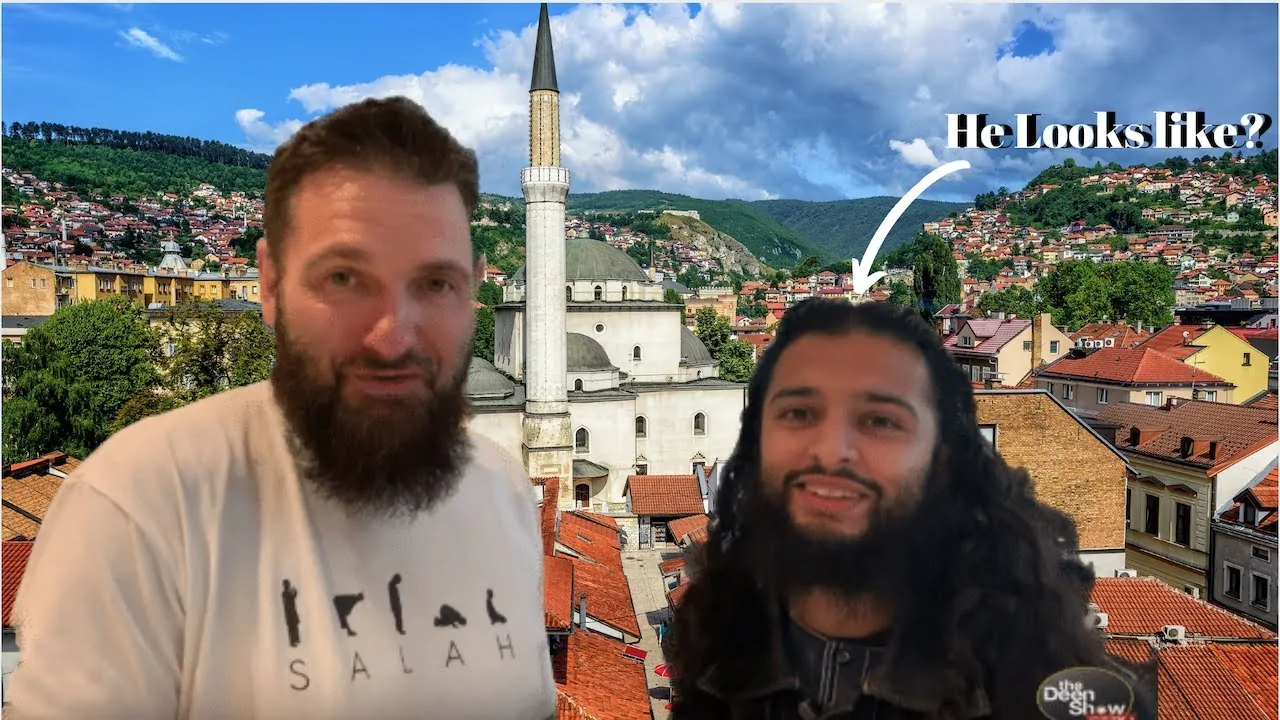
The Bosnian War of the 1990s brought systematic violence, the destruction of mosques, and mass atrocity against the Muslim population of Bosnia and Herzegovina — and yet, as the guest on The Deen Show makes clear, not a single church was targeted in retaliation. This was not weakness, and it was not political calculation. It was the fruit of Islamic spirituality and guidance embedded deep in the Bosnian Muslim identity. The same values that moved a Muslim family to carry the Haggadah through wartime rather than abandon it — the same faith that prompted Muslims to risk their own lives sheltering Jews — those same values held firm when the test came at its most severe. The episode also pauses on a striking image: a Muslim man in Sarajevo who physically resembles the historical description of Prophet Jesus, son of Mary, peace be upon him — darker complexion, wavy hair — a far cry from the blue-eyed, blonde-haired depictions that have dominated Western culture. It is a small but pointed reminder that Muslims love and revere Jesus (peace be upon him), not as a deity, but as one of God’s mightiest messengers, who came, as all prophets came, to call humanity back to the worship of the One Creator alone.
“When enemy forces destroyed our mosques, the Muslims here never retaliated. They preserved the churches. No churches were destroyed during the genocide here against the Muslims — and that was thanks to our heritage, thanks to Islam.”
Bosnia and Herzegovina is more than a destination — it is a mirror held up to the world, reflecting what a civilisation grounded in Islam, purpose, and sincere faith in Allah looks like across centuries of trial. When the narrative around Muslims is so often shaped by fear and distortion, Sarajevo quietly answers with stone and story: with a Jewish scripture saved by Muslim hands, with churches that stood unharmed while mosques burned, with a people who chose mercy when brutality had been shown to them. The spirituality of this city is not abstract — it is written into the cobblestones of Baščaršija, echoed in the call to prayer drifting over the hills, and carried in the warmth of its people, who greet strangers with Merhaba and the universal declaration of peace. For any Muslim seeking to reconnect with their faith, or any non-Muslim seeking to understand Islam beyond the headlines, Sarajevo is not just worth visiting — it is essential. Come, witness, and let the city speak for itself.