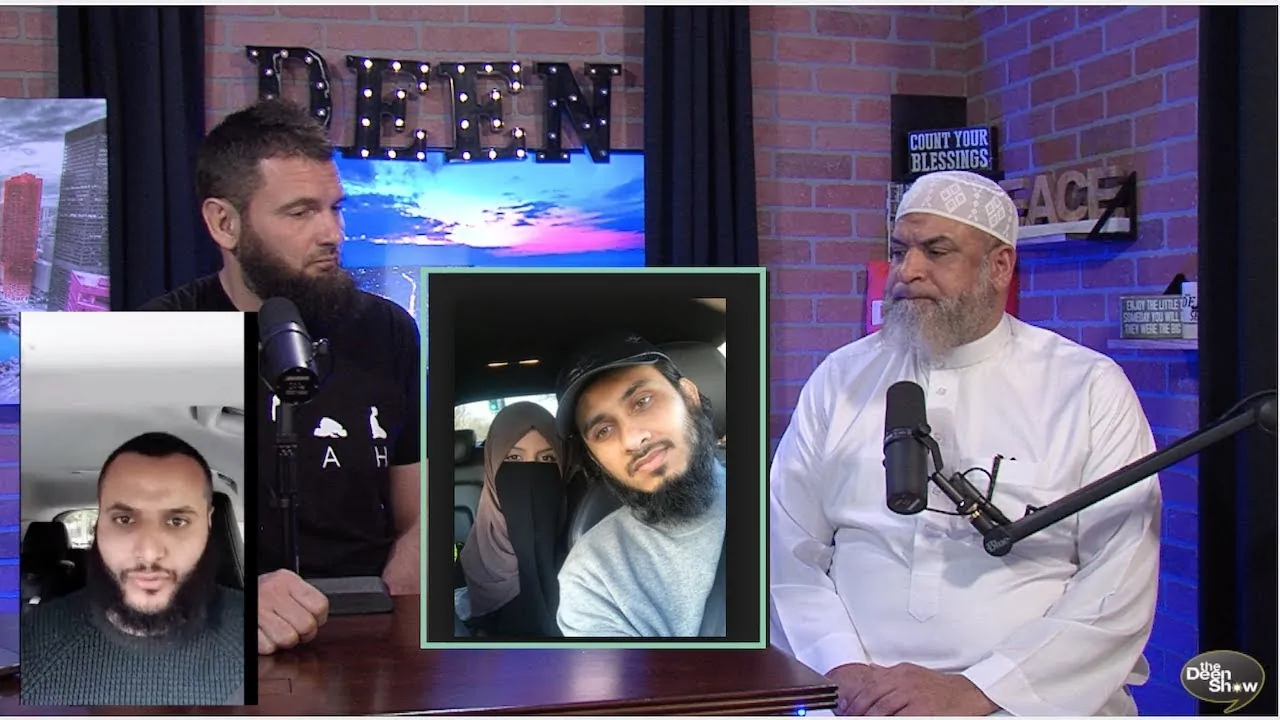
The Muslim community was recently shaken by the exposure of individuals who had been posing as practicing Muslims while secretly living double lives as atheists. This troubling case of infiltration, involving fake faith healers collecting hundreds of thousands of pounds in charity, serves as a powerful reminder about the importance of Islamic knowledge, proper Tawheed, and vigilance against spiritual deception in the community.
The Danger of Fake Faith Healers and Ruqyah Fraud
Scholars on this episode explained that the phenomenon of fraudulent Ruqyah practitioners is widespread in the Muslim world, not limited to isolated incidents. The root cause is ignorance, specifically a lack of knowledge about Tawheed (Islamic monotheism). The line between legitimate Ruqyah and shirk (associating partners with Allah) is razor thin. The moment a person believes the Raqi (healer) himself has the power to cure rather than Allah alone, that belief crosses into dangerous territory. As the scholars clarified, all of the Quran is a cure, and the ideal practice is to recite Ruqyah upon oneself, maintaining complete reliance on Allah.
“The moment that you believe that there is someone out there who can benefit you without Allah’s permission or cause harm to come upon you without Allah’s permission, your Tawheed is gone.” — Shaykh on TheDeenShow
Proper Etiquette of Ruqyah in Islam
- The authentic Sunnah shows that Prophet Muhammad (peace be upon him) would recite Ruqyah on himself, and when ill, asked Aisha (may Allah be pleased with her) to recite over him
- A legitimate Raqi should never seek fame, money, or social media followers through their practice
- Before performing Ruqyah on someone, a practitioner should verify the person’s faith and connection to prayer
- Men performing Ruqyah on women in private settings is strongly cautioned against by scholars
- Ruqyah should never become a commercial business with set fees and wages
- The story of the boy and the king in Sahih Muslim demonstrates the proper attitude: declaring clearly that only Allah cures
“I cure nobody. Indeed, Allah is the One who cures. If you believe in Allah, I will ask Allah, I will supplicate to Allah to cure you, and if Allah wills, He will cure you.” — The proper declaration of a Raqi
Lessons for the Muslim Community
The scholars emphasized that displaying one’s family on social media for likes and fame contradicts Islamic protective jealousy (gheerah), and that the Prophet (peace be upon him) warned about individuals who see wickedness in their family yet do nothing about it. The ultimate takeaway is clear: study Tawheed, maintain complete reliance upon Allah the Creator of the heavens and earth, recognize that no human being can benefit or harm without Allah’s permission, and never elevate any person to a status that belongs only to the Almighty.