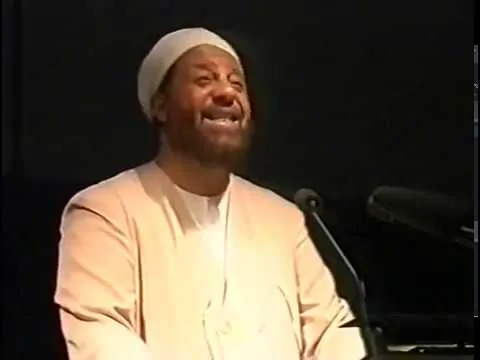
When we speak of a war against Muslim women, the instinct is to look outward — at hostile media narratives, attacks on the hijab, or the manufactured clash of civilisations. But in this deeply honest and empowering lecture, Shaykh Abdullah Hakim Quick, PhD — scholar, imam, and da’wah leader with over two decades of field experience across more than 34 countries — turns the mirror firmly inward. The most urgent front in the struggle for the Muslim woman’s dignity is not the news cycle or the courtroom; it is the household, the madrasa, and the masjid. Unless the Muslim ummah is willing to examine its own internal practices with the sincerity that Islam demands, external victories will ring hollow — just as a Companion wept on the day of military triumph, fearing the day Muslims would disobey Allah and lose the authority He had granted them.
The War Within: Abuse, Educational Exclusion, and the Misuse of Islamic Rulings
Drawing on years of service as an imam in Canada, Australia, the West Indies, and South Africa, Shaykh Quick documents a troubling pattern found across Muslim communities worldwide. Behind the thobe, the abaya, and the kufi, he found women suspended in the state of al-mu’allaqah — left between marriage and divorce, with husbands who neither fulfilled their nafaqah obligations nor granted freedom through talaq. He found domestic violence rationalised in the name of Islam, despite the clear and celebrated Sunnah that the Prophet ﷺ never struck any of his wives. He found madrasas educating boys while turning girls away, with community leaders actually claiming that the more knowledge women gain, “the more problem you have” — a statement the Shaykh rightly challenges: seeking knowledge is fard upon every Muslim, male and female, without exception. These distortions are not rooted in the Quran or authentic Sunnah; they are cultural imports and jahiliyyah — states of ignorance that Islam came precisely to dismantle.
“Beware of the du’a of the oppressed person. There is no barrier between that du’a and Allah subhanahu wa ta’ala.” — The Prophet Muhammad ﷺ, as cited by Shaykh Abdullah Hakim Quick
- Domestic violence has no Sunnah basis — the Prophet ﷺ never struck any of his wives, and that restraint is itself the Sunnah most deserving of emulation
- Talaq is a solemn covenant, not a weapon — the Prophet ﷺ expressed displeasure whenever it was uttered carelessly, and using it as repeated blackmail is a state of ignorance (jahiliyyah)
- Khul’ and judicial faskh are valid Islamic instruments — an imam can annul a marriage in cases of sustained abuse or abandonment without the husband’s consent, and this is agreed upon across all schools of fiqh
- Education is a right, not a privilege — Sayyida Aisha (ra) narrated over 2,210 hadith and was a foremost scholarly authority; Imam Shafi’i learned from Sayyida Nafisa at the height of his fame; women appear in the silsilah (chains of knowledge) of the greatest imams in Islamic history
- The mahr is the woman’s property alone — not a symbolic gesture or a bribe for her family, but genuine financial independence that Islam established centuries before any modern women’s liberation movement
- Separation is not marginalisation — unequal masjid facilities, one-sided curricula, and “obligations of women” framing without an equal discussion of their rights is institutional injustice, not Islamic practice
Islam as Liberation: Restoring the Forgotten Legacy of Faith
The shaykh reminds his audience of a spiritual and historical heritage that commands deep pride, not shame. Islam arrived in a world that buried infant daughters alive, denied women souls (a question the Christian church was still debating into the 20th century), and reduced them to tradeable property with no legal standing. Islam gave women full spiritual accountability before Allah, the right to own property under their own name, the right to their own financial accounts independent of their husbands, the right to retain their family name in marriage, and the right to direct access to Allah through du’a, scholarship, and worship. The Islamic marriage is not “husband and wife” in the hierarchical English sense — it is zawjain, two companions whose qualities are designed by Allah to strengthen one another, not to compete, suppress, or diminish. When Muslims enter the deen and proceed to belittle the women who raised them, taught them, and kept families intact through generations of hardship — including the legacy of slavery and colonial disruption in the African American and wider Muslim diaspora experience — they are not practising Islam; they are importing jahiliyyah into the deen while wearing its symbols. Islam empowered the first generation, the second, and the great scholars across every century of Islamic civilisation. How, the Shaykh asks, can we now disempower people in its name?
The Path Forward: Rebuilding the Muslim Home on Justice and Taqwa
“Our original sources of Islam, our original revelation, was liberation of all people. No ideology, no political movement, no army, no civilisation, no culture has ever given women rights on the ground like Islam gave.” — Shaykh Abdullah Hakim Quick
The ummah stands at a crossroads — a community of vast potential, with intelligent men and strong women, yet experiencing confusion and humiliation on the ground. The path forward is not a new ideology; it is a return to the original one. If a woman is educated, the entire family is educated. If a mother loves the masjid, her children will love it too. If she is honoured in the home, the next generation will carry that honour into the world. The Islamic vision of gender — zawjain, companions who complement one another — was never meant to produce second-class citizens on one side of the partition. The real test of our iman, as the Companion’s tears on the day of victory remind us, is not how we perform in moments of public triumph, but how we treat the most vulnerable within our own homes, behind closed doors, where only Allah sees. Allah will not change the condition of a people until they change what is within themselves — and that change begins with taqwa, with truthfulness, and with the courage to speak qaul sadidan, a clear and upright word, first and foremost to ourselves.