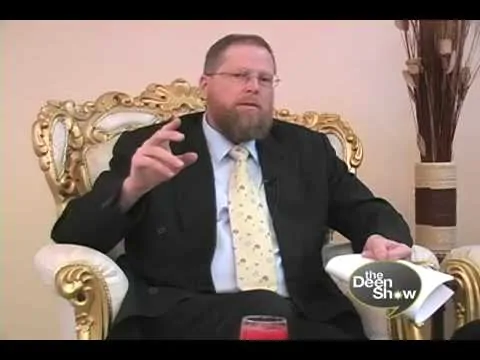
The question of whether we can trust the Bible is not one that Muslims raise to attack Christianity — it is a question that honest Christian scholars themselves have been grappling with for centuries. Dr. Laurence Brown, a former Christian who became Muslim through deep scholarly investigation, examines the foundational issues of biblical authority that every truth-seeker must confront before accepting the doctrine of atonement as the path to salvation.
The Problem of Anonymous Authorship
The four Gospels — Matthew, Mark, Luke, and John — were not written by Matthew, Mark, Luke, or John. This is a fact acknowledged by leading New Testament scholars, including Graham Stanton, who stated that “the familiar headings which give the name of an author were not part of the original manuscripts — they were added only early in the 2nd century.” We do not know who wrote the Gospels, and we do not know who added the names. If someone handed you a book of guidance on any subject, your first question would be: who wrote this? Yet the foundational texts of Christianity cannot answer this most basic question.
“We’re reading anonymous, anonymous, anonymous, anonymous. We don’t know who wrote them, and there are tremendous differences between them.” — Dr. Laurence Brown, summarizing the scholarly consensus on the four Gospels.
More Differences Than Words
The Interpreter’s Dictionary of the Bible, a Christian scholarly work, states that “there is not one sentence in the New Testament in which the manuscript tradition is wholly uniform.” Scholar Bart Ehrman put it even more starkly: there are more differences in the manuscripts than there are words in the New Testament. When the foundational text contains more variations than it has words, the question of reliability becomes impossible to avoid.
“There are more differences in our manuscripts than there are words in the New Testament.” — Bart Ehrman, one of the world’s leading New Testament scholars, on the reliability of biblical manuscripts.
Why This Matters for Every Truth-Seeker
- The concept of atonement — that Jesus died for our sins — is the foundation of Christian salvation, yet it rests on anonymous, conflicting accounts
- The Gospels disagree on what Jesus wore, what he drank, when the crucifixion occurred, and what his last words were
- All four Gospels agree that all disciples deserted Jesus and fled before the crucifixion — raising the question of who witnessed and recorded these events
- The Quran, by contrast, has been preserved letter-perfect for over 1,400 years, with not a single variation in its text across the entire Muslim world
The invitation of Islam is not to blindly reject the Bible but to honestly examine its reliability and compare it with the Quran — a scripture whose authorship, preservation, and internal consistency have never been successfully challenged. When you hold the two side by side, the choice between anonymous, conflicting accounts and a perfectly preserved divine revelation becomes clear for any sincere seeker of truth.