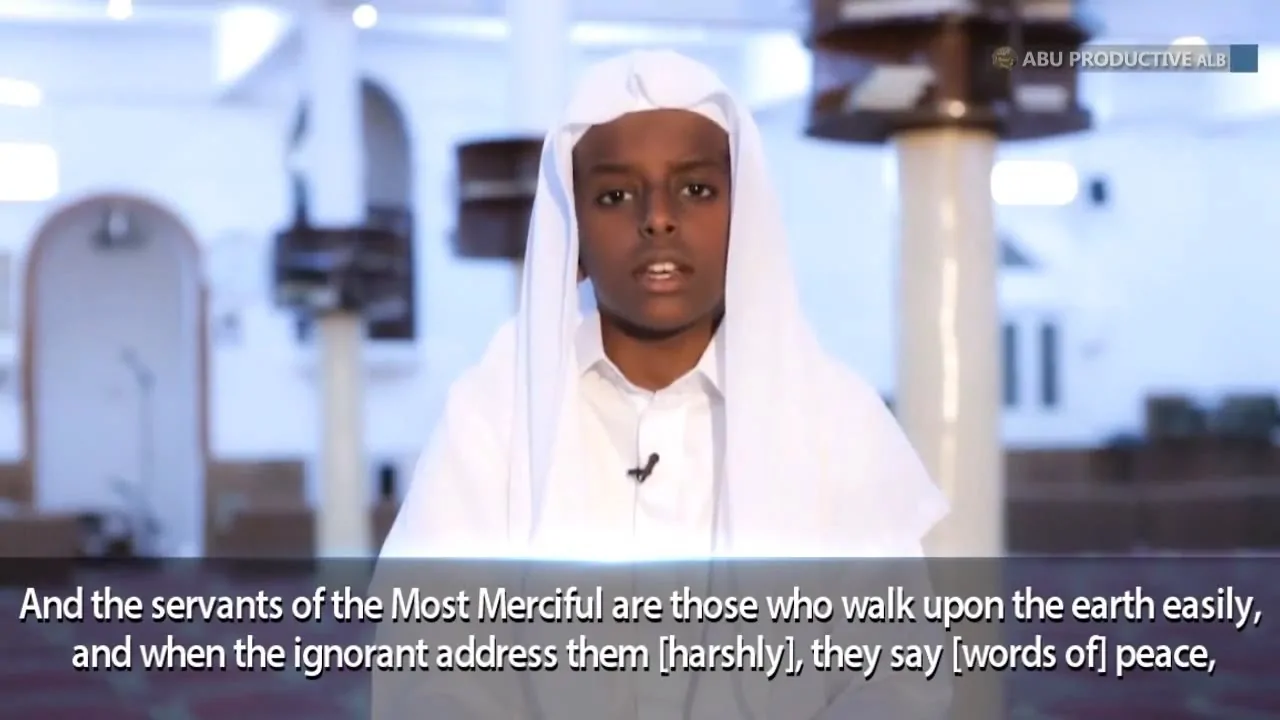
Few passages in the Quran paint as vivid and soul-stirring a portrait of the ideal believer as these ten verses of Surah Al Furqan (25:61–70). Opening with the majestic signs of creation — the sun, the moon, the seamless alternation of night and day — and closing with an extraordinary promise of divine mercy and transformation, this recitation does not merely reach the ears; it settles into the heart. It reminds every sincere Muslim that Islam is not a religion of ritual alone, but a complete, purposeful way of life built on humility, moral clarity, and an unshakeable trust in Allah’s boundless compassion. Hearing these ayat recited with beauty and care is itself an act of remembrance — a call back to what truly matters.
The Portrait of the Ibad al-Rahman: Humility, Night Devotion, and Steadfast Patience
After drawing our attention to the cosmos as a sign for those who desire to remember Allah or show gratitude, these verses introduce the concept of the Ibad al-Rahman — the servants of the Most Merciful — and the portrait is as demanding as it is beautiful. These are not people defined by lineage, wealth, or outward status. They walk the earth with ease and serenity, free from arrogance. When the ignorant provoke them with harsh or foolish words, they respond simply with “Peace” — choosing character over conflict, guidance over retaliation. Their nights are spent in prostration and standing before their Lord, and their tongues carry the sincere supplication: “Our Lord, avert from us the punishment of Hell — indeed, its punishment is ever a lasting torment.” This is the spiritual archetype that Allah Himself describes — a human being rooted in faith, purpose, and devotion to something far greater than the fleeting pleasures of this world.
“And the servants of the Most Merciful are those who walk upon the earth in humility, and when the ignorant address them, they say, ‘Peace.'” — Surah Al Furqan (25:63)
A Divine Roadmap: Balanced Living, Moral Clarity, and the Transforming Power of Repentance
The qualities of the Ibad al-Rahman extend from private worship into every corner of daily life, offering a remarkably complete framework for navigating the modern world as a person of faith and principle. These verses lay out both the standards to aspire to and, in a moment of extraordinary mercy, the path back for those who have fallen short:
- Balanced spending: Neither wasteful nor miserly — the Quran points to a “middle way” in financial conduct that reflects both wisdom and trust in Allah’s provision.
- Pure Tawheed: Never invoking any deity alongside Allah — the cornerstone of Islamic faith, the source of all genuine spiritual guidance, and the very meaning of Islam.
- Sanctity of life: Avoiding the unlawful taking of life — a profound commitment to justice, human dignity, and the sacred nature of creation itself.
- Moral purity: Abstaining from illegal sexual intercourse — a protection of individual souls, families, and the wider fabric of society.
- The power of Tawbah (repentance): For those who sin and then turn back with sincere belief and righteous deeds, Allah promises not merely forgiveness — but the extraordinary transformation of evil deeds into good ones.
“Except for those who repent, believe, and do righteousness — for those, Allah will replace their evil deeds with good, and ever is Allah Forgiving and Merciful.” — Surah Al Furqan (25:70)
What makes these ten verses so enduring and so essential for every Muslim seeking spiritual growth is the completeness of the path they illuminate — from the grandeur of creation that awakens gratitude, to the intimacy of night worship that deepens closeness to Allah, to the ethical compass that governs every interaction, transaction, and moral choice in between. And running through all of it, like a golden thread, is the mercy of God: the reminder that no matter how far a soul has strayed, the door of sincere repentance remains open, and Allah’s promise to convert sin into good is as real and as certain as the sun and moon He placed in the sky as signs for us. Let this recitation be more than something we hear — let it become a standard we return to, a measure of our own walk upon this earth, and a constant reminder that in Islam, the purpose of life and the mercy of God are never truly separate.