
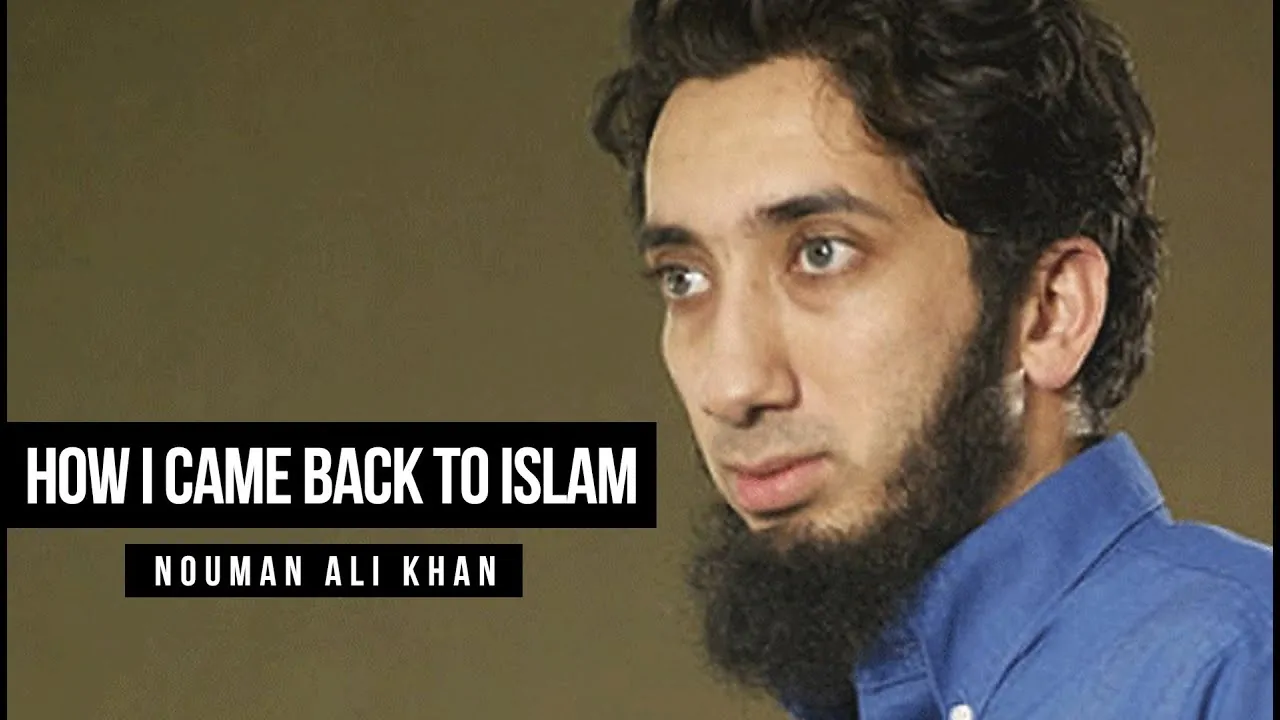
The story of drifting away from Islam and finding your way back is not one told in whispers — it is one shared by millions of Muslims across the globe, from immigrant communities in the West to young people raised in Muslim-majority countries. What makes this particular account so powerful is its raw honesty: a young Muslim who arrived in the United States, felt the pull of assimilation, slowly abandoned his practice, silenced his conscience, and then — through one unexpected friendship — found his way back to the faith that had never truly left him. This is not merely a personal journey; it is a mirror held up to every Muslim community wrestling with identity, belonging, and the quiet erosion of iman in environments that offer nothing to nurture it.
The Slow Drift: How Identity Pressure Erodes Faith
“…whoever rejects evil and believes in Allah hath grasped the most trustworthy Hand-hold, that never breaks…” — (Qur’an 2:256)
When a young Muslim enters a high school where he knows not a single other Muslim, the pressure to conform is not dramatic — it is gradual, almost imperceptible. He begins by missing Jumu’ah once, then twice, then entirely for two years. He builds friendships with non-Muslims whose lifestyle has no connection to religion, and slowly mirrors their choices. He becomes two people: one at home, another outside of it. The guilt, as he describes it, becomes unbearable — but rather than addressing it, he chose the path many take: silence the conscience and remove the thing making you feel guilty. This is the heart of a spiritual crisis that faces countless young Muslims in the West and beyond. The values of Islam — modesty, prayer, community, accountability to Allah — are simply not reinforced strongly enough, even within Muslim households, and the surrounding environment does the rest.
- Peer pressure and assimilation are among the leading causes of young Muslims drifting from Islamic practice in Western contexts.
- The absence of a Muslim community — even for just one year of high school — can have lasting effects on a young person’s connection to faith and spirituality.
- Living a double life (one identity at home, another outside) creates a spiritual disconnect that, if left unaddressed, leads to abandoning practice altogether.
- Guilt is not the enemy — silencing that guilt is. The fitrah, the innate human disposition toward truth, never fully disappears; it waits to be reawakened.
- Islamic values require active, intentional promotion — we cannot assume that culture or family will carry them automatically across generations.
The Return: How Allah Guides Through the Company We Keep
The turning point did not come through a lecture, a punishment, or a confrontation — it came through a flyer, a misunderstanding, and a friend who never once delivered a formal lesson about Islam. When he stumbled across a Muslim Student Association member putting up a notice on campus, he attended expecting a social gathering, and instead found two brothers quietly discussing the Qur’an. He nearly left. But they were kind to him. They gave him rides home, spent time with him without agenda or judgement, and simply treated him as a human being who carried goodness within him. Then one afternoon, one of those brothers pulled over by the roadside to pray — and something stirred deep within. He prayed alongside him, not out of conviction at first, but out of a quiet feeling of shame. And that single act of returning to the posture of submission before Allah lit a spark he could not extinguish. Within months he was praying five times a day again, relearning the number of rak’ahs in Maghrib, relearning what to recite in tashahhud — rebuilding, brick by brick, what years of distance had eroded. He attributes it entirely to Allah, Who used that friendship as the vehicle of His guidance.
“The Messenger of Allah ﷺ said: A man is upon the religion of his close friend, so let every one of you carefully consider whom he takes as a companion.” — (Abu Dawud, Tirmidhi)
What this journey teaches us is something every Muslim community must take to heart: no soul is beyond the reach of Allah’s mercy, and the most effective da’wah is often not the most eloquent — it is the most patient and the most genuine. The brother who brought him back never instructed him to pray, never debated theology, never made him feel like a project. He extended companionship and humanity across an entire year, and the result was a complete return to the deen. For every Muslim who looks at a brother or sister who seems far from Islam and quietly writes them off, this story stands as a profound reminder: our role is not to judge who deserves guidance, but to be the means through which Allah’s guidance may reach them. The door of tawbah is always open, the fitrah is always alive, and sometimes all it takes for a heart to return to its Lord is a friend who pulls over by the road to pray — and waits.