
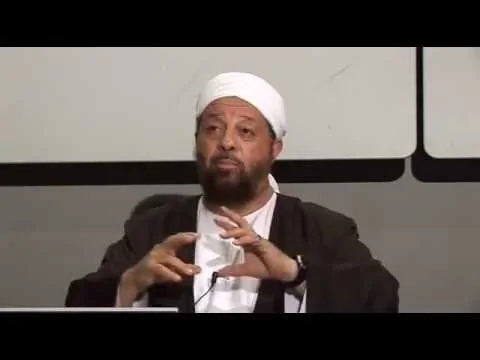
The Prophet ﷺ regularly sought protection from two closely linked afflictions: al-‘ajz — the inability to act — and al-kasl — the spiritual laziness that prevents one from even trying. When a companion said “I cannot,” the Prophet ﷺ would respond by seeking refuge in Allah from such limiting speech. This prophetic supplication cuts to the heart of one of the greatest crises facing Muslims today: not persecution, not poverty, but the comfort-induced paralysis that Shaykh Abdullah Hakim Quick calls spiritual stagnation. Born in the United States and having accepted Islam in Canada in 1970, Shaykh Abdullah studied at the Islamic University of Madinah, completed his doctorate in History at the University of Toronto, and has since served as imam, scholar, and da’ee across North America, South Africa, the West Indies, and beyond — traveling to over 58 countries. In this powerful lecture from Melbourne, delivered as part of the IISNA 2010 Islamic Revival Tour, he draws on centuries of suppressed Muslim history to issue an urgent call to the believer who has everything — and does nothing with it.
Faith Forged in Chains: The Testimony That Shames Our Complacency
“Praise be to Allah who has everything in His power to do as He thinks good, and no man can remove whatever burden He chooses to put on us… My parents’ religion is Islam… but I am lost to all these advantages since my bondage. I now conclude by begging the Almighty God to lead me into the path that is proper for me, for He alone knows the secrets of my heart and what I am in need of.”
— Abu Bakr al-Siddiq, from bondage in Kingston, Jamaica, September 20th, 1834
Shaykh Abdullah traces a remarkable and largely unknown thread of Islamic resilience across three continents. The Cape Malays of South Africa — transported as political prisoners and slaves from Malaysia, Java, and Sri Lanka in the 17th century — rose in chains at night to make du’ā’ that their faith would survive to their descendants. Despite slavery, apartheid, and colonial oppression, they preserved their isnād, their unbroken chain of scholarship, establishing over 150 masājid in Cape Town alone. In the Americas, documented evidence confirms that over 30% of those transported during the transatlantic slave trade were Muslim — scholars who wrote entire copies of the Qur’ān from memory while in bondage, and murabits from West Africa who organized the first successful anti-colonial revolt in the Americas, in Haiti. The Moriscos of Al-Andalus, living under the Spanish Inquisition after the fall of Granada, received a fatwa from the North African scholar al-Wansharisi in 1504, permitting hidden worship as a matter of survival: pray with your eyes, make tayammum by touching a wall as you walk, give zakāt as a gift with pure intention, and hold your nikāh secretly at midnight. These histories are not merely inspiring — they are a judgment upon those who take their faith for granted. Key lessons Shaykh Abdullah draws for the believer today include:
- The Cape Malay community maintained an unbroken Islamic scholarly tradition through centuries of brutal oppression because their scholars taught Qur’ān even while suffering — proof that taqwā sustains communities, not politics or ethnicity.
- Enslaved Muslims in Jamaica and the Americas largely lost their faith within a single generation when Arabic recitation was punished by death — making the freedom to worship openly today a sacred trust, not an entitlement to be squandered.
- Surah Yunus (10:62–63) — “Verily, on the friends of Allah there is no fear, nor shall they grieve; those who believe and constantly guard against evil” — was recited by captive believers as a source of unshakeable certainty covering past grief, present fear, and future hope simultaneously.
- Being a walī of Allah requires only two qualities: sincere īmān and consistent taqwā — both available to any Muslim, regardless of lineage, language, or social standing.
The Delusions That Keep the Muslim Asleep
Taqwā, the scholars explain, is not a passive state — it is the living combination of fear of Allah and hope in His mercy, each of which demands movement. Fear makes you flee from sin; hope drives you toward righteousness. The person who feels both yet remains motionless is, Shaykh Abdullah warns, in a dangerous state of self-deception. He identifies several forms of this delusion spreading through Muslim communities: the person who inherits piety vicariously (“my mother gave sadaqah; my grandfather was a scholar”) as a substitute for personal effort; the one who tallies their hasanāt like a spiritual ledger and concludes they have earned a license to sin; the one who perfects the outward appearance of Islam — first row in salah, Ramadan fasting, the full Islamic dress — while carrying jealousy, fault-finding, and arrogance in their heart; and the one who studies Islamic texts with academic brilliance but never applies them, reading the Qur’ān in melodious tones that, as the Prophet ﷺ foretold, do not pass beyond the throat. Each of these figures is, in Shaykh Abdullah’s assessment, under the grip of Shayṭān — deceived into believing they have already arrived at their destination. The true walī, he reminds us, is often the unassuming person sweeping the masjid before Fajr, whom no one notices and no one films.
“Say: I believe in Allah — and then become upright.”
— The Prophet Muhammad ﷺ, when asked by Sufyān ibn Abdillāh al-Thaqafī for a single, comprehensive gem of guidance sufficient for an entire lifetime
The cure Shaykh Abdullah prescribes is as simple as it is demanding: genuine istiqāmah — uprightness of heart and consistent action, quietly renewed day after day, without the need for an audience or a spiritual title. Allah’s promise in Surah Fussilat (41:30–31) is that upon those who say “Our Lord is Allah” and then become truly upright, the angels descend with glad tidings of Paradise, offering companionship and protection in this world and the next. This reward is not reserved for scholars or public figures — it is the inheritance of every believer who, in the words of the Qur’ān, believes and guards against evil with sincerity. The stories of Abu Bakr al-Siddiq writing in Jamaican chains, of Cape Malay scholars teaching Qur’ān under apartheid, of the Moriscos praying in secret with their eyes pressed shut while facing the Inquisitor — these are not relics of a distant past. They are living mirrors held up to every Muslim who has freedom, safety, and the open ability to worship, asking: with all of this, what have you done? The answer to spiritual laziness is not a grand gesture or a one-off revival, but a daily, sincere renewal of the covenant between the believer and their Lord — rooted in taqwā, expressed in righteous action, and sustained by the certainty that the friends of Allah have nothing to fear in this life or the next.