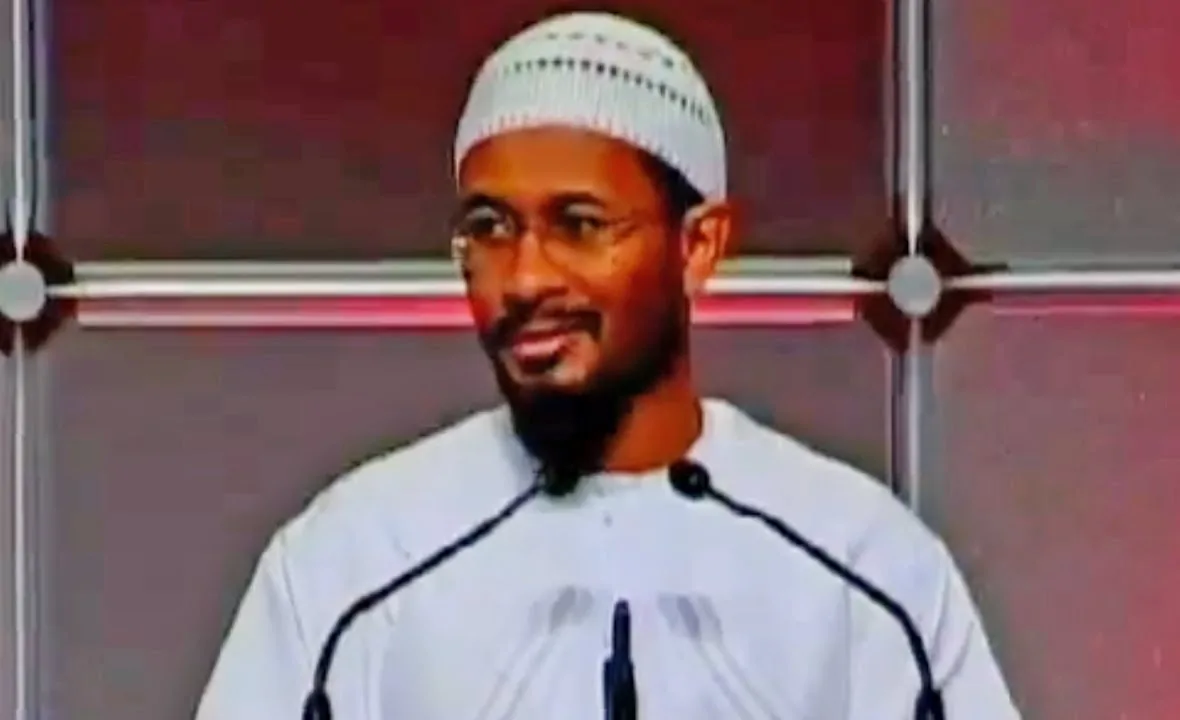
How we communicate our faith to others — whether to family, friends, or strangers — can either open hearts or permanently close them. Shaykh Kamal El Mekki, one of the most respected voices in contemporary Islamic outreach and dawah education, addresses one of the most misunderstood tensions in Muslim interpersonal communication: when is firmness appropriate, and when does it become a liability? Drawing on practical wisdom, prophetic guidance, and real-world scenarios, this lecture unpacks why the style of communication we choose carries enormous spiritual and social consequences — and why Islam has always championed balance over extremes.
Why Aggression in Dawah Almost Always Backfires
One of the most common pitfalls among newly practicing Muslims is turning religious enthusiasm into a form of pressure — particularly toward family. When someone discovers the beauty of Islam with fresh eyes, the urgency to share it can overwhelm their judgment. Breakfast becomes a theological debate, dinner turns into an argument, and soon the family has emotionally locked the door on any religious conversation. Shaykh Kamal is direct: aggression doesn’t just fail to convince — it burns bridges that may take years, or outside intervention, to rebuild. The same principle applies to fear as a motivator. Whether training a cat to stay off the kitchen counter or raising children in worship, behavior driven purely by fear evaporates the moment the enforcer leaves the room. Allah Himself, in the Quran, balances mention of the Hellfire with equal mention of Paradise — fear and hope always working in tandem, never one alone. This is the prophetic model: exceptions exist, as when the Prophet ﷺ shook Umar ibn al-Khattab (رضي الله عنه) in a decisive moment of dawah, but these are precisely that — exceptions. The general rule is unmistakably gentle.
- Communication style must adapt to the person, relationship, environment, and context — there is no single universal approach.
- Young Muslims who become aggressive with non-practicing parents often permanently damage their credibility as a source of religious guidance within the home.
- Fear-based motivation only lasts as long as the fear is present — it produces compliance, not genuine change of heart.
- Even the classical hadith about changing evil “with the hand, then the tongue, then the heart” does not prescribe a fixed order — scholars clarify that the instrument of change depends entirely on who and what needs to be changed.
- Attacking something a person loves — their music, their habits, their lifestyle — triggers defensiveness, not reflection; the person defends the thing they love by attacking Islam itself.
Dawah comes from the root word meaning “to invite.” An invitation is always gentle — nobody twists your arm and says, “You want to come to dinner?” So if someone is inviting you to Islam, it cannot be a fight. — Shaykh Kamal El Mekki
The Power of Rapport: Building Relationships Before Building Arguments
Shaykh Kamal introduces the concept of rapport — establishing a genuine human connection before introducing religious conversation — through a vivid campus story. At his university, a group of Muslim students would pass their less-practicing peers daily with nothing but frowns and disapproving looks. When the MSA considered how to invite these students to salah, one brother’s suggestion was to walk up and sternly announce prayer time. Shaykh Kamal’s counter was disarmingly simple: what if instead, someone walked over with a bowl of candy, gave salam, asked what game they were playing, and came back again the next week just to say hello? The dynamic shifts entirely. When a person who has shown you warmth and genuine interest gently mentions, “I noticed you never come to pray — it only takes five minutes, come back to your game after,” that message lands differently than a command barked by a stranger. This is the middle path Islam calls us to — neither the aggression that alienates nor the passivity that abandons. A Muslim carries the dignity (izzah) of faith and does not humiliate themselves before others, but they also do not weaponise that dignity against the very people they hope to reach. Balance, Shaykh Kamal reminds us, is how Allah designed this world to function.
- Rapport means establishing a basic human relationship — even small talk about weather or parking — before introducing religious topics.
- Dirty looks and silent disapproval communicate nothing positive about Islam; they make the religion appear cold and exclusionary.
- A small act of kindness — passing out candy, offering a genuine greeting — can shift someone’s entire perception of practicing Muslims.
- Islam does not demand black-and-white judgements of people; you can love someone for their generosity while disliking a harmful trait — the middle path applies to our emotions and assessments too.
- Passivity is not the same as modesty (haya’) — there is a difference between humbling yourself before Allah and allowing yourself to be humiliated or rendered voiceless.
The middle is always what will work best — you’re kind, you’re gentle, somewhere between being aggressive and being too passive. There will be exceptional cases, and in those cases you use the appropriate approach — but for the most part, always the middle. — Shaykh Kamal El Mekki
Ultimately, every technique in interpersonal communication — every calculated piece of advice about rapport, tone, and timing — must be anchored in sincerity of purpose. Shaykh Kamal’s closing reminder carries the weight of the entire lecture: we speak to people because we genuinely want them to be saved from harm in this life and the next. That intention, if it is real, naturally softens the voice, extends patience when advice is rejected, and keeps us coming back with kindness even when the first attempt fails. We do our best, we follow the prophetic method, and we leave the results with Allah (سبحانه وتعالى). The reward for sincere effort is written, regardless of outcome — and that is both a comfort and a summons to keep going.