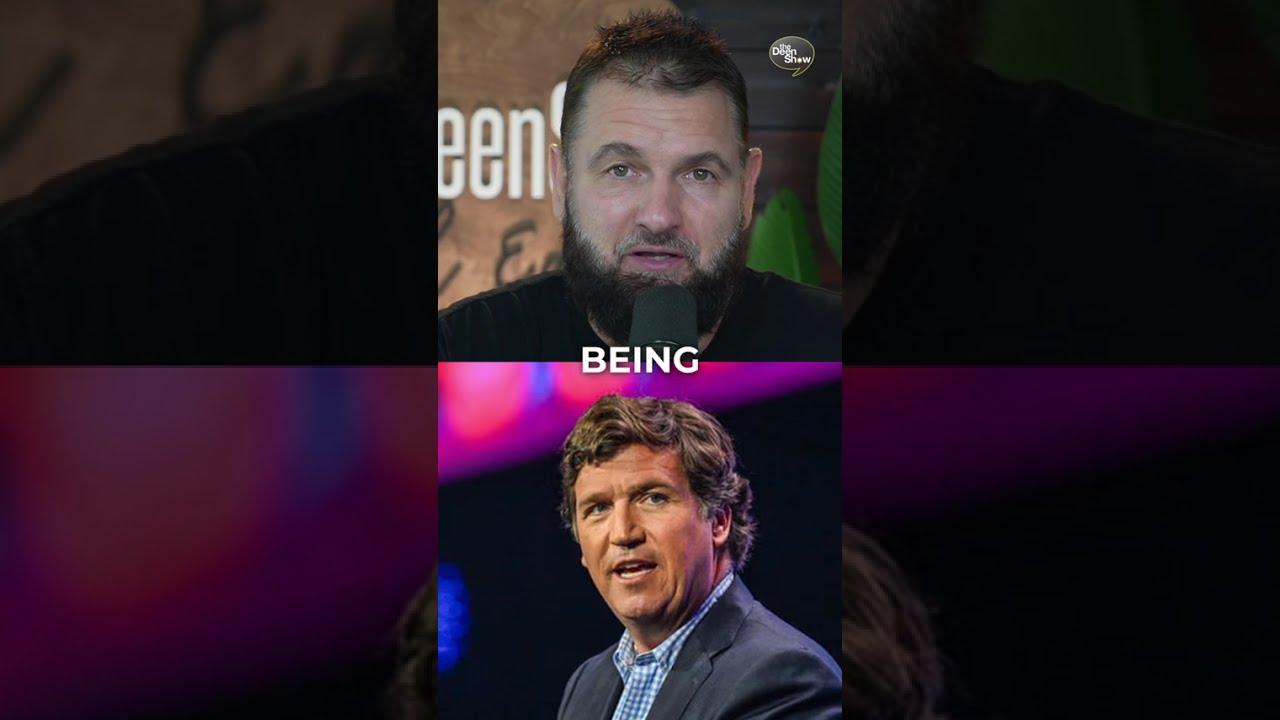

Every human being, at some point in their life, confronts the question that no amount of wealth, fame, or entertainment can silence: Why am I here? In a culture that has reduced existence to sports scores, social media feeds, and weekend plans, the discussion of God and purpose has become almost taboo. Yet, as Dr. Lawrence Brown — an ophthalmologist and convert to Islam — observes on The Deen Show, even Hollywood’s wealthiest and most celebrated inevitably arrive at the same uneasy moment: they have it all, and still feel hollow. This restlessness is not weakness; it is the sound of the soul searching for its true orientation — a yearning built into human nature itself, what Islam calls the fitra, the innate disposition toward the One who created us.
Why Human Reason and Science Cannot Settle the Question
The Enlightenment promised that reason alone would unlock every mystery, including the mystery of existence — but its greatest thinkers returned empty-handed. Albert Camus called life “absurd”; Jean-Paul Sartre spoke of “anguish, abandonment and despair.” When philosophers Will Durant and Dr. Hugh Moorhead separately surveyed the finest minds of the twentieth century asking “What is the meaning of life?”, some offered guesses, some confessed they had simply invented a purpose, and several asked to be written back if anyone ever found the answer. Science fares no better at the deepest level. The Big Bang theory may describe how the universe expanded into its present form, but it cannot explain where the original matter and energy came from — who, as Dr. Brown puts it, “set off the firecracker.” Darwin himself began to question evolutionary theory when he studied the eye: that single small organ is so intricately interdependent — cornea, lens, iris, retina, optic nerve, and brain all working in perfect coordination — that attributing it to random chance becomes intellectually untenable. The universe’s finely calibrated constants — Earth’s precise distance from the Sun, the exact gravitational balance sustaining all life — point to the same conclusion that rocket scientist Dr. Wernher von Braun reached: “These laws must have been set by somebody.” Every object human beings manufacture has a purpose and comes with rules; it is entirely reasonable to expect that the Creator of humanity did the same.
“In the creation of the heavens and the earth and the alternation of the night and the day, there are surely signs for all who are endowed with insight, who remember God when they stand, and when they sit, and when they lie down to sleep, and reflect on the creation of the heavens and the earth: ‘O our Lord, You have not created this without meaning and purpose. Limitless art You in Your glory…'” — Quran 3:190–191
- Post-Enlightenment philosophy produced despair, not answers — existentialists like Camus and Sartre concluded life has no inherent meaning.
- The Big Bang explains the shape of the universe but not the origin of the matter and energy that preceded it — a Creator is not ruled out by science; it is logically demanded.
- The complexity of biological structures like the human eye — studied across multiple sub-specialties of ophthalmology — points to intelligent design, not random assembly.
- Islam has no conflict with natural selection or cosmological theories; the distinction is that Muslims understand these processes to be under the design of the Creator, not in place of one.
- Every object we manufacture has a function and comes with an instruction manual written by its maker — divine scripture serves exactly this role for humanity.
Islam’s Answer: Worship Is the Purpose, and Peace Is the Proof
Islam cuts through centuries of speculation with a direct, unambiguous answer that no other theological or philosophical tradition has articulated with equal clarity. The word for worship in Islam — ibadah — is not confined to ritual; it encompasses obedient submission to the will of God across every sphere of life. In practice, this worship is structured through the Five Pillars: the shahada, the testimony that there is no god but Allah and that Muhammad ﷺ is His final messenger; the five daily prayers that anchor every day in conscious remembrance of God; the fast of Ramadan, which trains the soul in discipline and gratitude; zakat — not a tithe on income, but a calculated share of surplus wealth given to those in need; and, for those with the means, the pilgrimage to Makkah once in a lifetime. These are not burdens imposed on an unwilling creation; they are the owner’s manual in practice, aligning the human being with the purpose for which they were made. Furthermore, every soul born carries the fitra — the primordial covenant made before birth in which every descendant of Adam bore witness that God is their Lord. Environmental conditioning may bury it, but it cannot erase it. Islam is the call back to that original recognition, and when a person responds, what they discover — as Dr. Brown testifies from his own conversion — is not restriction but peace: a peace no bank balance can purchase and no material achievement can replicate.
“I did not create the jinn and mankind except for My worship.” — Quran 51:56
- The Islamic answer to the purpose of life is singular and clear: human beings and jinn were created solely for the worship of God.
- Worship in Islam is a complete orientation of life toward the Creator — encompassing intention, ethics, ritual, and social responsibility.
- The Five Pillars provide a practical, daily and annual framework through which that purpose is lived, not merely believed.
- The concept of fitra confirms that monotheism is not an acquired opinion but the original state of the human soul, present before birth.
- The false gods of modernity — ideology, wealth, fame, political abstractions — offer meaning that is temporary and hollow, producing the very emptiness that drives the search.
- Peace (salam) is the natural consequence of aligning one’s life with the purpose for which one was created — something consistently reported by those who have made that choice.
Dr. Brown reflects that before Islam, everything he did felt like “marking time” — not without pleasure, but without direction or weight. The moment he submitted to his Creator, peace entered his life in a way nothing prior had prepared him for. That peace — the salam from which Islam takes its name — is not the absence of difficulty but the presence of meaning. It is the answer to the philosopher’s despair and the celebrity’s emptiness alike, and it is available to every human being who asks the oldest of all questions with honesty and follows the answer wherever it leads. The Quran does not ask us to abandon our intellect; it invites us to use it — to look at the heavens, study their breathtaking order, and hear what they are saying. What they say, across every discipline of genuine inquiry, is that nothing of this scale and precision makes itself. If you were made, you were made for a reason; and the most direct way to discover that reason is not to speculate, but to turn to the One who made you and ask.