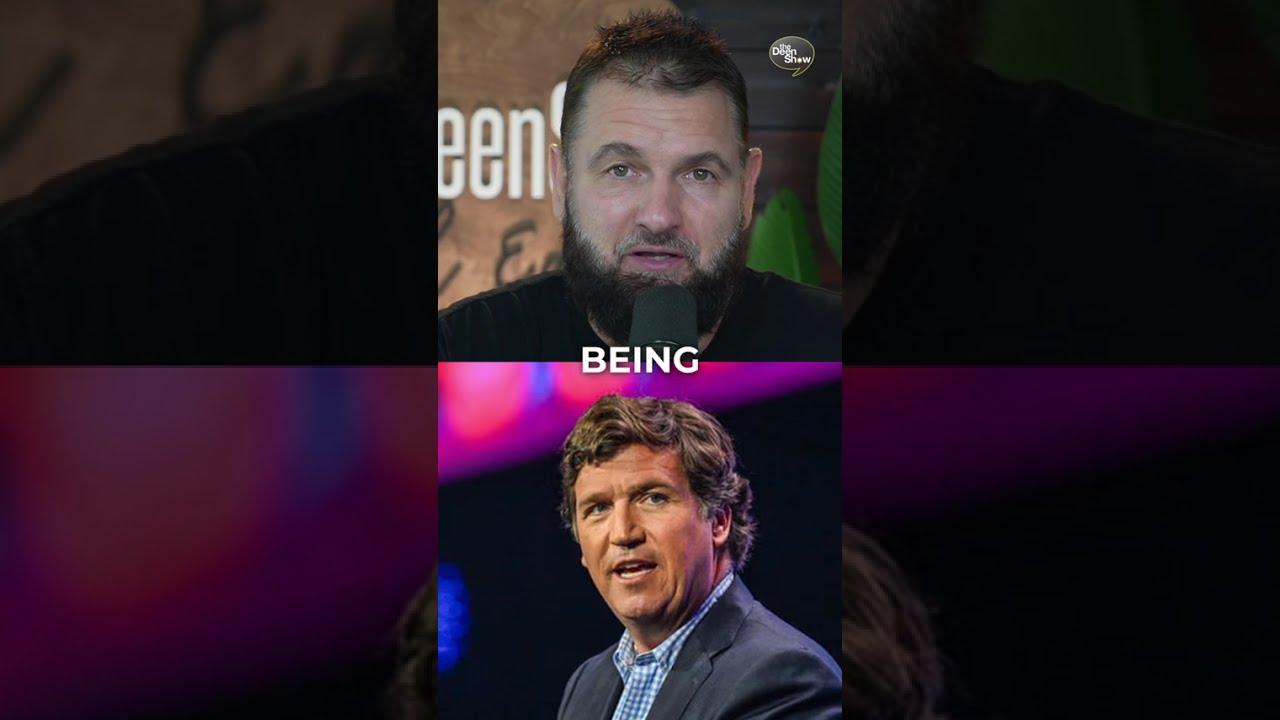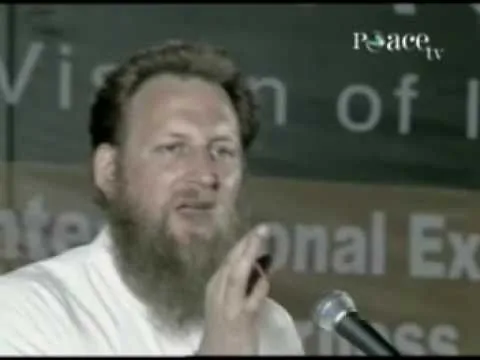
Few topics ignite more debate in the contemporary Muslim world than the relationship between Islam and democracy — and few speakers are better placed to unpack it than Abdur Rahim Green, a British-born convert whose journey from Roman Catholic boarding schools to the Speaker’s Corner of Hyde Park reflects a lifetime of rigorous spiritual inquiry. Born in Dar-es-Salaam, Tanzania, Green embraced Islam in 1988 after years of studying multiple faiths — including three years of Buddhist practice — drawn ultimately by the clarity and preserved integrity of the Noble Quran. Now serving as Visits and English Da’wah Co-ordinator at the London Central Mosque and Islamic Cultural Centre, Green stands alongside prominent voices like Dr. Zakir Naik and Khalid Yasin in presenting Islam with intellectual honesty and unwavering conviction. In this lecture, he takes on a subject that unsettles many Muslims today: does democracy have a place within Islamic faith and governance — and if not, why not?
The Unchanging Foundation: Islam as Complete Submission to Allah’s Authority
Green begins not with politics, but with principle — grounding his entire argument in what Islam fundamentally means. The word itself derives from the Arabic for submission: to surrender one’s will entirely to the commands of Allah subhanahu wa ta’ala. This is not a marginal teaching or an ancient relic; it is the living core of the deen. The Quran is preserved from all corruption, the Sunnah is authenticated, and the companions of the Prophet ﷺ — who witnessed revelation descend in real time, who saw the camel beneath him sag under the weight of incoming revelation — understood this religion with a depth no subsequent generation can surpass. When differing arises, the Islamic response is not to poll the masses or defer to shifting cultural norms, but to refer all matters back to Allah and His Messenger. Green draws on the Prophet’s farewell counsel — urging his companions to cling to the Sunnah and the example of the rightly guided caliphs — as a timeless blueprint for an ummah facing enormous pressure to conform to the values of the age. He also warns against allowing external voices to fracture Muslim unity by manufacturing distinctions between “fundamentalists” and “moderates” — labels designed to sow division rather than illuminate truth. Every sincere Muslim, he argues, is in the literal sense a fundamentalist: one who holds to the foundational creed of tawheed, the inviolability of the Quran, and the prophetic way of life.
- Islam means submission. Allah’s authority precedes every human institution, political system, or elected majority.
- The Quran is preserved. Muslims possess a book protected from all corruption — an unparalleled gift that removes any excuse for blind deference to human legislators.
- The companions set the standard. Those who lived with and were taught directly by the Prophet ﷺ offer the most authoritative understanding of the deen.
- Refer all disputes to revelation. When differing emerges, the answer lies in Quran and authentic Sunnah — not personal opinion, desire, or human intellect.
- Reject divisive labels. The media-manufactured split between “fundamentalist” and “moderate” Muslims serves to weaken the ummah; every believer shares the same essential creed.
- Even the great imams deferred to the text. Abu Hanifah, Imam Shafi’i, Imam Malik, and Imam Ahmad all instructed their students: if a hadith contradicts what I have said, leave my opinion and follow the Messenger ﷺ.
“Cling to my Sunnah and the Sunnah of the rightly guided successors after me — bite onto it with your molar teeth. And beware of newly invented matters in the religion, for every innovation is a deviation, and every deviation leads to the Fire.” — Prophet Muhammad ﷺ, as cited by Abdur Rahim Green
Divine Sovereignty vs. Human Legislation: Where Democracy and Islam Part Ways
Turning to democracy itself, Green traces its origins to ancient Athens — noting, with striking historical weight, that even the Greek philosophers who coined the term considered it a weak and corrupt form of governance. Plato and others observed that democracy forces leaders to pander to the desires of the masses rather than pursue what is morally decisive or spiritually sound. This structural flaw — the subordination of truth to popular preference — has never been resolved. The modern version of democracy carries the same essential problem: it places legislative authority in human hands, meaning that what is halal and haram, lawful and unlawful, is ultimately determined not by Allah but by majority vote. Green invokes a profound Quranic ayah warning that those who accepted their priests and rabbis as legislators alongside Allah — making halal what Allah made haram, and haram what Allah made halal — effectively worshipped them as gods. The Prophet ﷺ himself confirmed this to a companion who had been a Christian: the act of accepting another’s legislation over Allah’s command is itself a form of shirk. For a Muslim, to place any parliament, court, or elected majority on equal footing with Allah’s Shari’ah is to commit the one sin Allah has declared He will not forgive — ascribing partners to Him in His absolute right to legislate.
“Whoever accepts any human being to be a legislator alongside Allah — whoever believes that any imam, mufti, scholar, or human being has the right to make haram what Allah made halal, or halal what Allah made haram — has done exactly what the Jews and Christians did. They have taken them as a god and worshipped them as an idol alongside Allah.” — Abdur Rahim Green
The question this lecture ultimately asks every believer to sit with is not merely political but profoundly spiritual: who, in the deepest chamber of your heart, holds the final authority over your life? Green is careful not to dismiss the practical realities Muslims face living as minorities within democratic societies, nor does he call for recklessness. But he insists that the Muslim’s internal compass must remain calibrated to divine guidance — the Quran, the authenticated Sunnah, and the scholarly tradition rooted in both — rather than to the shifting winds of human opinion and popular desire. We have been entrusted with a book that Allah Himself has preserved from all corruption; that is not a small thing. It is a mercy without parallel in the history of human civilisation, a living proof that the path of faith, purpose, and spiritual clarity remains open to every soul willing to seek it. To surrender that treasure in exchange for a system that places human desire at the centre of governance is not progress — it is a retreat from the very purpose of our creation. As Muslims navigating the pressures of modernity, the call of this lecture is clear: seek knowledge, hold fast to revelation, guard the unity of the ummah, and let the command of Allah remain the supreme authority in your life, in your home, and in your heart.