
Among the most striking signs mentioned in the Quran is the fate of Pharaoh — not merely his drowning, but what happened to his body afterward. Over 1,400 years ago, Allah revealed in Surah Yunus that He would preserve Pharaoh’s body as a sign for future generations. For centuries, this verse stood as a statement of faith. Then, in the 1970s, a French surgeon examining a mummy in Cairo made a discovery that stopped the world of science in its tracks — and brought him face to face with the Quran.
What the Quran Said About Pharaoh’s Body
When Pharaoh realised death was upon him in the waves of the sea, he declared his belief — but the time for repentance had passed. Allah drowned him and then made a precise, documented promise. Ibn Katheer (rahimahullah) noted that some of the Children of Israel had doubted the death of Pharaoh, so Allah commanded that his body be brought forth from the sea — whole, recognisable, preserved — so there could be no doubt. That was the immediate purpose. But the verse carries a second, enduring dimension: the body would be a sign for those who came after. Key points from Islamic scholarship on this miracle include:
- Pharaoh drowned while pursuing the Children of Israel through the divided sea, in a moment of arrogance that cost him everything
- Allah preserved his body — not decomposed, still in his armour — and cast it onto a raised portion of land for all to witness
- The Quranic statement was not merely historical; it was a forward-looking promise that the body would remain a sign for those yet to come
- Scholars like Shaykh Saalih al-Fawzaan clarify that the preservation serves as historical confirmation aligned with the Quran — and that is itself the miracle
- The verse in Surah Ar-Rum about the Roman-Persian war and the discovery of Pharaoh’s mummy both illustrate the Quran’s unique character: it speaks to the past and the future simultaneously
“So this day We shall deliver your (dead) body that you may be a sign to those who come after you! And verily, many among mankind are heedless of Our signs.” — Surah Yunus (10:92)
The Discovery That Shook a Scientist into Studying the Quran
Dr. Maurice Bucaille, one of France’s leading surgeons and scientists, was invited to Cairo in the early 1970s to examine a royal mummy as part of a forensic study. His findings were remarkable: the evidence clearly pointed to death by drowning — the lungs had filled with water. Given the time period and the historical context, he concluded this was almost certainly Pharaoh of the time of Moses (Musa, alayhis salam). When he excitedly shared this discovery with Egyptian Muslims, they responded with calm certainty: “Yes, we already know — it is in the Quran.” Bucaille was stunned. He then dedicated years to learning Arabic, reading the Quran word by word, and investigating its scientific claims across geology, geography, astronomy, and embryology. His conclusion, published in his groundbreaking book The Bible, the Quran and Science, was unambiguous: every single reference the Quran makes to the natural world is demonstrably correct. That journey — from a surgical table in Cairo to a lifetime of Quranic study — began with one preserved body and one verse from Surah Yunus.
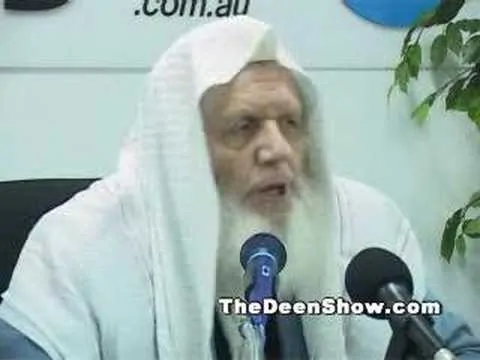
“It was his book that really stood the science people up on their ear — and it all began with a mummy whose cause of death matched exactly what Allah had promised in the Quran over a thousand years before the discovery.” — Yusuf Estes, paraphrasing the significance of Dr. Bucaille’s findings
A Lesson in Faith, Signs, and Spiritual Blindness
The story of Pharaoh’s preserved body is ultimately not about archaeology — it is about the consequences of arrogance and the mercy of divine proof. Allah does not leave humanity without signs; He places them across history, in nature, and in the very body of a tyrant who refused to believe until it was too late. The Quran predicted something about an event 3,000 years in the past and connected it to a discovery centuries into its own future — something no human author could have engineered. For Muslims, this is not a novelty; it is confirmation of what we already hold by faith. For seekers, it is an invitation: the Quran is not a book that asks you to ignore your intellect, but one that challenges it, and then surpasses it. As Dr. Bucaille found when he approached the Quran with the rigour of science, the text does not flinch under scrutiny. The sign of Pharaoh stands today in museum exhibitions around the world — a preserved body, a drowned tyrant, and a fourteen-century-old promise that proves itself anew with every generation that looks upon it.