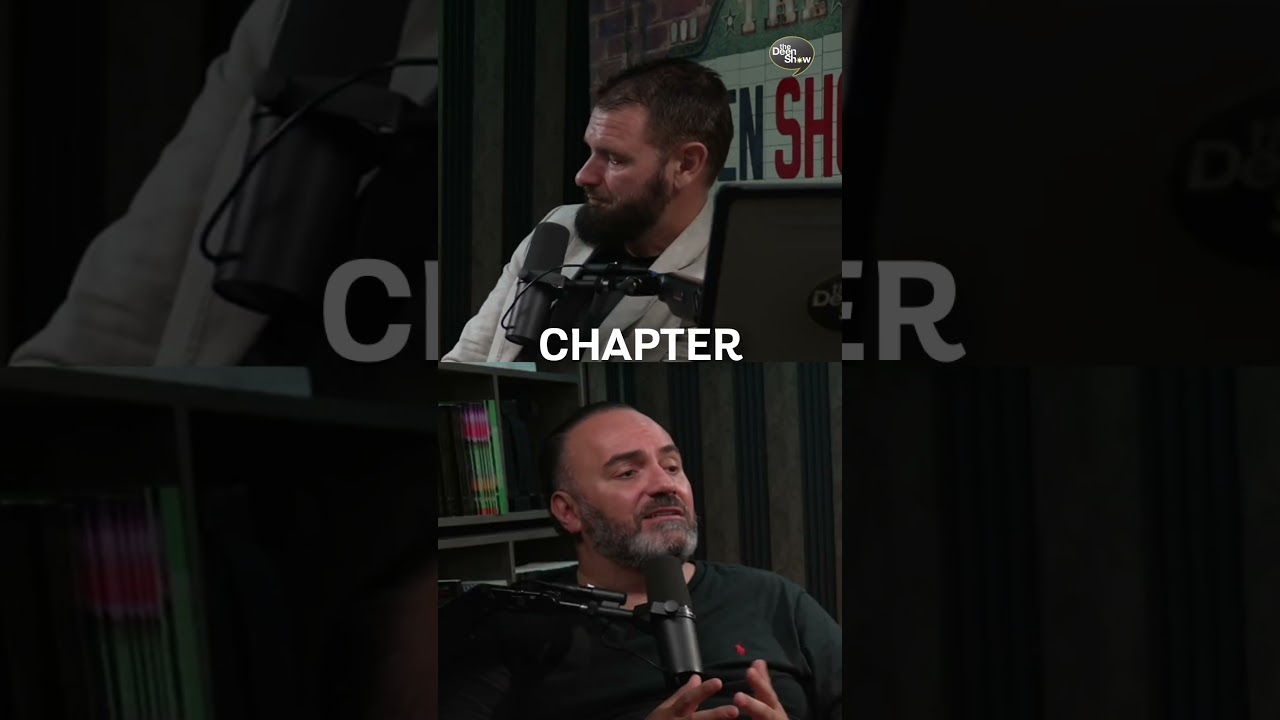
When most people in the Western world hear the word “Muslim,” the word “terrorist” is rarely far behind — an association so deeply embedded in public consciousness that it has become almost reflexive. This is not an accident. The host of this episode admits that before embracing Islam himself, he carried exactly the caricature that has been promoted for centuries: an Arab riding out of the desert with a Quran in one hand and a sword in the other, demanding conversion or death. That image was not born from honest study of Islamic teaching; it was manufactured during the Crusades and has been recycled ever since to serve particular political ends. This episode of Contemporary Issues cuts through that caricature with historical evidence, Quranic principle, and a frank reckoning with where true responsibility for global violence actually lies. Islam is not a religion of terror — it is a tradition whose covenant with humanity is justice, mercy, and the inviolable sanctity of every human soul.
The Historical Record: A Faith That Spread Through Character, Not Conquest
The most powerful single refutation of the “Islam spread by the sword” narrative is the lived reality of the world’s largest Muslim-majority nation. Indonesia — home to over 200 million Muslims — never once saw a Muslim soldier set foot on its soil. Islam arrived through Arab traders from Oman and Hadramawt who had worked those sea routes for generations. When those traders embraced Islam, the people they traded with noticed a transformation: they were honest about product defects, transparent in pricing, willing to forgo profit rather than deceive. That visible change — the fruit of Islamic guidance on character and commerce — drew people to ask about their faith, and they accepted it freely. Across West Africa (Nigeria, Ghana, Senegal, Chad, Niger), the identical pattern repeated: a religion carried not by armies but by the integrity of men in the marketplace. Muslims ruled Spain for over 700 years and the Indian subcontinent for over a thousand, yet the vast majority of the populations of both regions never converted to Islam — a fact that alone dismantles the forced-conversion thesis. Jewish scholars and philosophers driven out of Europe during medieval persecutions found sanctuary in Muslim Spain, flourished under its rule, learned Arabic, and produced some of their greatest intellectual work within its borders. Large Christian communities have coexisted continuously inside Muslim-majority societies for thirteen consecutive centuries. And today, 300 to 500 people voluntarily embrace Islam every single day in the United States — a country that stands as a global symbol of religious freedom — with no sword in sight.
“There is no compulsion in religion.” — Qur’an, Al-Baqarah 2:256
- Indonesia, the world’s largest Muslim nation, was never reached by Muslim armies — Islam came through traders whose honest dealings inspired voluntary conversion
- West African nations including Nigeria, Ghana, and Senegal received Islam entirely through trade networks, not military campaigns
- Muslim rulers of Spain and India governed majority non-Muslim populations for centuries without forcing conversion
- Jewish communities fleeing European persecution found refuge, religious freedom, and intellectual flourishing under Muslim governance
- Islam is the fastest-growing religion on earth today, with voluntary conversions rising daily across the United States and Europe
- The Crusades — often cited as a “response” to Muslim aggression — were in truth motivated largely by control of lucrative trade routes through Palestine, and their armies massacred Muslims, Eastern Christians, and Jews alike
Defining Terrorism Honestly — and Confronting the Double Standard
The US government defines terrorism as “the threat or use of violence to advance a political cause by individuals or groups, intended to shock, stun, or intimidate a target group wider than the immediate victims.” Applied consistently, this definition encompasses the American War of Independence, the French Revolution, and dozens of other struggles the West celebrates as heroic. What genuinely distinguishes terrorism — as this discussion makes clear — is the indiscriminate targeting of innocent civilians: violence designed not to defeat a military opponent but to spread fear among non-combatants. On that precise and honest definition, Islam’s condemnation is categorical and unambiguous. Islamic law sets strict rules for conduct in conflict: a Muslim soldier may only direct harm toward those actively engaged in fighting, bearing arms, wearing military equipment. Civilians, women, children, clergy, the elderly — these are protected classes under Islamic military ethics. The media, however, applies a glaring double standard in how it assigns religious identity to violence. The IRA planted bombs in cafés and shopping centres for decades in a conflict explicitly rooted in Catholic–Protestant tensions — yet were never once called “Catholic terrorists.” When Timothy McVeigh killed 168 people in the 1995 Oklahoma City bombing, connected to Christian fundamentalist networks, no broadcaster labelled him a “Christian terrorist.” Yet the moment an Arabic-sounding name is linked to any act of violence — even when the perpetrator might be a nominal Muslim, an atheist, or an Arab Christian — the compound label “Muslim terrorist” is deployed instantly and universally. Some Muslim individuals and fringe groups have unquestionably committed acts of indiscriminate violence — the Luxor massacre in Egypt, elements of the Abu Sayyaf group in the southern Philippines — and intellectual honesty demands acknowledging this. But the mainstream Islamic scholarly community has condemned these actors without ambiguity as criminals operating in direct violation of Islamic law, not as representatives of 1.8 billion believers.
- Islam absolutely forbids the killing of non-combatants; Islamic rules of engagement explicitly protect civilians, clergy, women, children, and the elderly
- Western media consistently attaches religious identity to Muslim perpetrators of violence while withholding equivalent labels from Christian, Jewish, or secular actors
- The founding of the Israeli state was advanced by documented acts of terror against civilian populations — by groups like the Stern Gang — yet this is rarely described as “Jewish terrorism”
- Fringe groups operating under Muslim names (al-Jama’a al-Islamiyya in Egypt, Abu Sayyaf in the Philippines) have been formally condemned by mainstream Islamic scholarship as violating clear Islamic prohibitions
- True terrorism — the indiscriminate targeting of civilians to generate mass fear — is prohibited explicitly in both the Qur’an and the authenticated Sunnah of the Prophet Muhammad ﷺ
- The question of martyrdom operations in asymmetric warfare (where heavily outgunned defenders seek to strike military targets) is a nuanced scholarly debate — categorically distinct from the random targeting of civilians
“Because of that We ordained for the Children of Israel that if anyone killed a person — not in retaliation of murder, or to spread mischief in the land — it would be as if he killed all mankind, and if anyone saved a life, it would be as if he saved the life of all mankind.” — Qur’an, Al-Ma’idah 5:32
Islam’s opposition to terrorism is not a modern public-relations statement issued under political pressure — it is a fourteen-century covenant written into the Qur’an, lived out by the Prophet Muhammad ﷺ in Madinah (where he guaranteed the security, property, freedom of worship, and right to self-governance of Jewish tribes alongside the Muslim community), and upheld by every rightly guided ruler who followed him. The Prophet ﷺ warned explicitly that anyone who wrongs a non-Muslim living under Muslim protection will face his personal intercession against that person on the Day of Resurrection — words that speak to a standard of justice more demanding than most modern legal frameworks. The honest path forward is not to judge a civilisation’s entire spiritual tradition by the worst acts of a handful of individuals who invoke its name, but to hold every ideology — religious, political, or secular — to the same rigorous and consistent standard. When that standard is applied fairly across history, the violence carried out in the name of liberation, colonialism, empire, and geopolitical interest by non-Muslim states towers over anything attributed to Muslim actors. What Islam asks is simply this: judge it by its scripture, its scholarship, and the centuries of pluralism that define its genuine history — and extend to its followers the same presumption of good faith instinctively granted to every other tradition. That is where honest dialogue begins, and where the path toward a more just and peaceful world must be built.