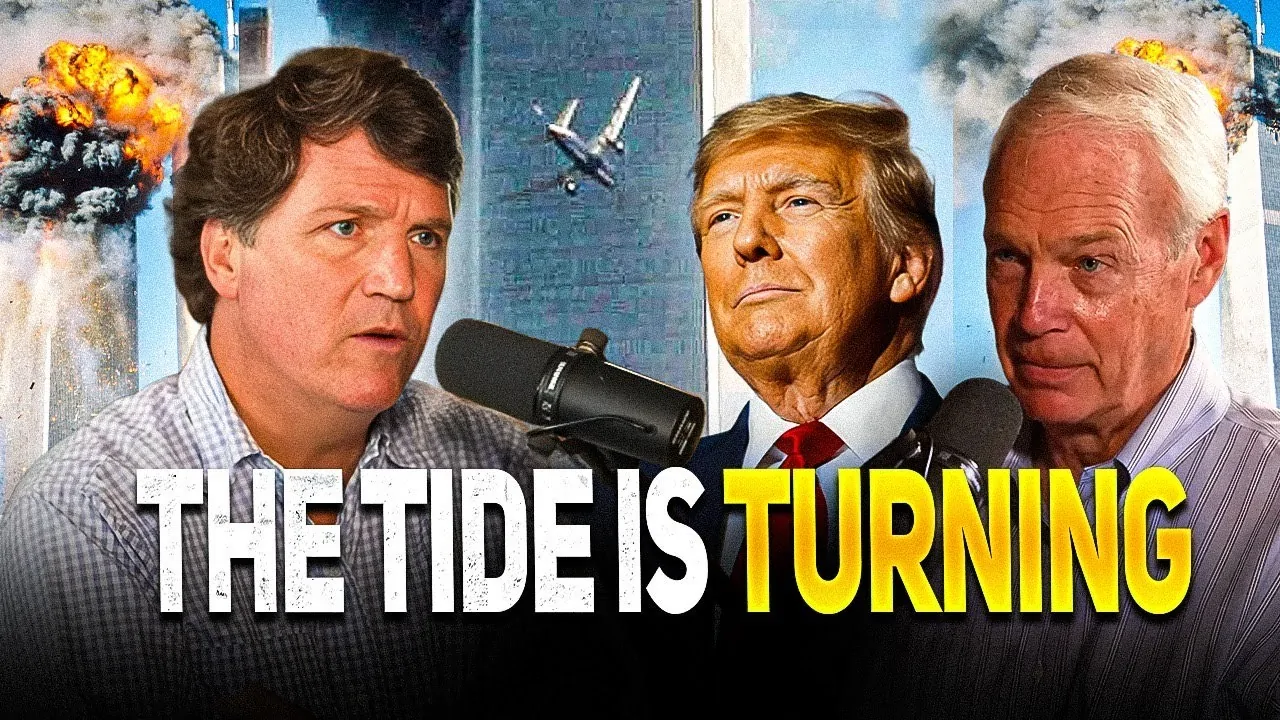
For over two decades, the events of September 11, 2001 cast a long shadow over Muslim Americans, reshaping foreign policy, fueling wars, and distorting how millions of people viewed Islam and its followers. But today, something remarkable is happening. The very questions that once got scholars fired and labeled as extremists are now being asked by the biggest names in media and politics. Tucker Carlson, the most prominent voice Fox News ever produced, along with sitting U.S. Senators and members of Congress, are openly raising the same questions about the official 9/11 narrative that were once dismissed as fringe. The tide of truth is shifting, and justice may finally be within reach.
When Asking Questions Was Called Extremism
Dr. Kevin Barrett, a PhD scholar and former University of Wisconsin professor, was among the earliest public voices to question the official story. He was not let go for misconduct but for encouraging his students to think critically, a principle America was once proud of. He faced hostile interviews on national television, was called irresponsible, and labeled a propagandist. Yet even then, the data was on his side: a New York Times poll showed that 84% of Americans did not accept the 9/11 Commission Report. Today, those same uncomfortable questions are no longer confined to the margins. They are front and center in mainstream discourse, proving that silencing honest inquiry only delays the truth, it never destroys it.
“Building 7 was never hit by a plane. Why did it fall down? There was never a steel building that ever collapsed like that.” These are the questions that Tucker Carlson and others are now asking openly, questions that Muslim Americans and independent scholars have raised for years while facing ridicule and persecution.
The Real Cost to Muslim Americans and the Call for Justice
The events of that day were weaponized to launch wars across the Muslim world and to justify widespread suspicion of Muslim Americans at home. An entire generation grew up under the weight of prejudice rooted in a narrative that is now being seriously re-examined. As more voices in positions of power demand transparency, it becomes clear that the pursuit of justice is not a fringe cause but a universal obligation. For those rooted in faith, this moment is a reminder that standing firm on principle, even when the world pushes back, is never in vain. Key points emerging from this conversation include:
- Tucker Carlson and U.S. Senators are now publicly questioning the same 9/11 narrative that got scholars blacklisted years ago
- Building 7, which was never struck by a plane, remains one of the most significant unanswered questions surrounding that day
- Exposed inconsistencies have led 60% or more of polled Americans to support reopening these questions
- The wars launched in the aftermath devastated Muslim-majority nations and fueled Islamophobia domestically
- Islam teaches love and reverence for Jesus (peace be upon him), a fact most critics have never taken the time to learn
“I think the West could really use a hard look at the positive side of Islam. It offers a very straight, clean version of the essential truth of monotheism.” — Dr. Kevin Barrett, PhD scholar and Muslim convert, reminding audiences that Islam is a faith of clarity, devotion, and justice.
Islam, Truth, and the Road Ahead
What makes this moment so powerful is not just the political shift but the spiritual one. As Dr. Barrett noted, Islam and Christianity share a deep bond through their love and reverence for Jesus, the Messiah. In a world where nuclear threats and runaway technology make the future uncertain, the values of faith, honesty, and moral courage matter more than ever. For Muslim Americans, this is a time of vindication and renewed purpose. The conversation is no longer about whether questions should be asked, but about why they were suppressed for so long. As the truth continues to surface, it reaffirms what believers have always known: justice is not just a political goal, it is a divine promise.