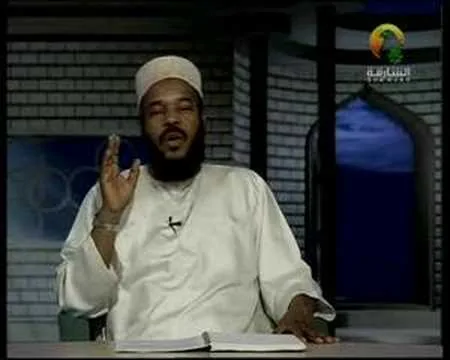
Islamic jurisprudence — Fiqh — is far more than a dry legal code. It is the living expression of how Muslims translate divine guidance into the details of daily life and worship, from the prayers surrounding the Friday congregation to the precise methodology by which the greatest scholars of this Ummah resolved apparent contradictions in prophetic teaching. In this fifth and deeply instructive segment of our Studies in Islam series on Fiqh, we examine some of the most practically important questions a Muslim encounters: what prayers are authentically established around the Jumu’ah prayer, what well-intentioned innovations must be carefully set aside, and — at a more advanced methodological level — how the four major schools of Islamic law arrived at genuinely different rulings from the very same sacred sources. Understanding these matters is not merely academic; it is a pathway to worshipping Allah (SWT) with knowledge, sincerity, and unshakeable spiritual purpose.
The Friday Prayer: What the Prophetic Sunnah Establishes and What It Does Not
“Those who pray this Sunnah [before Jumu’ah] are not following the Messenger or imitating any of the imams; on the contrary, they are imitating the later scholars who are like them in that they are also imitators rather than mujtahideen. I am amazed to see an imitator imitating another imitator.” — Imam al-Albani, al-Qawl al-Mubeen, commenting on the absence of any established pre-Jumu’ah sunnah prayer in the practice of the Prophet ﷺ and the early imams
Among the most frequently misunderstood aspects of Islamic worship are the practices surrounding the Friday congregational prayer. The Messenger of Allah ﷺ would come to the masjid on Fridays, ascend the minbar, and after the adhan was called, begin his khutbah directly — at the time of the Prophet ﷺ, there was nothing between the adhan and the khutbah but the prayer itself. On this basis, the majority of the great imams — Malik, al-Shafi’i, and the well-known position of Ahmad — agreed that no specifically established sunnah prayer with a set number of rak’ahs before Jumu’ah was reported from the Prophet’s ﷺ words or actions; this practice is not mentioned in Imam al-Shafi’i’s Kitab al-Umm, nor in Imam Ahmad’s al-Masa’il. What is authentically established is the prayer after Jumu’ah: the Prophet ﷺ himself would return home and pray two rak’ahs of sunnah there, while also instructing his companions that those who offer the post-Jumu’ah sunnah in the masjid should pray four rak’ahs — a synthesis recorded by Ibn al-Qayyim in al-Zaad and reinforced by Ibn Taymiyyah: two rak’ahs at home, four in the masjid. Equally important is what the Sunnah does not include: making collective du’a in one voice behind the imam after the prayer is a bid’ah not reported from the Prophet ﷺ or his companions; individual dhikr said aloud is the established practice, as confirmed in Sahih Bukhari from Ibn Abbas. Similarly, wiping the face after du’a carries no authentic narration and has been classified by scholars of hadith as an unsupported innovation. True piety lies in adhering to what was actually taught — not in embellishing worship out of good intentions alone.
- No specific pre-Jumu’ah sunnah with a fixed number of rak’ahs is established from the Prophet ﷺ — not found in the major works of any of the three other founding imams either.
- Post-Jumu’ah sunnah: two rak’ahs if prayed at home; four rak’ahs if prayed in the masjid — both supported by authentic narrations from the Prophet ﷺ and his companions.
- Collective du’a in unison after prayer is bid’ah; the Sunnah is individual dhikr and du’a, which may be said aloud as reported in Sahih Bukhari from Ibn Abbas.
- Wiping the face after du’a has no sound basis in the Sunnah and is classified as an innovation in works such as Mu’jam al-Bida’.
Navigating Conflicting Hadiths and the Methodological Roots of Scholarly Difference
This segment then addresses one of the most sophisticated dimensions of Fiqh: how do scholars reconcile two authentic hadiths — both found in Sahih Bukhari and Sahih Muslim — that appear to contradict one another? The instructive example involves two prophetic instructions: one prohibiting voluntary prayers after Fajr (until sunrise) and after Asr (until sunset); another commanding that whoever enters a mosque must pray two units before sitting down — the tahiyyat al-masjid, the mosque greeting prayer. Imam Abu Hanifa treated the mosque greeting as the general ruling, with the Fajr/Asr prohibition as the specific exception, meaning his followers would sit without praying during those restricted times. Imams Malik, Shafi’i, and Ahmad took the opposite view — the prohibition is the general principle, the mosque greeting a specific exception that overrides it — so their followers would still pray two units even after Fajr or Asr. The Prophet’s ﷺ own practice provides the decisive resolution: he permitted a companion who had missed his pre-Fajr sunnah to make it up after the obligatory prayer, and himself made up missed post-Dhuhr sunnah prayers after Asr, explaining to his wife that he had missed them due to visitors at the masjid. The guiding principle that emerges: voluntary prayer after Fajr and Asr is restricted unless there is a specific religious reason behind it — a missed obligation, a make-up prayer, or an established instruction — in which case it is not only permissible but prescribed. The strength of the tahiyyat al-masjid recommendation is illustrated by an authentic narration in which the Prophet ﷺ, while delivering the Friday sermon, stopped mid-khutbah to ask a man who had sat down whether he had prayed his two units first — and upon hearing he had not, commanded him to rise and pray them immediately. Such neglected sunnahs, when understood in their proper jurisprudential context, recover their full spiritual weight. Beyond conflicting texts, differences between the schools were also rooted in foundational methodological principles: Imam Ahmad accepted ijma (scholarly consensus) only for the era of the Sahabah — reasoning that their geographical concentration made genuine consensus verifiable — and refused to extend it to later generations when scholars were dispersed across a vast empire. Imam Malik uniquely accepted the inherited practice of Madinah’s people as legal evidence. Abu Hanifa and Malik both employed istihsan (juristic preference), setting aside a ruling’s strict implication when it would cause harm — a principle Imam Shafi’i rejected as insufficiently grounded in revealed texts, though he later developed his own analogous doctrine. Most distinctively, Imam Shafi’i elevated the individual opinions of the Sahabah to binding legal precedence over all other scholars, while the other imams treated those opinions as authoritative and respected, yet non-obligatory. And underpinning all these differences was qiyas — analogical deduction — perhaps the broadest source of divergence of all, since the principles governing how laws are derived by analogy varied significantly from one imam to the next.
- Resolving conflicting authentic hadiths requires determining which text carries the general ruling (aam) and which carries the specific exception (khaas) — a judgement on which the greatest scholars differed.
- The Prophet’s ﷺ own practice is the ultimate clarifier when scholarly interpretation diverges — his actions establish that post-Fajr/Asr prayer is permitted for specific religious reasons.
- Tahiyyat al-masjid is so strongly recommended that the Prophet ﷺ interrupted his Friday sermon to ensure it was observed — yet it remains widely neglected in mosques today.
- Imam Ahmad’s view on ijma: consensus was achievable among the Sahabah, but once scholars were dispersed from Spain to India, any claim of consensus beyond their era was unverifiable and therefore inadmissible as legal proof.
- Qiyas (analogical deduction) — deriving new rulings by analogy — is the most far-reaching area of scholarly divergence, as the principles governing that analogy varied considerably from school to school and produced the widest range of differing rulings across Islamic jurisprudence.
“Whoever claims consensus [after the time of the Sahabah] is a liar.” — Imam Ahmad ibn Hanbal, whose rigorous standard for ijma reflected his understanding that with scholars dispersed from Spain to India, genuine verifiable agreement among all qualified jurists had become impossible to establish — and that the absence of recorded objection must never be mistaken for actual consent.
What the study of Fiqh at this level ultimately reveals is not disorder within Islam, but a breathtaking tradition of intellectual integrity, principled methodology, and profound devotion to divine guidance. The differences between Abu Hanifa, Malik, Shafi’i, and Ahmad were not arbitrary — they were the honest outcomes of brilliant minds applying carefully developed principles to the same sacred texts, shaped by different circumstances, different epistemological standards, and a shared determination to serve the Ummah faithfully. For every Muslim seeking authentic spirituality and genuine faith, this knowledge offers both a protection and an invitation: a protection against bid’ah born of good intentions unchecked by sound learning, and an invitation to engage seriously with the extraordinary legacy of Islamic scholarship these imams bequeathed to us. Whether the question is how many rak’ahs to pray after Jumu’ah, or the sweeping jurisprudential issue of when scholarly consensus becomes binding, the answer always begins with the question the Prophet ﷺ himself modelled: what is authentically established from the Sunnah? May Allah (SWT) grant us all the sincerity to worship as He prescribed, the humility to follow those who understood His guidance most deeply, and the wisdom to distinguish always between what belongs to the Sunnah and what we have added to it.