
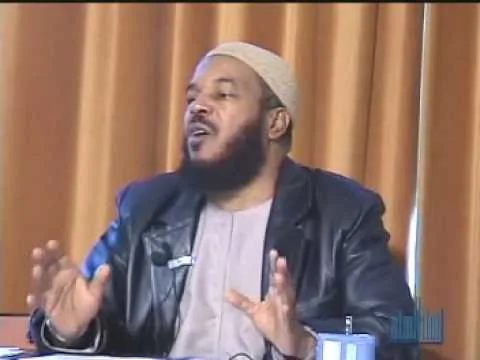
Every Muslim living in the West will, at some point, encounter a friend, colleague, or family member who says: “I just don’t believe in God.” Knowing how to respond — calmly, logically, and with genuine concern for that person’s spiritual wellbeing — is one of the most essential skills in dawah. In Part 4 of the Ultimate Dawah Course, Sheikh Bilal Philips unpacks the intellectual and spiritual tools needed to engage two of the most common audiences a Muslim will face: atheists and Christians. Drawing on Quranic reasoning, universal anthropology, and even modern neuroscience, this session transforms what can feel like an intimidating confrontation into a structured, confidence-building framework grounded in Islamic faith, purpose, and reason.
Atheism Is the Outlier: The Universal Case for Belief in God
One of Sheikh Bilal Philips’ most arresting opening points is that atheism — the outright denial of God’s existence — is not the rational default it presents itself to be. Archaeological and historical records reveal that no known civilisation ever uniformly disbelieved in a Supreme Being; the mass promotion of atheism only emerged in the 20th century through communist states like the Soviet Union and China. This maps directly onto the Islamic concept of fitrah — the innate, God-given disposition with which every soul enters the world — as the Prophet Muhammad ﷺ said: “Every child is born upon the fitrah, but it is his parents who turn him into a Jew, a Christian, or a Zoroastrian.” Modern science has provided an extraordinary confirmation of this reality: in 1997, neuroscientists at the University of California, Berkeley, discovered a dedicated region in the brain’s frontal lobe — which they termed the “God Spot” — that, when stimulated, produced intense feelings of divine presence and spiritual experience. Their conclusion was that the human brain appears to be hard-wired for belief in God. For Muslims, this is simply scientific testimony to what revelation has always affirmed. Among the most powerful arguments to use when engaging atheists are the following:
- The Fitrah Argument: Universal belief in a Supreme Being across every known human civilisation suggests this is an inherited, natural trait — not merely learned behaviour. It belongs under “nature,” not “nurture.”
- The God Spot: UC Berkeley research (1997) identified a neurological centre in the brain associated with spiritual experience and the sense of God’s presence — consistent with the Islamic teaching that belief in God is imprinted on the human soul.
- The Argument from Design: Complex, purposeful design — from the anatomy of a camel engineered for desert survival, to the staggering intricacy of the human body — logically demands a Designer. Explosions, by definition, produce chaos, not ordered and functional complexity.
- The Quranic Logical Proof (Surah At-Tur, 52:35–36): Allah presents only two alternatives — created from nothing, or self-created — and demonstrates both are rationally impossible. Nothing cannot produce something. A thing that does not yet exist cannot bring itself into existence. Only one conclusion remains: a Creator exists.
- The Impossibility of Infinite Regression: Even Plato argued that an infinite chain of creators is logically untenable — it would require an infinite amount of time before we could arrive at the present moment, meaning we would never arrive at all. The only coherent endpoint is an uncreated Creator.
“Were they created from nothing, or did they create themselves? Or did they create the heavens and the Earth? Indeed they are uncertain.” — Surah At-Tur, 52:35–36
Answering the Problem of Evil: Islam’s Deepest Response to Doubt
The atheist’s most emotionally powerful challenge is the so-called “problem of evil”: if God is all-powerful and all-good, why does evil exist? Sheikh Bilal Philips addresses this head-on, explaining that Islam neither denies that Allah is the Creator of all things nor pretends that evil is painless. What Islam offers is a profoundly different understanding of the relationship between evil and good — one rooted in divine wisdom rather than human limitation. Evil, in the Islamic worldview, is not purposeless: it is permitted for a greater good, even when that good is not immediately visible. The Quran illustrates this through the story of Al-Khidr and Prophet Musa ﷺ in Surah Al-Kahf — recommended to be recited every Friday — where every act that appeared destructive was, in truth, an act of mercy: a boat damaged to protect its owners from a tyrant king, an orphans’ wall rebuilt to preserve a hidden inheritance, and a child’s life taken to protect his parents’ faith. Bilal Philips shares the real-life story of an Egyptian teacher who, frantic and weeping, missed his flight to Bahrain because of a missing passport stamp — only to learn the following day that the aircraft had crashed, killing all on board. What felt like the worst moment of his life was, by Allah’s decree, the moment he was saved. This is the essence of Islamic guidance on suffering: not that we can always explain it, but that we trust in a Creator whose knowledge infinitely exceeds our own, knowing that everything He permits carries within it a good — whether visible to us now, revealed to us later, or known only on the Day of Judgement. Even the creation of Shaytan, as Bilal Philips notes, produced the act of repentance — which the Prophet ﷺ described as one of the greatest acts of worship a human being can perform.
“One who repents from sin is like one without sin.” — Prophet Muhammad ﷺ
Dawah to atheists and Christians is not a debate to be won — it is a conversation to be navigated with wisdom, evidence, and sincere care for the other person’s spiritual journey. What Part 4 of the Ultimate Dawah Course makes unmistakably clear is that Islam does not demand we suspend our intellect in favour of faith; rather, it invites us to use our intellect fully, honestly, and without fear, because every sincere line of reasoning ultimately points back to the reality of God. When a Muslim internalises the fitrah argument, masters the Quranic logical proof, and learns to address the hardest questions about suffering and evil with the depth of Surah Al-Kahf and the compassion of prophetic guidance, something shifts — not just in how they speak to others, but in how they understand their own faith. As Bilal Philips bears personal witness, the power of structured, knowledge-based dawah is real: hundreds of foreign troops embraced Islam through this very approach during the Gulf War, one honest and heartfelt conversation at a time. Whether you are a student of Islam, a parent raising children in a secular society, or someone who has ever felt tongue-tied when their faith was questioned, this course is an invitation to grow — in knowledge, in courage, and in closeness to Allah.