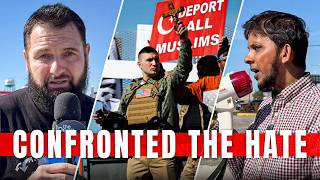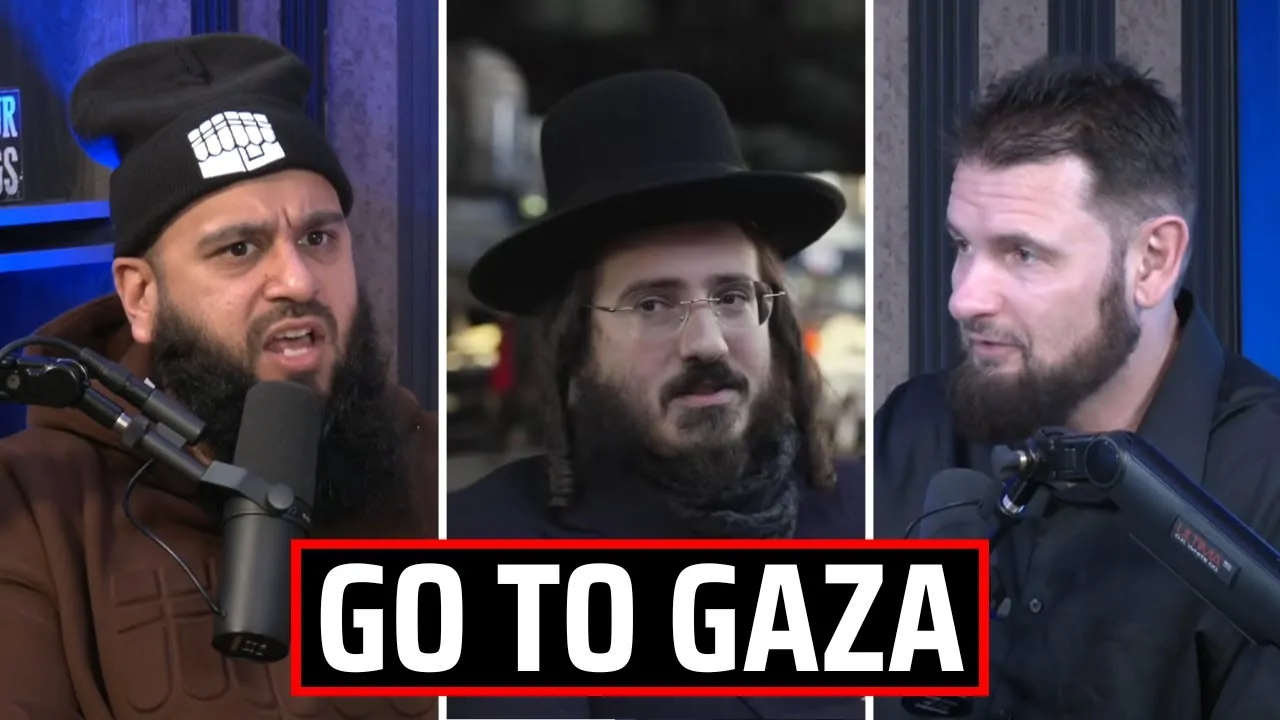
When a Muslim takes to the streets of New York to engage Jewish individuals in honest, face-to-face dialogue about Palestine, justice, and the shared roots of Islam and Judaism, the results are both eye-opening and deeply revealing. This powerful social experiment captures what happens when truth meets programming, when faith confronts political ideology, and when the courage to ask hard questions breaks through years of media conditioning. The conversation that unfolds is not one of hatred but of principled conviction rooted in Islamic values of justice, mercy, and respect for all of God’s creation.
Judaism and Zionism Are Not the Same — A Jewish Man Confirms the Truth
One of the most striking moments from the streets of New York came when an Orthodox Jewish man was asked to explain the difference between Judaism and Zionism. His answer confirmed what Muslims have long maintained: that Zionism is a nationalist, supremacist ideology that has hijacked the faith of Judaism for political gain. This practicing Jew made it unmistakably clear that the occupation of Palestine is illegal, that Zionists have no right to the land, and that you simply cannot be both a faithful Jew and a Zionist. It is like oil and water — they do not mix. This distinction matters because Islam teaches Muslims to respect the People of the Book, and many righteous Jewish voices stand with Palestine against oppression.
“Judaism is a religion which was started by Abraham, and Zionism has nothing to do with the religion. It’s a nationality which contradicts the religion. The occupation of Palestine is illegal. They have no right to it. You can either be a Jew or a Zionist — you can’t be both.”
Islam’s Message: Preserve Life, Defend Justice, Protect the Oppressed
- The Quran commands the sanctity of life: In Surah Al-Ma’idah (5:32), Allah declares that killing one innocent person is as if you killed all of mankind, and saving one life is as if you saved all of mankind — a verse originally ordained for the Children of Israel themselves.
- Islam honors all the prophets: Muslims love and revere Ibrahim (Abraham), Musa (Moses), and Isa (Jesus), peace be upon them all. The Abrahamic tradition of faith, justice, and submission to God runs through Islam as its purest continuation.
- The example of the Ansar: When the early Muslims migrated to Medina, the Ansar welcomed them into their own homes, shared their land, businesses, and wealth. This is what Islam teaches — generosity, brotherhood, and compassion for the displaced.
- Standing against oppression is a duty: Islam does not permit silence in the face of injustice. Speaking truth to power, defending the rights of the oppressed, and calling out corruption are acts of faith.
- Dialogue over division: The social experiment proved that respectful, evidence-based dialogue can open hearts and change minds — a method the Prophet Muhammad (peace be upon him) embodied throughout his mission.
Life Under Occupation: A Reality the World Must See
The conversation brought the brutal reality of occupation closer to home with a vivid comparison: imagine someone enters your house uninvited, takes control, monitors your every movement, decides when you eat, when you use the bathroom, and points military-grade weapons at you around the clock. That is daily life in Palestine. Checkpoints, surveillance, denial of building permits on your own land, arrest for planting a tree or raising a flag — all while billions of American taxpayer dollars fund this system of control instead of helping struggling communities at home. Palestinians are treated, as the guest described, worse than third-class citizens in their own homeland. Yet through it all, their spirit of welcome and hospitality endures, a testament to their unbreakable faith and dignity.
The Quran Stands as the Uncorrupted Truth
“How can the same Creator who made every child — brown, black, white, Asian — put a difference between two people and say one is better and to kill the other? These are not the words of God. God would never give one people authority to kill other people or destroy His own creation.”
- The Quran warns against textual corruption: Allah says “Woe to those who write the book with their own hands and then say this is from God” — a direct address to those who alter divine scripture to serve worldly agendas.
- Islam offers a consistent moral standard: Where corrupted texts may call for the destruction of innocents, the Quran upholds justice, mercy, and the absolute sanctity of innocent life without contradiction.
- True faith produces love for creation: As the episode concluded, the message was clear — if you truly love your Creator, you will love His creation. That is the Islamic standard, and it is the standard by which all claims of righteousness must be measured.
- Hearts can be changed through truth and dua: The final lesson was one of hope rooted in faith. More people than expected are willing to reconsider their views when presented with evidence and engaged with respect. The real solution lies in asking Allah to open hearts, presenting the truth with wisdom, and leaving the results to the Lord of all worlds.