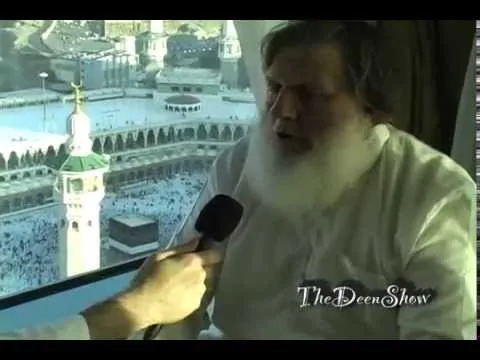
When Sheikh Yusuf Estes — one of the most recognised American converts to Islam — joined The Deen Show to document their Hajj journey live from the sacred city of Mecca, it was more than a broadcast; it was a window into one of the most profound acts of faith, spirituality, and collective worship the world has ever known. Hajj, the fifth pillar of Islam, is a once-in-a-lifetime obligation upon every Muslim who is physically and financially able — a direct divine command, not a lifestyle option or spiritual bonus. From the moment of boarding a plane in Ihram to circling the ancient Kaaba beneath the shadow of Jabal Nour, this episode of The Deen Show captured the raw, transformative essence of Islamic pilgrimage in a way that speaks powerfully to Muslims and non-Muslims alike.
From Ihram to Arafat: The Rites of Hajj Step by Step
The journey begins long before arriving in Mecca. As Sheikh Yusuf explains on the flight, pilgrims must enter the sacred state of Ihram — two simple white garments for men that strip away every marker of worldly rank and nationality — before crossing the designated boundary known as the Meeqat. This is accompanied by sincere intention (Niyyah) and the recitation of the Talbiyah: Labbayka Allahumma labbayk, labbayka laa shareeka laka labbayk — “Here I am, O Allah, here I am; You have no partner, here I am.” Once in Mecca, the first major ritual is the Tawaf, seven counter-clockwise circuits around the Kaaba — the House of Allah first constructed by Prophet Ibrahim and his son Ismail upon a divine command. Pilgrims then perform Sa’i, walking seven times between the hills of Safa and Marwa, commemorating Hajar’s courageous search for water for her infant son, a search that ended with the miraculous appearance of the Well of Zamzam, which continues to flow to this very day. Those performing Hajj Tamattu — the recommended form combining Umrah and then full Hajj — complete this first stage, trim their hair, and exit Ihram before re-entering it for the complete Hajj rites: the journey to Mina, the climactic standing at Arafat in collective supplication, the night at Muzdalifah, and the symbolic stoning of the Jamarat pillars in rejection of Shaytan.
“We don’t worship the mountains and we don’t worship the well and we don’t worship the water — but we worship the One who created all of it to begin with, the One who brings us water when there is nothing there to bring water out of.” — Sheikh Yusuf Estes at the Well of Zamzam, Mecca
- Ihram: Two white garments worn by male pilgrims, signifying absolute equality before Allah — no rank, no wealth, no nationality separates the believer from his Lord.
- Talbiyah: The pilgrim’s declaration of arrival — affirming pure monotheism and answering the ancient call of Ibrahim that echoes across every generation of Muslim faith.
- Tawaf: Seven circuits around the Kaaba, the same ritual performed by every Prophet of Allah, connecting the believer to an unbroken chain of monotheistic guidance stretching back to Adam.
- Sa’i: Seven passages between Safa and Marwa, honouring Hajar’s trust in Allah and commemorating the ongoing miracle of Zamzam — water that has never dried since the day it first sprang from the desert floor.
- Wuquf at Arafat: The spiritual climax of Hajj, where millions stand together in supplication from Zuhr until sunset — the Prophet (peace be upon him) said, “Hajj is Arafat.”
- Stoning the Jamarat: The symbolic rejection of Shaytan in Mina, following the example of Ibrahim who drove away the devil’s temptations with stones.
- Tawaaf al-Wada’: The farewell circumambulation — the final act before departing Mecca, sealing the pilgrimage with remembrance of Allah.
One Ummah, One God: Clearing Misconceptions and Understanding the Reward
One of the most powerful moments of this episode comes when Sheikh Yusuf directly addresses a question that non-Muslims frequently raise: are Muslims worshipping a black box in the desert? The answer — delivered with characteristic clarity from the floor of al-Masjid al-Haram — is an emphatic no. The Kaaba is the direction of worship, not the object of it. Muslims orient their Salah toward it five times daily as a unifying focal point, in the same way every Prophet from Ibrahim through Moses, Jesus, and Muhammad (peace be upon them all) directed their worship toward the one God who created the heavens and the earth. The Hajj rituals were not born of paganism; rather, paganism corrupted an originally pure monotheistic tradition, and it was Prophet Muhammad (peace be upon him) who restored the pilgrimage to its Abrahamic roots. Standing in Mecca and witnessing 3 to 5 million pilgrims of every race, language, and background — identically dressed, calling upon the same God — makes this argument not as abstract theology but as lived, undeniable experience. Sheikh Yusuf also speaks candidly to Muslims who have been procrastinating, reminding them that Hajj is the fifth pillar — a divine obligation — and that those with the means must prioritise it without delay. The reward for answering this call is unlike anything else in Islam: every sin since birth is forgiven, and the pilgrim returns home spiritually renewed, reconciled with their Lord, carrying a fresh beginning as though newly born.
“Everybody who comes back from Hajj — the only regret they will say is: I wish I would have done it sooner. I wish I could do it more often. Nobody comes back saying that was a lame thing, I wish I didn’t do it.” — Sheikh Yusuf Estes, speaking from personal experience of performing Hajj many times
For the Muslim watching from home, still weighing up costs and logistics, Sheikh Yusuf’s message from the heart of Mecca carries the full weight of lived conviction: trust in Allah, make the intention, and go — for Allah desires ease for you, not hardship, and those who go find that what they worried about at home has a way of resolving itself in their absence. For the non-Muslim curious about what Hajj truly represents, this journey — documented live, in Ihram, at the Kaaba, beneath the mountain where the first verses of the Quran were revealed to Prophet Muhammad (peace be upon him) in the Cave of Hira — is perhaps the most honest answer available. Hajj is not a spectacle or a cultural event; it is the fulfilment of humanity’s oldest covenant with its Creator, renewed by every generation of believers since Ibrahim raised the walls of the Kaaba and called out to a world not yet born to come, on every lean camel, out of every ravine, for the sole purpose of praising Allah.