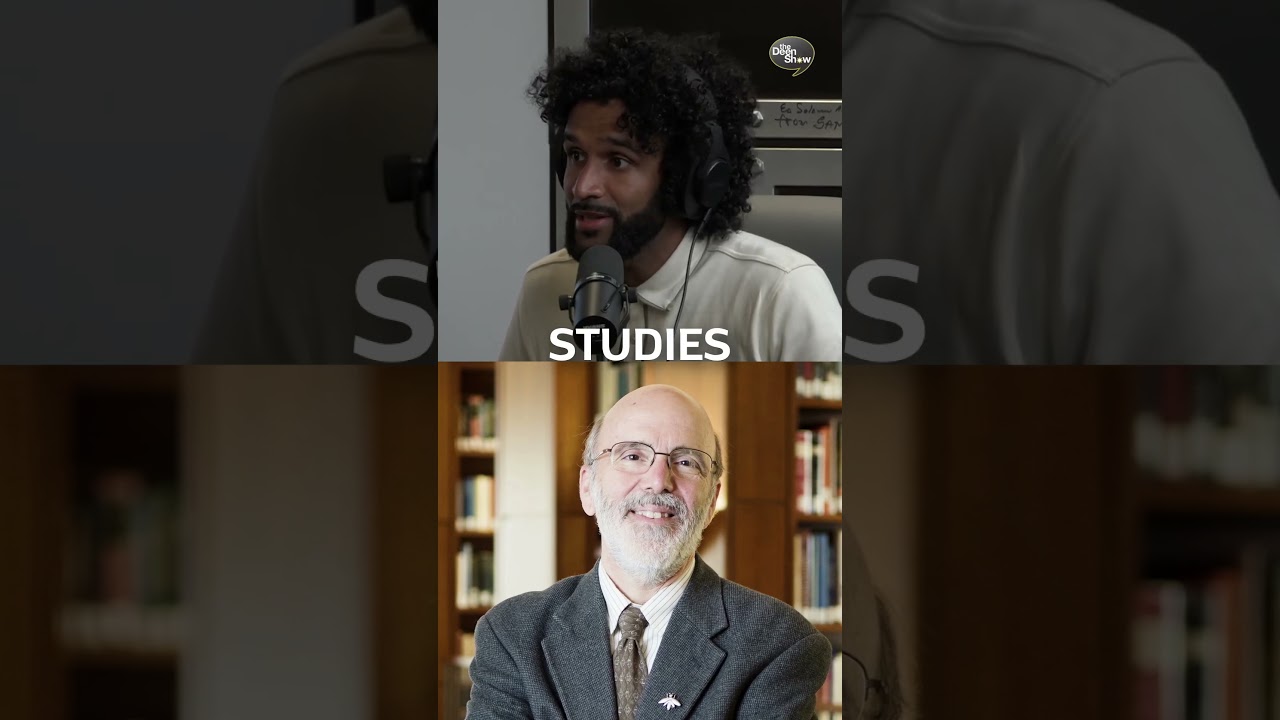
Few questions carry greater weight for the Abrahamic faiths than the true nature of Jesus, peace be upon him. For Christians, Muslims, and Jews alike, this is not an academic exercise — it is, as this episode of The Deen Show makes unmistakably clear, a matter of eternal salvation. Drawing from the Bible, the Quran, and the direct words attributed to Jesus himself, host Eddie presents ten logical, scriptural, and theological reasons why Jesus cannot be God. The reasoning is offered not in a spirit of hostility, but out of sincere faith and guidance: that every sincere seeker, regardless of background, encounters the clearest possible understanding of who God truly is — and who Jesus truly was: a noble messenger, a miracle-bearing prophet, and a servant of the One God who never stopped pointing humanity back toward his Lord.
God’s Nature Is Absolute — And Jesus Did Not Share It
The most foundational argument requires no verse: God, by definition, cannot be born. He exists eternally, uncreated, before time itself had meaning. Jesus (peace be upon him), by universal agreement, was carried in the womb of the blessed Virgin Mary and born into this world. That single fact alone draws a line that cannot be crossed. Beyond birth, God is entirely self-sufficient — Al-Samad, as the Quran names Him — with no need of food, sleep, or prayer. Jesus ate, slept, and regularly withdrew to pray, prostrating his face on the ground, asking the disciples to wait while he sought guidance from someone greater than himself. The Bible confirms in John 1:18 and 1 John that no human being has ever seen God. When Jesus stood among his followers and declared in John 5:37 that they had “neither heard his voice nor seen his face at any time,” he was clearly distinguishing himself from the One who sent him. God, as Malachi records explicitly, does not change. He cannot be subjected to hunger, fatigue, suffering, or the passage of time — because He created all of those things and is therefore utterly beyond them. To confine the Divine into a body that bleeds, thirsts, and prays is not an act of reverence. It is, in the framework of Islamic spirituality and pure monotheism, a profound diminishment of the Almighty.
- God cannot be born — Jesus was carried for nine months and born of a virgin; God is eternal and uncreated.
- God is self-sufficient — Jesus needed food, water, and sleep to survive; God needs nothing to sustain His existence.
- No one has ever seen God — John 1:18, 1 John, and Jesus’s own words in John 5:37 confirm this unambiguously.
- Jesus prayed — Prayer is the acknowledgement of a power greater than oneself; God has no one above Him to supplicate.
- God does not change — Malachi states this explicitly; God cannot be subjected to the physical laws He Himself created.
“I am God and there is none else. I am God and there is none like me.” — Isaiah 46:9, one of many explicit self-declarations God makes throughout the scriptures — declarations Jesus himself quoted and never contradicted.
What Jesus Said — And What He Never Said
A critical pattern running through this episode is the contrast between explicit and implicit statements. Throughout the Old Testament, when God speaks of His own nature, the language is unambiguous: “I am God, there is none like me, do not worship anything else.” Yet no verse in any scripture contains Jesus saying “I am God” in plain, direct terms. When accused of claiming divinity, he responded, “You say that I am” — a deflection, not a confirmation. If eternal salvation truly depended on belief in his godhood, Jesus would have been explicit, because that is precisely how God always communicates matters of ultimate importance. Instead, in John 17:3, Jesus defines eternal life in terms that resonate deeply with the Islamic declaration of faith: knowing “the only true God, and Jesus Christ whom you have sent” — establishing himself not as God, but as God’s messenger. Verses sometimes cited as evidence of divinity, such as “I and the Father are one,” gain an entirely different meaning read in full context: Jesus was expressing unity of purpose and mission, not sameness of essence. He was God’s representative, carrying out the Divine will. His title “Son of God” was also not exclusive — Adam, Jacob, Solomon, and Ephraim all carry this designation in scripture, making it a term of honour and closeness to God, not a claim to deity. The doctrine of the Trinity itself did not emerge until the third century and was formalised as mandatory belief only at the Council of Nicaea in 325 CE — a formulation introduced largely through Paul, a man who never walked with Jesus, never ate with him, and received his theology from a vision on the road to Damascus, not from the prophet himself.
- Jesus never said “I am God” — No scripture in any language records this statement directly from him.
- John 17:3 — Jesus defines eternal life as knowing “the only true God and Jesus Christ whom you have sent” — messenger, not deity.
- John 14:28 — Jesus said plainly, “The Father is greater than I,” admitting a hierarchy that contradicts equality of essence.
- “Son of God” is not exclusive — Adam, Jacob, Solomon, Ephraim, and ordinary people are all called sons of God in both Testaments.
- The Trinity is historically late — Unknown to Jesus’s own disciples, who continued to worship in synagogues after his departure, practising Judaism just as he had.
- Jesus did not know the Hour — He said only the Father knows the Day of Judgement, proving he did not share God’s omniscience.
The Most Urgent Question: Who Did Jesus Tell Us to Worship?
“In vain shall you worship me, and teach as doctrine the commandments of men.” — Jesus, as recorded in Matthew 15, a forewarning that Eddie argues speaks directly to the theological innovations that arose after him.
At the heart of this entire discussion lies an urgent and deeply compassionate call to honest reflection. Worship, in every faith tradition, flows toward God — the supreme object of devotion, the one to whom prayers, sacrifices, and ultimate loyalty belong. Jesus (peace be upon him) never once instructed anyone to direct that worship toward him. He redirected every act of reverence back to God. When someone called him “Good Master,” he responded, “Why do you call me good? There is none good but one — that is God.” When departing from this world, he told Mary Magdalene with unmistakable clarity: “I ascend unto my Father and your Father, my God and your God” — placing himself and his followers on the same side, both of them beneath the one sovereign Lord. The Quran confirms what this episode emphasises: on the Day of Judgement, God will ask Jesus whether he commanded people to worship him, and Jesus will deny it, saying he only taught what he was commanded to teach. This is the essence of tawhid — the absolute, indivisible oneness of God that Islam proclaims and that every prophet, from Ibrahim to Musa to Isa to Muhammad (peace be upon them all), carried as the core of his message. Jesus’s honour is not diminished by recognising him as a messenger; it is elevated. He was among the greatest of prophets, born of a miracle, gifted with extraordinary signs, and sent as a mercy to the Children of Israel — a man who spent every moment of his life pointing toward the One he himself turned to in prayer. For anyone sincerely seeking faith, purpose, and spiritual clarity, the invitation here is not to reject Jesus but to honour him correctly: as a beloved servant and prophet of the Most High God, in the way he himself would have wanted.