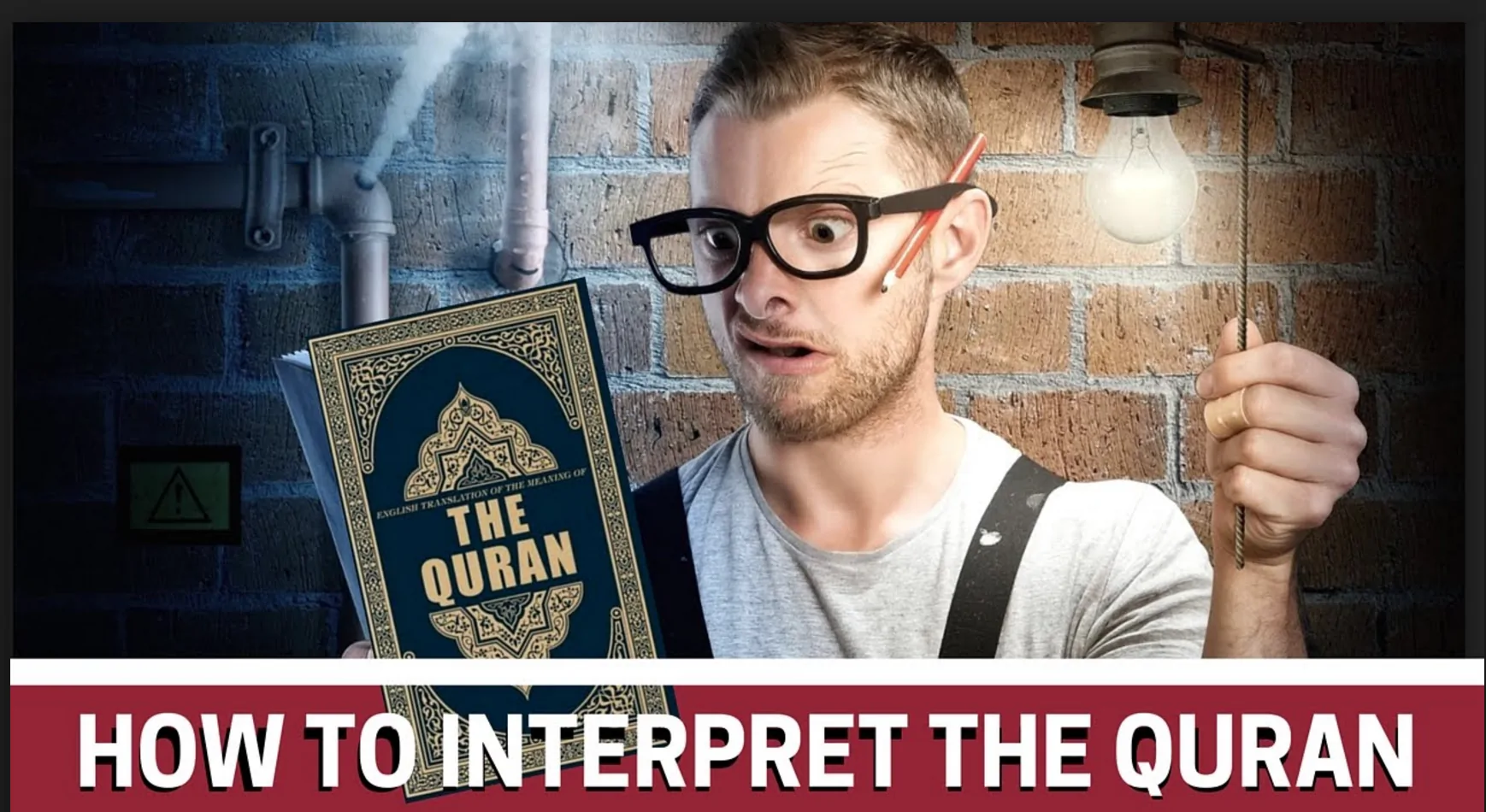
The Quran is not merely a book — it is the preserved, verbatim Word of Allah ﷻ, revealed over 23 years as a living miracle for all of humanity. Yet in an age of instant information, a troubling trend has emerged: Muslims and non-Muslims alike are opening the Quran — often in English translation, which is not the Quran itself — and drawing conclusions that this sacred text never intended to convey. When a verse about the sanctity of human life is torn from its context to paint Islam as violent, or when someone insists that “hijab” does not appear in the Quran as a justification for abandoning it, we are witnessing the cost of approaching divine guidance without a proper methodology. The question this episode of The Deen Show compels every sincere seeker to ask is not merely what the Quran says — but how, through what lens, and in whose footsteps, we are called to understand it.
The Grave Danger of Interpreting the Quran Without Scholarly Grounding
Among the most humbling examples in Islamic history is that of Abu Bakr al-Siddiq ؓ — the closest companion of the Prophet ﷺ, the first caliph of Islam, and a man described as the very shadow of Rasulullah ﷺ. When asked about the meaning of a Quranic verse he did not know, he did not speculate or defer to his fluency in Arabic. He admitted his ignorance openly. Even more striking is the account of the great scholar Imam Ahmad, who, while delivering a sermon, quoted the word abba from Surah ‘Abasa. Though he knew what fakiha (fruit) meant, he turned to those before him and declared plainly: “I do not know what it means, and I am not going to speak about it without knowledge.” If the Siddiq and the imam of the Salaf exercised such restraint before the Word of Allah ﷻ, what does it say about a generation that picks up two or three English translations and believes that is sufficient to interpret divine revelation independently?
“What earth would carry me, and what heaven would shade me, if I say about a verse in the Quran without knowledge?” — Abu Bakr al-Siddiq ؓ
- The Quran was revealed in classical Arabic — English translations are interpretive aids, not the Quran itself; reading a translation is not the same as engaging the divine text
- Every verse carries a sabab al-nuzul (reason for revelation) that structures its proper understanding and prevents misapplication
- The “Quran-only” position — rejecting the Sunnah entirely — collapses under basic questions: where in the Quran is the precise method of prayer, the exact percentage of zakat, or the details of Hajj? These obligations exist only through prophetic transmission
- Approaching the Quran with a corrupt belief system produces corrupt conclusions; the story of Finhas the Jewish scholar, who misread a verse on charity because he believed Allah was in need, illustrates how a flawed aqeedah blinds even the learned
- Misinterpretations of the Quran do real harm — they fuel Islamophobia, mislead the spiritually curious, and cause Muslims themselves to abandon established obligations of their faith
The Established Five-Stage Hierarchy of Quranic Interpretation
Classical Islamic scholarship established a clear, sequential methodology for tafseer (Quranic exegesis), one followed by scholars like Ibn Kathir and rooted in the lived practice of the companions themselves. When a companion did not understand a verse in Surah Ghafir, he did not speculate — he turned to Surah al-Baqarah, because the Quran explains the Quran. This is the first and most foundational step. Then comes the Sunnah — the sayings, actions, and approvals of the Prophet ﷺ, who was taught the Quran directly by Jibreel ؑ and who, as Allah ﷻ commands in the Quran itself, must be obeyed. Third are the companions (Sahabah), who were present when verses descended and asked the Prophet ﷺ directly when they did not understand. Fourth are the Tabi’een and Tabi’ al-Tabi’een — the second and third finest generations of Islam. Only after exhausting these four sources may the scholar turn to Arabic linguistics. The infamous verse of Surah Tawbah — “kill the polytheists where you find them” — is a case study in why this sequence is indispensable: without the Sunnah and Seerah, one cannot know that this verse referred to armed combatants who had been granted four months to vacate the sacred Ka’bah, and who remained combatants within it after that ultimatum expired. Strip away prophetic context and a verse of military law becomes, in the hands of bad faith readers, a license for indiscriminate violence — a distortion Islam has never sanctioned.
“The Quran explains the Quran. The Prophet ﷺ explains the Quran. The Sahabah explain the Quran. The second and third best generations explain the Quran. Only then do you go to the Arabic language — and that is it.”
The Quran itself, in Surah Al-Imran, divides its verses into two categories: the muhkamat — the clear, foundational rulings that anchor the Book — and the mutashabihat — verses whose understanding requires the depth of authentic scholarship and correct belief. For the sincere seeker, Muslim or not, the path is clear: begin with the crystal-clear verses, and for anything ambiguous, turn to those who have spent their lives in the company of revelation and its transmitted explanation. And before any of this, one must establish a correct aqeedah — a sound, undistorted understanding of who Allah ﷻ is, of His names and attributes — because approaching divine guidance without this foundation is like drinking a prescription from a doctor whose credentials you have never examined. Islam’s tradition of interpretation is not guesswork; it is a meticulously preserved, authenticated chain of understanding stretching from the Prophet ﷺ to his companions to their students and beyond. Those who sincerely seek truth first gather the evidence, then formulate their conviction — while those in pursuit of a predetermined conclusion search for verses to justify what they already believe. The Quran is far too magnificent a trust to be handled carelessly, and the tradition of its interpretation is far too rigorously preserved to be bypassed for the sake of intellectual shortcuts or personal convenience. May Allah ﷻ grant us all the humility to approach His Book as it deserves to be approached — with sincerity, with proper guidance, and with the reverence that every word of divine revelation commands.