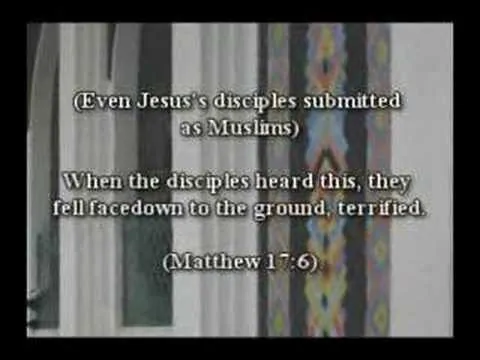
At the heart of this episode lies a truth that is both ancient and urgently relevant: Islam is not a new religion. The word “Islam” itself means submission to the will of God — and that act of submission, expressed through prayer, bowing, kneeling, and prostrating before the Creator, has been the practice of every prophet from Noah to Abraham, from Moses to Jesus, and ultimately to Muhammad, peace and blessings be upon them all. What many find visually striking about Muslim prayer — the rows of believers bowing in unison, foreheads touching the earth — is not a foreign innovation. It is the living continuation of a prophetic tradition preserved in the Quran, the Sunnah, and attested to within the Torah and Gospel themselves.
The Biblical Prophets and the Postures of Submission
One of the most compelling arguments for the universality of Islamic prayer is found by examining how the prophets of the Bible actually worshipped. When Christians and Jews look past centuries of evolving liturgical custom and return to the recorded actions of their own prophets, the physical postures are unmistakable — they fell on their faces, they bowed in complete humility, they stood, they knelt, they prostrated. These are the very movements of Salah. Islam is also uniquely distinct in that it is not named after a person, a place, or a tribe; it is the universal religion of submission that transcends ethnicity and era. The Quran and the Sunnah of the Prophet Muhammad ﷺ simply preserved and perfected what every prophet before him had already practiced.
- All major prophets practiced prostration — falling upon the face before God is documented throughout the Torah and Gospel
- The postures of Muslim prayer are ancient — bowing, standing, and prostrating reflect the worship of Abraham, Moses, David, and Jesus, peace be upon them all
- Being a Muslim means submitting to the will of God — a definition that applies to every soul that ever surrendered to the One Creator
- The method of prayer comes from divine command and prophetic example — Muslims follow the Sunnah of the Prophet ﷺ just as the earlier prophets followed the revelation given to them
“Were Christians and Jews to look to the examples of the prophets given in the Torah and the Gospel, they would find themselves praying like Muslims.”
The Complete Form of Salah: Every Movement a Meaning
Salah is not a ritual of empty gesture — it is a complete, structured act of worship documented in extraordinary precision through the Sunnah of the Prophet Muhammad ﷺ, summarised masterfully in Shaykh al-Albani’s work Sifat Salaat al-Nabi (The Prophet’s Prayer Described). From the moment a worshipper faces the Qiblah and raises their hands in Takbeer, to the measured verse-by-verse recitation of Surah Al-Fatihah, through the deep bow of Rukoo’, the grounded stillness of Sujood, and into the Tashahhud — every posture carries theological weight. The Prophet ﷺ commanded: “Pray as you have seen me pray.” This is not empty mimicry; it is the loving, disciplined following of the one who stood closest to God, connecting every Muslim across centuries to the same unbroken chain of prophetic worship.
- Facing the Qiblah — all Muslims worldwide unified in a single direction toward the Ka’bah, a pillar without which prayer is not valid
- Takbeer and raising the hands — the opening declaration “Allahu Akbar” marks entry into the sacred, protected state of prayer
- Recitation of Al-Fatihah — obligatory in every rak’ah, this opening chapter is the heartbeat of Salah, and must be memorised even by non-Arabic speakers
- Rukoo’ (bowing) — back held level, hands gripping the knees, glorifying Allah with Subhaana Rabbiy al-‘Azeem
- Sujood (prostration) — the forehead, nose, palms, knees, and toes all meeting the earth in the closest physical posture a human can take before God
- Tashahhud and Tasleem — the prayer closes with bearing witness that there is no god but Allah, sending salawat upon the Prophet ﷺ, and greeting the angels and righteous souls with peace
- Khushoo’ is the goal — humble presence of heart is the spiritual core that gives Salah its power to purify, protect, and elevate the believer
“Verily, the prayer prevents from Al-Fahsha’ (great sins of every kind) and Al-Munkar (disbelief and every kind of evil wicked deed).” — Quran, Al-‘Ankaboot 29:45
The evidence is clear, and the invitation is timeless. Salah is not a practice invented fourteen centuries ago — it is the eternal language of the soul surrendering before its Creator, spoken by every prophet who walked this earth. For the Muslim, this understanding deepens the meaning of every prayer offered: to stand in Salah is to stand alongside all the prophets in their truest and most complete act of worship. For those exploring Islam or sincerely seeking to understand what submission to God really looks like, the prayer itself is the answer — a structured, daily conversation with Allah that straightens the heart, purifies the soul, and roots the believer in a tradition as ancient as humanity itself. May Allah accept our prayers, grant us true khushoo’, and make us of those who meet Him with a clean and surrendered heart.