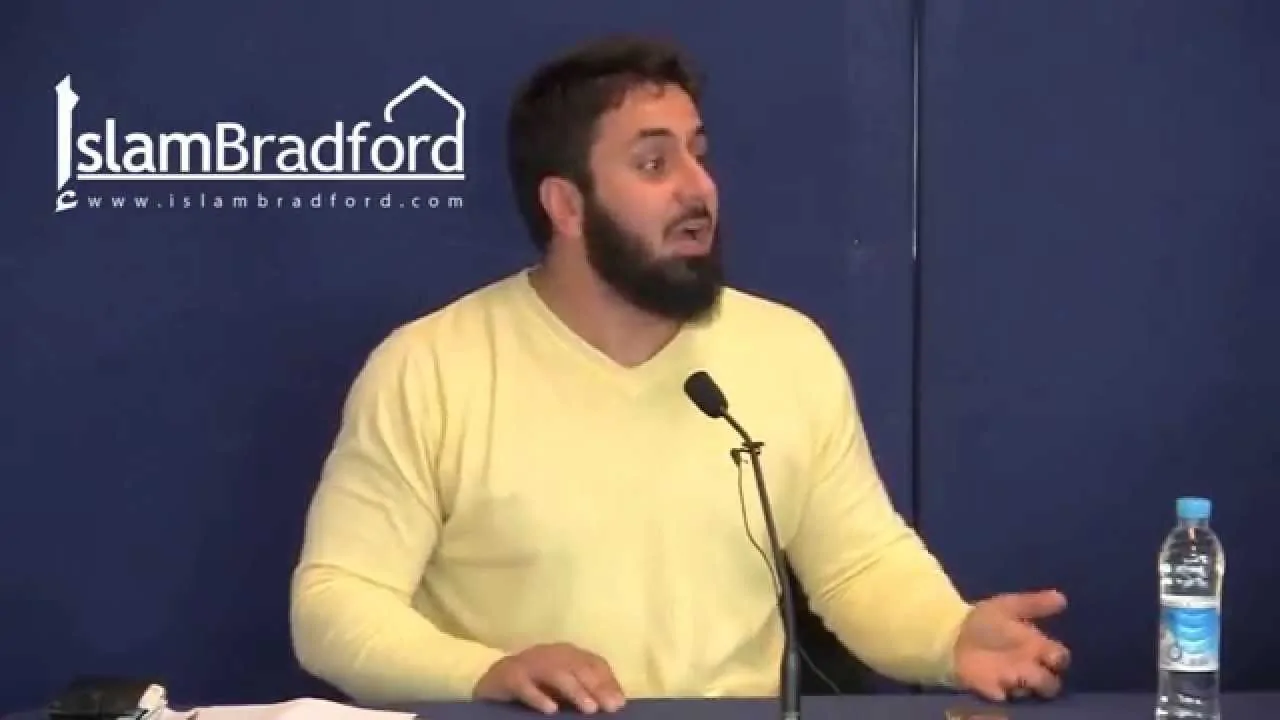
Imagine spending an entire lifetime in worship — praying every optional sunnah prayer, fasting alternate days, giving half your wealth in charity, facilitating the guidance of thousands, raising righteous children — and then arriving on the Day of Resurrection only to be cast into the Hellfire forever. Ustadh Hamza Andreas Tzortzis opens this lecture not with theory, but with that precise, shattering mental image. It is a deliberate provocation, designed to awaken every believer to a truth that Islamic spirituality places above almost all else: without ikhlas — pure, undivided sincerity of intention — no deed, however outwardly magnificent, carries any weight before Allah subhanahu wa ta’ala. Drawing from classical scholarship and the “Soul’s Musk” course on purification of the heart, this second instalment of the “Let’s Revive Our Emaan” series addresses the most neglected yet most consequential dimension of faith and practice.
The Heart: Spiritual Sovereign of Every Deed
“There is in the body a clump of flesh — if it is sound, the whole body is sound; if it is corrupt, the whole body is corrupt. And indeed it is the heart.”
[Sahih Bukhari, Volume 1, Book 2, Number 49]
This foundational hadith, recorded in both Bukhari and Muslim, is the lens through which Islamic spirituality understands all outward deeds. Imam Al-Ghazali, the 11th-century theologian and scholar, taught that “the heart is the king and the limbs are its soldiers” — meaning that every external action is a symptom of an internal state, and bad behaviour in a person is merely the surface expression of a deeper corruption within. The scholars of Islamic spirituality identify three categories of hearts mentioned in the Quran: the sound heart, free from the blemishes of sin and lower desires; the sick heart, which knows its Lord but struggles with lapses — the condition, Ustadh Hamza humbly suggests, of most of us; and the dead heart, which has lost all awareness of Allah entirely. Crucially, the fleeting doubts and whispers that plague many Muslims — over the validity of wudu, the number of rak’ahs prayed, whether an act was correct — are not “actions of the heart.” These are the wasawis of Shaytan, and the Prophet ﷺ taught that experiencing and rejecting such doubts is itself a sign of Iman. The true action of the heart is the firm, resolved intention behind each deed — the driving force that either purifies a good action or renders it spiritually worthless — and this is precisely where ikhlas lives or dies.
What Ikhlas Demands: Principles from the Classical Scholars
- Single out Allah in every intention — each act of obedience must have Allah alone as its sole object and purpose, without any secondary audience in the heart.
- Purify deeds from spiritual contamination — performing any part of a deed for reputation, social praise, or worldly recognition strips it of its spiritual value entirely.
- Equalise public and private worship — a person of true sincerity worships no less in private than in public; ideally, the deeds no one witnesses surpass those that are seen.
- Seek no witness but Allah — the story of Abu Bakr as-Siddiq (RA), the Khalifah of all the Muslims, secretly cleaning the home of an elderly Jewish woman before Umar (RA) could beat him to it, is the living standard: total anonymity in the most humble of acts.
- Remove all intermediaries of the heart — even a trace of performing a deed partly “for someone else alongside Allah” invalidates the sincerity of the action according to the scholars.
- Transform habitual actions into worship — eating, working, and everyday routines become acts of immense reward when consciously dedicated to strengthening one’s servitude to Allah; even a meal eaten with the intention of strengthening the body for worship can be an act of ibadat.
The Greatest Losers — A Warning from the Last Day
“The first of people against whom judgment will be pronounced on the Day of Resurrection will be a man who died as a martyr… Allah will say: ‘You have lied — you fought only that it might be said of you: he is courageous.’ And so it was said. Then he will be ordered to be dragged along on his face and cast into the Hellfire.”
[Sahih Muslim]
The same devastating verdict, in the same hadith, falls upon the scholar who taught Islam only to be called learned, and the wealthy man who gave generously only to be called open-handed. Three individuals performing three of the most celebrated categories of deed in Islamic life — sacrifice, religious knowledge, and charity — yet all counted among the greatest losers, precisely because their hearts sought the recognition of people rather than the pleasure of Allah. Ustadh Hamza uses the image of eternity itself — an ocean so vast no land is visible in any direction, emptied one teaspoon every thousand years — to convey what it would mean to dwell in Jahannam for even a fraction of forever. The fruits of true ikhlas stand in sharp contrast: a sincere intention to perform an act can be rewarded by Allah even when circumstances prevent its full execution; routine habits become acts of worship; and above all, deeds are actually accepted. Sincerity is one of the two conditions for any action to count before Allah — the other being that it must accord with the Sunnah — which is why the scholars of the past would say: “I fear nothing as much as I fear my own intention, because it is always changing.”
The practical call from this lecture is direct and personal: take a snapshot of your intentions not once a year, but every day, every hour if necessary — because the heart wavers, and Shaytan is patient. Ask yourself with total honesty who your deeds are truly for, and never become comfortable with the outward form of worship while the inward soul of it has quietly emptied. The Prophet ﷺ taught that “the deen is sincerity,” and that sincerity is not a one-time spiritual achievement but a continuous, lived discipline — a ceaseless cleansing of the heart from the subtle disease of seeking other than Allah. May Allah subhanahu wa ta’ala purify our intentions, grant us hearts in a constant state of yearning for His face alone, and on the Day when neither wealth nor children will avail, count us among those who arrive with a sound heart.