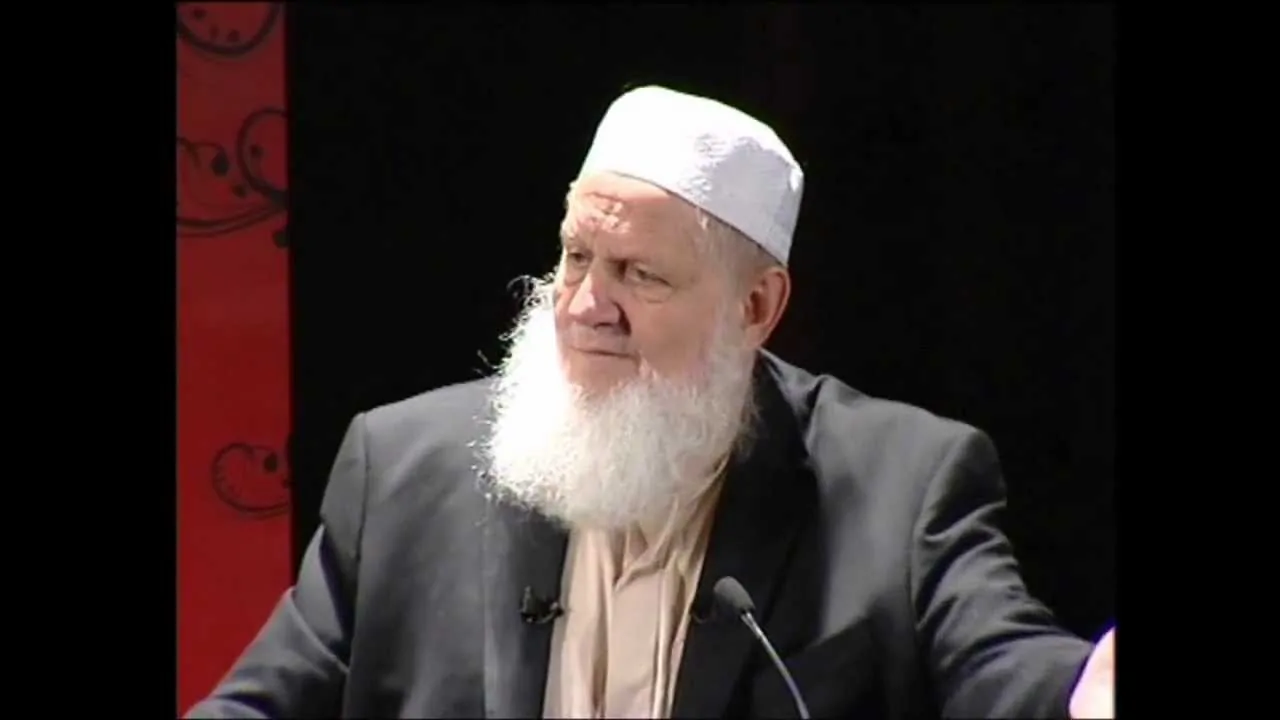
In a world saturated with noise, moral confusion, and fear-driven headlines, the question of how a Muslim finds peace of mind is not abstract — it is daily and urgent. Speaking at Knowledge Village in Dubai, Sheikh Yusuf Estes addressed a gathering of Muslims with characteristic candour and warmth, surveying the chaos unfolding around the ummah: Islam’s name weaponised in political discourse, Sharia conflated with terrorism in American state legislatures, Muslim women’s dignity made a cultural battleground, and news cycles that sensationalise sin while missing the deeper moral collapse beneath it. His core message, drawn from Quran and Sunnah, was simple and timeless — every answer the believer needs is already present in Islam, and the path to peace begins with returning to Allah and sincerely asking to be guided.
A Distorted Picture: How the Modern World Misreads Islam
From Murfreesboro, Tennessee — where lawmakers attempted to criminalise Sharia practice, effectively threatening to jail Muslims for praying five times a day — to broader Western narratives that frame modesty as oppression while commodifying women’s bodies for profit, the pattern is unmistakable: Islam is not misunderstood by accident. Sheikh Yusuf drew a piercing contrast that resonated deeply with the audience: the same society that applauds a woman who uncovers bristles when she freely chooses to cover. The cosmetics, fashion, and media industries collude to reduce a woman’s worth to her appearance — a system that tolerates no deviation and offers no mercy to those who fall short of its manufactured standards. Against this, Islam’s message is a liberation: human worth is measured by taqwa, character, and sincere worship of the One who created us. The Prophet Muhammad ﷺ, known even to his fiercest opponents as Al-Amin — the Trustworthy — never abandoned truth even when his own family turned against him, and when his enemies posted guards at the mountain passes of Makkah to warn travellers that he was a “magician” or a “poet.” For over a decade the early Muslim community were the persecuted, never the perpetrators — a fact that makes today’s labels all the more urgent to correct, not with anger, but with authentic knowledge and a sincere invitation to the truth.
“Whoever works righteousness — whether male or female — while he (or she) is a true believer, verily, to him We will give a good life in this world with respect, contentment and lawful provision, and We shall pay them certainly a reward in proportion to the best of what they used to do.” — [Surah al-Nahl, 16:97]
- Islam is a complete way of life — the Quran and Sunnah address every dimension of human existence, from personal ethics to social justice and family relationships
- Misrepresentation thrives in a knowledge vacuum — those with the least Islamic knowledge often make the most noise; the antidote is authentic, accessible Islamic education in English
- The early Muslim community faced the same hostility — and emerged through patience, sincerity, and reliance on Allah, not through retaliation or compromise of principle
- Women’s dignity in Islam is divinely established, not culturally negotiable — the choice to observe hijab or niqab is a religious right and an act of worship, not a sign of subjugation
- Violence and abuse are not Islamic — any Muslim man who mistreats his family acts in opposition to Islam, not in accordance with it, and this distinction must be made clearly and consistently
The Path Back to Peace: Consistency, Sincerity, and Trust in Allah
Sheikh Yusuf shared the founding story of Guide US TV — a free-to-air Islamic satellite channel broadcasting authentic Islam in plain English — as a living parable about what happens when believers act on Islamic principles rather than commercial logic. No subscriptions, no advertising that could compromise the purity of the message, and no shortcuts. When satellite operators offered three options — subscriptions, advertisers, or “deep pockets” — the response was characteristically Islamic: many small pockets, many brothers and sisters across America and Canada giving twenty or thirty dollars, one young boy donating a single dollar every month. Within one year the channel launched; within six months it had grown from 50,000 to over 200,000 homes without a single extra effort beyond increased du’a. The principle behind it came from a Hadith the Sheikh turned to after six years of fruitless effort: that Allah loves the deed done regularly, even if it is small, far more than the grand deed performed only once. Act consistently, seek His help sincerely, and release the outcome to the One in whose hand all outcomes rest. This is the Islamic model of success — not passive resignation, but active striving combined with deep tawakkul. Ibn al-Qayyim, commenting on the famous Hadith of the strong believer, explained that helplessness is not humility; it is the door through which the Shaytan enters. The believer who says “if only I had done otherwise” after a setback opens himself to regret, panic, and discontentment — all the work of Shaytan. The believer who says “Allahu qadar wa ma sha’a fa’al — Allah has decreed, and what He wills He does” has closed that door and opened a far greater one.
“Allah loves the deed which is done regularly, even if it is small, more than the deed which is great but done only once.” — [Hadith of the Prophet Muhammad ﷺ, reported by al-Bukhari and Muslim]
The chaos of the modern world is real — its signs are visible in fractured families, hollow materialism, legislated hostility toward faith, and a media ecosystem that amplifies fear while suppressing meaning. But for the believer, none of this is a surprise; the Prophet ﷺ described precisely these conditions as among the signs that would precede the Hour, and the Hadith of Jibreel has been there all along, waiting to be read. What Islam offers is not an escape from chaos but the spiritual clarity to live through it with purpose, dignity, and genuine peace of mind. The strong believer strives, seeks help from Allah, and does not feel helpless — and if something befalls him, he does not dwell in “if only,” but moves forward trusting in divine wisdom. The answer Sheikh Yusuf brought back to his audience in Dubai is the same answer every Muslim repeats in every unit of every salah, every single day: “Ihdinas siratal mustaqeem” — Guide us to the straight path. To find peace in a chaotic world, the believer need not look to news cycles, political movements, or modified versions of the deen designed to suit the times. The guidance is already complete. The path is already illuminated. All that remains is to walk it — sincerely, consistently, and with full trust in the One who laid it down.