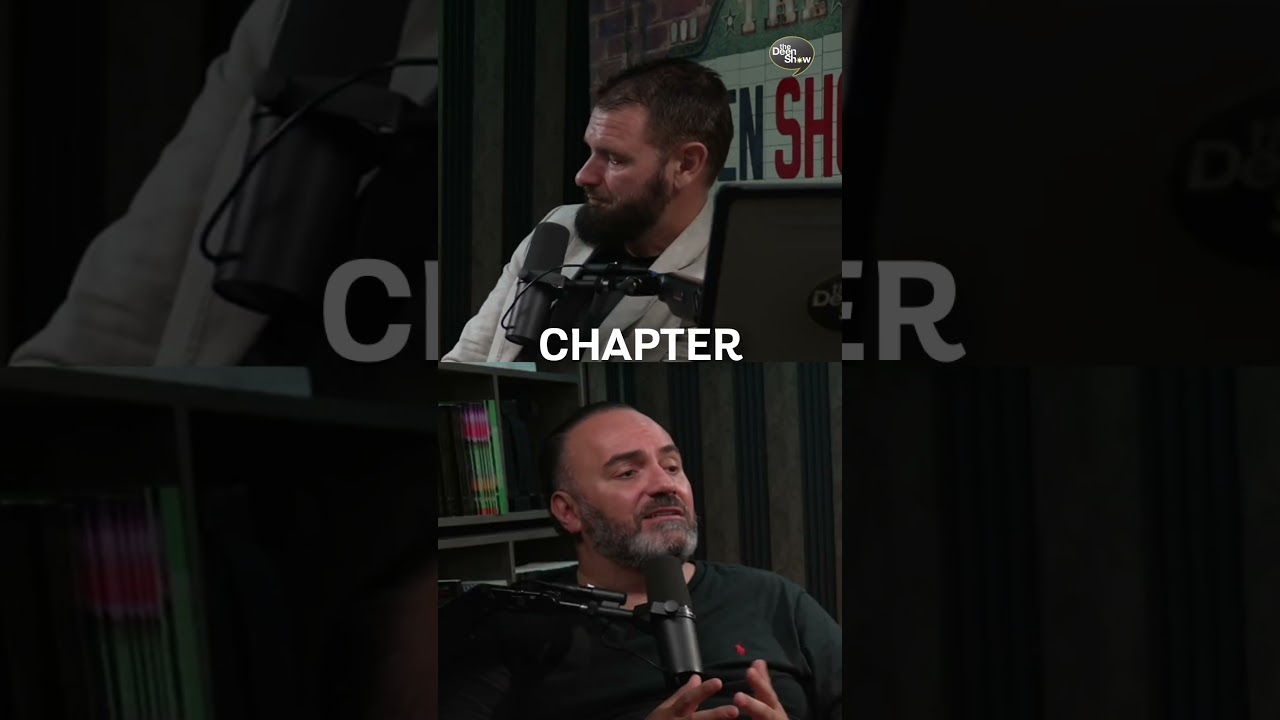
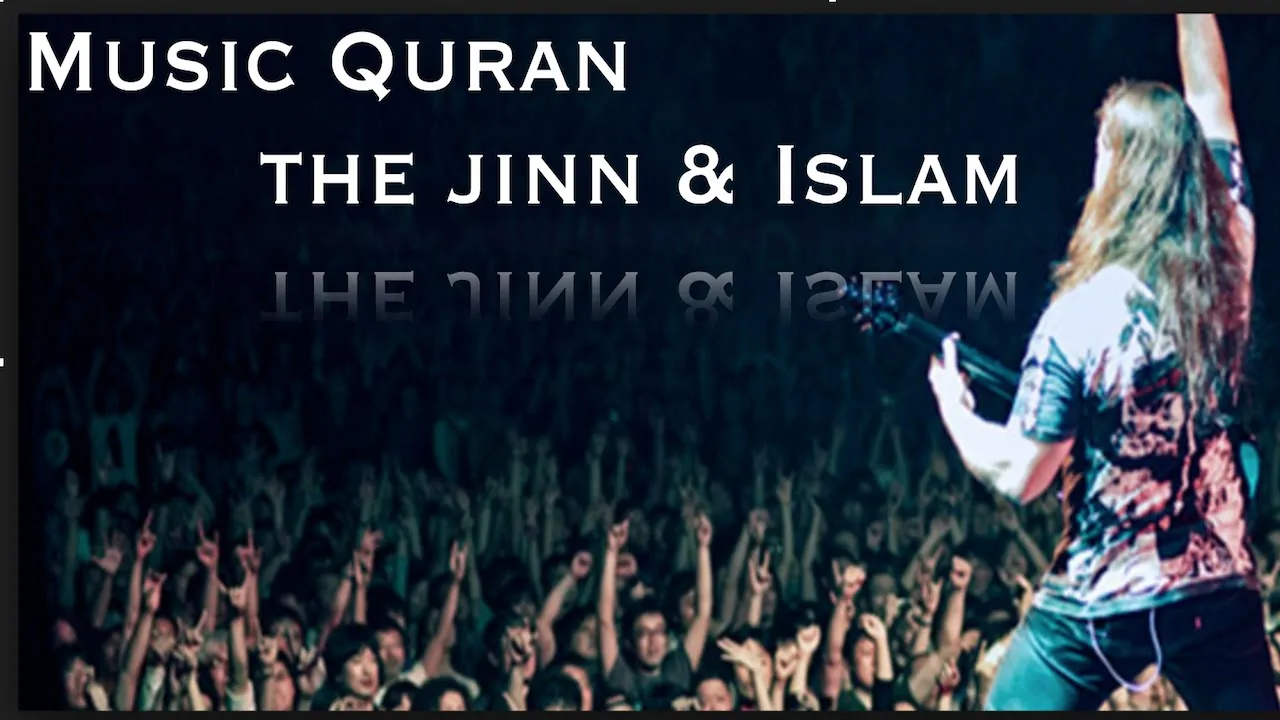
When a former Def Jam recording artist — someone who shared studios with the likes of Keyshia Cole and Bruno Mars, whose beats drove nightclub crowds and filled dancefloors — walks away from that entire world and picks up the Qur’an instead, the question demands to be asked: what did he find in Islam that the industry could never provide? This episode of The Deen Show brings exactly that conversation. A man who was professionally paid to entertain now testifies to what that life cost his heart — and what sincere faith in Allah (subhanahu wa ta’ala) gave back to it. His testimony is not theoretical. It is lived, raw, and deeply instructive for any Muslim — or truth-seeker — grappling with the real spiritual weight of music in their life.
A Heart Screaming for Guidance in an Industry Built on Distraction
The guest speaks with striking clarity about the internal condition of someone immersed in the music world: “The heart itself is searching for the truth, sometimes without the individual even realising it.” The strategy of Shaytan, he explains, is not always to make people overtly sinful — it is to keep them busy, distracted by music, entertainment, and an endless stream of stimulation, until the soul is screaming for direction while the person it inhabits keeps dancing. Having lived that reality himself — wearing a cross without understanding its meaning, performing in nightclubs without questioning the spiritual cost — he identifies lack of knowledge as the root of his former misguidance. Islam brought him knowledge, and knowledge brought clarity: the ability to see counterfeit gold for what it is. The transformation was visible to everyone who knew him before and after. Key takeaways from his personal journey and Islamic scholarship on this topic include:
- Music addiction is a barrier to the Qur’an: Citing the great scholar Ibn al-Qayyim al-Jawziyyah (rahimahullah), he explains that love of music and love of the Qur’an cannot simultaneously occupy the same heart — they are at war, and whichever dominates will push the other out.
- The fame trap is real: Suicide rates, drug dependency, and depression are statistically elevated among famous musicians — evidence that the industry’s promise of fulfilment is a lie, and the heart, even at the top of the charts, keeps searching for something real.
- Even “clean” music carries a corrupting message: Songs without explicit lyrics still condition listeners toward the disobedience of Allah — normalising fornication, eroding chastity, and making virginity socially embarrassing. The packaging changes; the destination does not.
- Music is a tool used against women: The guest speaks candidly from his industry experience — music, particularly the RnB genre he worked in, functions to lower a woman’s spiritual and emotional defences, making her vulnerable to exploitation in ways that Islam explicitly came to prevent and forbid.
- Islam is not man-made restriction — it is divine clarity: Unlike the hypnotic and performative aspects of corrupted religion, Islam makes logical, fitrah-aligned sense. It does not ask for blind following; it invites the sincere seeker to think, read, and discover that the prophets — including ‘Isa (Jesus) and Musa (Moses), peace be upon them — all called to worship the one Creator alone.
“The Qur’an and music cannot be in the same heart at the same time — they are going to be at war with one another. A person addicted to music may not feel the same tranquillity when reciting in salah; it may even cause them to hate listening to Islamic lectures. When a person is dying and a song is on their lips instead of the Kalimah — that is how dangerous this is. This is what Ibn al-Qayyim al-Jawziyyah said, and it is the reality I lived.” — Former Def Jam Artist, The Deen Show
The Jinn, “Soul Music,” and What the Industry Keeps Hidden
The most sobering dimension of this conversation is the guest’s account of what lies beneath the surface of mainstream music culture. Speaking from direct personal experience as a musician before Islam, he describes feeling genuinely as though he were under a form of possession while playing — performing things he was not capable of doing in a normal state, producing sounds that seemed to arrive from somewhere outside himself. He notes, in conversation he recalls having with an old-school musician in Egypt who had known Jimi Hendrix, that the word genius etymologically echoes the word jinn — and this is not dismissed as coincidence. He points out that the highest-level musicians are almost invariably involved with drugs and alcohol: substances that lower the rational and spiritual defences of the human being and open them to unseen influence. The term “soul music” is itself telling — if a song flows from someone’s soul, the listener should sincerely ask what spiritual state that person occupied when they wrote and performed it, because those states are transmitted. When music arouses a person into heightened emotional or sensual states, it dissolves the spiritual protection Allah has placed around the believer. Celebrities chasing fame have turned to Ouija boards and occult rituals to solicit the assistance of the jinn — a reality Islam names, defines, and warns against with complete clarity. This is not superstition; it is a dimension of reality that most Muslims, the guest notes with concern, have grown dangerously ignorant about.
The Way Back: Sincerity, Supplication, and the Medicine of the Qur’an
“Even if you do not believe the Creator exists — say: ‘O God, guide me to the way in which You are pleased.’ If a person sincerely asks the Creator of the heavens and the earth to guide them, He will guide them to Islam. And likewise, if a person sincerely asks Allah to guide them away from music, Allah will show them a better way — step by step.” — Former Def Jam Artist, The Deen Show
The guest is honest that leaving music is rarely a single dramatic rupture — for most people it is a gradual, step-by-step process that requires sincerity, mercy toward oneself, and consistent return to Allah. His practical test for the person in denial is disarmingly simple: if you listen to music regularly, ask yourself how many verses of the Qur’an you have memorised — and if the Qur’an feels difficult, heavy, or joyless, now you know why. He met a man in Egypt, surrounded by a culture famous for producing those who have memorised the entire Qur’an, who had memorised only four surahs in his entire life — a lifelong music addict. The Qur’an had been quietly crowded out. But the door is never closed. Allah (subhanahu wa ta’ala) is Al-Ghaffar and Al-Rahim — the Most Forgiving, the Most Merciful — and no distance, however self-inflicted, places the sincere heart beyond His reach. The path back begins with honest self-examination, with replacing music gradually through Qur’an recitation, Islamic reminders, and dhikr, and above all with du’a — asking the One who fashioned the heart to heal it. That is ultimately what this former Def Jam artist discovered: the heart was never built for the nightclub. It was built for the worship of its Creator, and no Grammy, no hit record, and no temporary high can fill the space that only Allah can occupy.