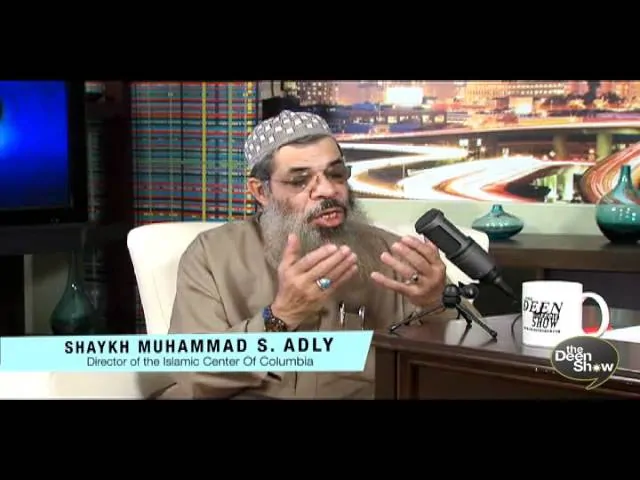
At a time when divorce rates are climbing and families are fracturing across the globe, Islam offers something the modern world urgently needs: a complete, divinely-guided framework for building and sustaining a marriage rooted not in fleeting emotion, but in faith, purpose, and mutual accountability. Imam Sheikh Muhammad Slasley, who has served as Imam and director of the Islamic Center of Columbia, South Carolina, since 1980, has spent over three decades counselling couples through every kind of marital difficulty. His experience, drawn directly from the Quran and the authentic Sunnah of the Prophet Muhammad ﷺ, points to a truth that Islamic scholarship has affirmed for centuries: when a marriage is built on the right foundation, it can weather almost any storm — and when it is not, no amount of patching will make it stand.
Choosing the Right Foundation Before the Wedding Day
Imam Slasley is direct on this point: most of the marital problems he encounters can be traced back to day one — specifically, why a person chose their spouse. The Prophet Muhammad ﷺ identified four reasons a man typically seeks marriage — a woman’s beauty, her wealth, her lineage, or her religion — and his guidance was unambiguous: prioritise religion, or face the consequences of building on sand. Beauty fades with time, wealth is lost, and social standing shifts, but a shared commitment to Islam, to the Quran as the verbatim word of Allah and to the authentic Sunnah, provides the moral and spiritual scaffolding that holds a family together through every hardship. A person who has not grounded their marriage in this way, the Imam explains, is like a patient who has an allergy to the very medicine they need — when difficulty comes and Islamic guidance is offered, they cannot receive it. This is why Islamic teaching on marriage begins not with a ceremony but with a criterion: marry for deen, and everything else becomes workable.
“Marry a woman because of her religion — otherwise you will be a loser.” — The Prophet Muhammad ﷺ (Agreed Upon)
Mutual Rights, Complementary Roles, and the Art of Staying One Team
Islam does not leave spouses to guess at their responsibilities — it defines them with precision and wisdom. The wife holds clear financial rights over her husband: the mahr (obligatory dowry), full financial maintenance including food and accommodation, and the right to these even if she is independently wealthy. Beyond the financial, she holds equally important non-financial rights: fair treatment, genuine kindness in daily life, and freedom from any form of harm — for the Prophet ﷺ established the principle that “there should be no harming nor reciprocating harm.” The husband, in turn, holds rights that reflect his role as qawwaam — protector, maintainer, and leader of the household — a position that Islam grants him not as a privilege but as a weighty responsibility. Imam Slasley describes the practical reality with memorable clarity: marriage is like a bucket with two handles. Both spouses carry it, each from their own side. Neither handle is more important than the other; remove either and the whole thing drops. The man is designed, by nature and divine assignment, to go out and provide; the woman is designed with the patience, gentleness, and nurturing capacity to keep the home as a sanctuary and raise the children who will one day be a generation of believers. These are not restrictions — they are roles that Islam says Allah Himself has fitted each person for. Where the system breaks down, almost without exception, is in the failure to communicate: husbands who impose without consulting, wives who withhold without speaking, couples who stop genuinely listening to one another and allow small frictions to harden into walls. Islam’s answer is shura — mutual consultation — not on matters of worship, but on the thousand daily decisions that shape a shared life. And when private resolution fails, the Quranic prescription is not to phone a biased parent, but to convene a family gathering: one representative from her side, one from his, sitting together with the sole aim of preserving the family unit.
- Choose a spouse for their deen first — shared faith is the only foundation that holds under the pressures of real life.
- Fulfil your partner’s rights before demanding your own — the wife’s mahr, maintenance, and kind treatment; the husband’s leadership honoured and supported.
- Practise shura (consultation) — involve your spouse in decisions, listen genuinely, and compromise freely in all permissible matters.
- Remember the higher purpose — marriage in Islam is a means of pleasing Allah, protecting each other’s chastity, and raising a generation of righteous, contributing Muslims.
- Lend a patient ear — many conflicts, as Imam Slasley observes, stem from nothing more than an unwillingness to truly listen to one’s partner.
- Seek structured mediation as a last resort — one trusted representative from each family, guided by the Quranic method in Surah An-Nisa, not a chorus of emotionally invested voices.
- Embrace sacrifice for the shared goal — just as people leave home and family to pursue education or opportunity, the higher goal of Jannah justifies far greater patience and effort within marriage.
“Fear Allah concerning women! Verily you have taken them on the security of Allah, and intercourse with them has been made lawful unto you by words of Allah. You too have rights over them… Their rights upon you are that you should provide them with food and clothing in a fitting manner.” — The Prophet Muhammad ﷺ, Farewell Sermon (Narrated by Muslim, 1218)
The Islamic model of marriage is not a burden placed on human beings — it is a mercy extended to them. It acknowledges honestly that two people from different upbringings, habits, and temperaments will inevitably clash; it does not pretend otherwise or offer the naïve reassurance that love alone is enough. What it offers instead is a complete roadmap: ground the marriage in shared faith and correct intention, know your rights and honour your partner’s with generosity, communicate with patience and the humility to truly listen, and when conflict arises, resolve it through the channels Allah has prescribed rather than through pride or outside interference. The goal, as Imam Slasley captures it so simply, is to remain one team, under one roof, worshipping the one Creator — raising children who will carry righteousness forward into the next generation, and ultimately, by the grace of Allah, reuniting in Jannah. That is the Islamic vision of marriage: not a transaction, not a convenience, but a sacred partnership with a beginning in this world and, inshallah, no ending in the next.