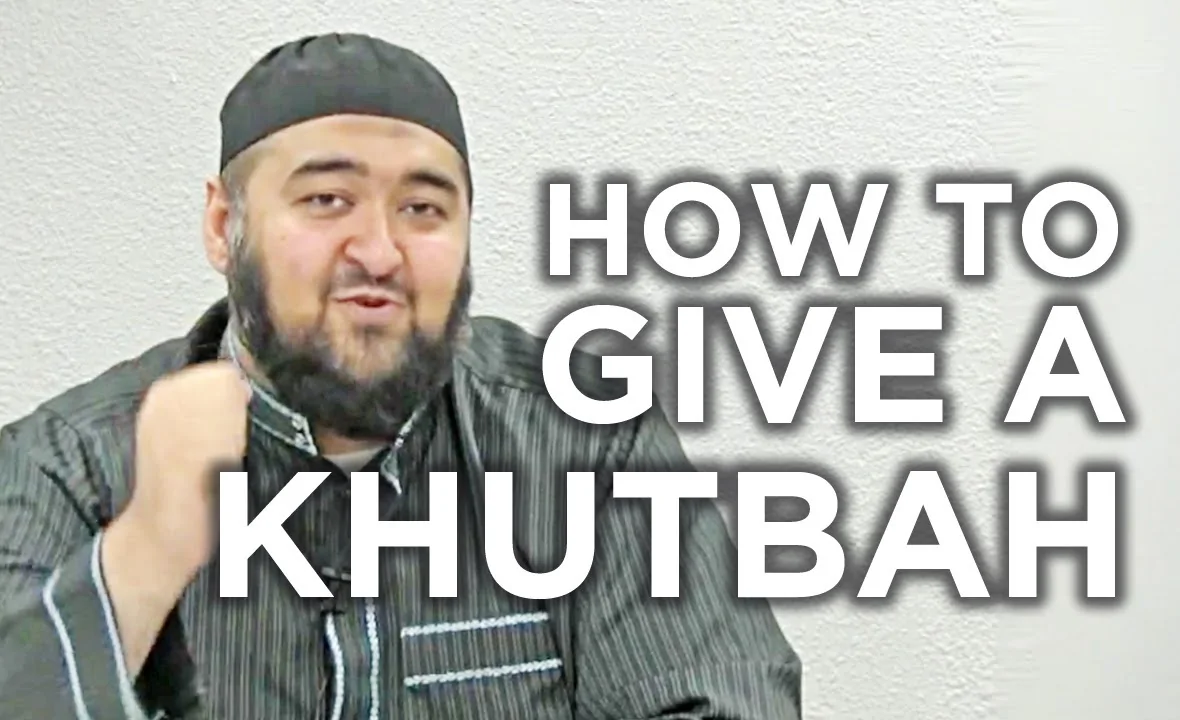
Every Muslim who steps onto the minbar carries more than a microphone — they carry a trust. Shaykh Navaid Aziz, director of the Islamic Information Society of Calgary (IISC) and a graduate of the Islamic University of Madinah, opens this khateeb training workshop with a sobering reminder: a poorly delivered khutbah doesn’t just bore the congregation, it risks turning people away from Islam altogether. For a faith grounded in guidance, spirituality, and the prophetic example, the Friday khutbah is one of the most powerful weekly touchpoints a Muslim community has — and that power demands both knowledge and preparation.
The Fiqh Foundation: Timing, Location, and Congregational Requirements
Before a khatib ever opens his mouth, there are shariah conditions that determine whether the Jumu’ah prayer is even valid. Shaykh Navaid walks through each with scholarly precision, grounding every ruling in Quran, Sunnah, and classical usul al-fiqh. Understanding these conditions is not dry legalism — it is the framework that gives the Friday gathering its spiritual legitimacy and communal purpose. The name “Jumu’ah” itself derives from jam’ — congregation — reminding us that unity and gathering are the very soul of this act of worship.
- Timing: The majority position (Maliki, Shafi’i, and others) holds that Jumu’ah begins after the sun passes its zenith (zawaal). A valid second opinion within the Hanbali school permits starting in the last sixth of the morning, supported by narrations of Companions praying before the zenith with the Prophet ﷺ.
- Location: The prayer must be held in a publicly known, unrestricted venue — not a private gathering of three friends at someone’s home. The location must be open to any Muslim who wishes to attend.
- Minimum congregation: While some scholars require 40 (citing the people of Banu Salim), the linguistically and textually grounded opinion is a minimum of three, with two being permissible based on the hadith: “Let one of you give the adhan and let the other lead the prayer.”
- Multiple Jumu’ahs: Permitted only by genuine necessity (e.g., the venue cannot physically accommodate the community) — not for convenience, such as students avoiding class conflicts they could schedule around.
- Khatib’s dress: No specific garment is required — no staff, no particular colour, no mandatory head covering. The khatib must only meet the general shariah requirements of covering the ‘awrah. Wearing something presentable is strongly encouraged as a mark of respect for the occasion.
“The general rule is that there are no requirements until they can be proven. If you want me to do something, please bring a proof for it — we’re not going to blindly follow customs.” — Shaykh Navaid Aziz
The Khutbah Itself: Structure, Language, and the Prophet’s Model
The khutbah is structurally simple but spiritually rich. It consists of two parts separated by a brief sitting, and each part has three obligatory elements. Shaykh Navaid emphasises that the Prophet ﷺ never abandoned the khutbat al-hajah — the opening formula of praise and testimony found in all six books of hadith — and aspiring khatibs should memorise it as a non-negotiable foundation. The Salah component that follows the khutbah need not be led by the same person who delivered the address, allowing communities to assign roles based on each individual’s strengths.
- First khutbah (3 elements): Praising Allah, reminding the congregation to have taqwa, and sending salah and salam upon the Prophet ﷺ.
- Sitting between the two parts: The brief pause that divides the khutbah; making istighfar during this pause is a common practice but not textually obligatory.
- Second khutbah (3 elements): Praising Allah, sending salah and salam upon the Prophet ﷺ, and concluding with du’a — which may be made in any language the congregation understands.
- Language of the khutbah: The khutbah does not have to be in Arabic. Allah sent every Messenger in the language of his people. Minimum standard: quote Quranic verses and hadith in Arabic first, then provide the translation. The purpose is comprehension and benefit — not performance.
- Recitation in the Salah: The Prophet ﷺ regularly recited Surah al-A’la and Surah al-Ghashiyah. If these are not memorised, any portion of the Quran suffices.
- Adhan: Two adhans are appropriate only when one is given publicly (e.g., in a marketplace) before the time of Jumu’ah, as was introduced during the time of ‘Uthman رضي الله عنه. When praying within a masjid only, one adhan given after the khatib ascends the minbar is sufficient.
“When you deliver a bad khutbah, you are potentially turning people away from Islam — that’s why being a khatib is a very, very huge responsibility that needs to be taken seriously.” — Shaykh Navaid Aziz
The art of the khutbah ultimately sits at the intersection of scholarship and sincere communication. A khatib who knows the fiqh but cannot connect with hearts has only done half the work; one who moves hearts but delivers errors in the deen has also fallen short. Shaykh Navaid’s workshop is a reminder that Islam equips its speakers with both — precise knowledge grounded in the Sunnah and the wisdom to translate that knowledge into living guidance for real communities. Whether you are preparing your first khutbah or refining years of practice, the standard is the Prophet ﷺ himself: clear, purposeful, spiritually nourishing, and always rooted in the remembrance of Allah. That is the legacy every khatib is called to carry forward.