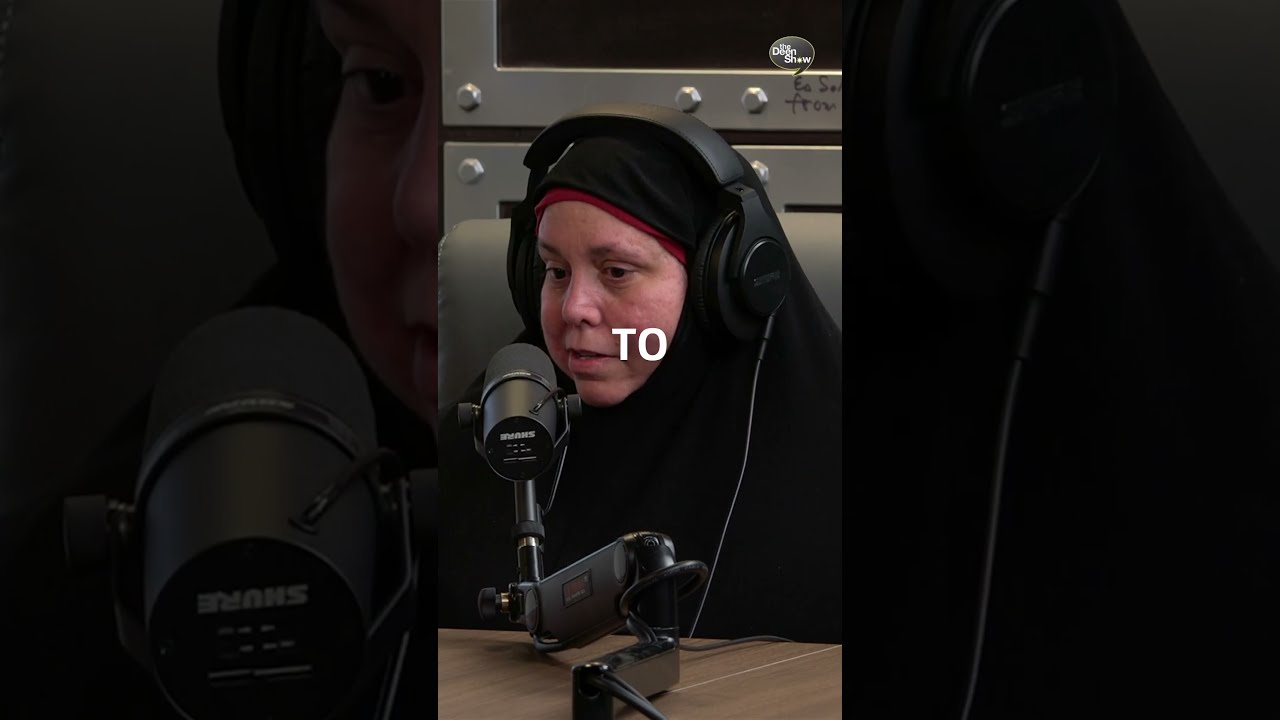
Sheikh Kamal El Mekki addresses this lecture directly to those within the ummah who struggle with music — not as an attack on their iman, but as an act of sincere care. These are believers who long for paradise, who love Allah, yet whose hearts have been gradually captured by something pulling them in the opposite direction. The statistics alone are sobering: research shows that young people between the ages of 15 and 20 listen to approximately 27 hours of music per week. Many of these same Muslim youth can name the childhood, relationships, and full discography of their favourite artists, yet struggle to name a single one of the Mothers of the Believers or recall the biography of a Companion of the Prophet ﷺ. Music has not simply become entertainment — for many, it has quietly displaced the Quran as the primary source of emotional nourishment, spiritual reference, and cultural identity. That displacement is the true conversation this lecture opens.
The Logical Case: What Surrounds Music Cannot Be Ignored
Long before producing Quranic verses or ahadith, Sheikh Kamal presents a straightforward logical test that any Muslim can apply: observe what consistently surrounds the thing in question. Halal things are reliably accompanied by good — prayer gatherings, Quran circles, and fasting bring together righteous people in an atmosphere of taqwa and sincere faith. Haram things, by contrast, are almost invariably surrounded by other forbidden elements. When a companion was asked directly whether music was halal or haram, his response was a question in return: “On the Day of Judgment, when truth and falsehood are separated — which side do you believe music will stand on?” The man acknowledged it would stand with falsehood. The companion replied: “Then go. You have answered your own question.” This same clarity is visible wherever music gathers people today.
“Let your first lesson to them be the hatred of musical instruments that begin with the Shaytan and end with the wrath of Allah; for it reached me from the people of knowledge that listening to music and songs grows hypocrisy in the heart the same way water causes plants to grow.”
— Umar ibn Abdul-Aziz, in a letter to the tutor of his sons
- Music gatherings routinely feature alcohol, smoking, gender intermingling, and immodest dress — environments that even the most devoted music lover would find incompatible with the masjid
- The fact that even the biggest music enthusiast would be deeply offended to hear rap played from the minbar during Jumu’ah proves that he himself recognises the feeling is fundamentally opposed to worship
- People who sincerely repent and return to Allah naturally stop attending nightclubs and music events — they already know what those spaces represent
- The Quran forbids fully covered women from even striking their feet loudly so their ankle ornaments are heard — yet music culture normalises far greater arousal of desire without hesitation
- Music produces an emotional intoxication that strips away modesty (haya), inflames desire, and — as the scholars warned — can do to the mind what alcohol does to the body
- Even certain Christian denominations, such as the Church of Christ, reject music in worship precisely because they recognise its power to stir what should remain guarded
Two Opposing Forces: The Quran Builds What Music Dismantles
The early scholars of Islam were unambiguous: music and the Quran cannot coexist in the heart of a believer because they move the soul in directly opposing directions. The Quran cultivates chastity, humility, accountability before Allah, and resistance to desire. Music — not the rare exception, but the mainstream that dominates what Muslim youth consume — promotes fornication, degrades women, glorifies substance abuse, and is written not by scholars or people of wisdom, but by individuals whose lives reflect the worst of human behaviour. Sheikh Kamal recounts the story of a genuinely righteous man who, after agreeing to merely listen to a woman singing behind a partition, found himself gradually overtaken — the fitna of hearing combined with the fitna of sight — until he stood on the verge of committing zina. He was saved only by the sudden, trembling memory of the decree of Allah and the punishment of the Day of Judgment, and he fled weeping, never to return. If music could erode the heart of a righteous person this way, what is it doing to hearts that carry less protection? Those who insist it “does not affect them” need only walk into a high school and observe: from dress, attitude, and identity alone, you can identify which music subculture each student belongs to. Music shapes people. It always has. And if it truly softened hearts and refined character, musicians themselves — the most saturated in it — would be the most gentle and virtuous among us. We know this is not the reality we observe.
“Those who believe, and whose hearts find satisfaction in the remembrance of Allah — for without doubt, in the remembrance of Allah do hearts find rest.”
— Surah Ar-Ra’d (13:28)
The message here is ultimately one of hope, not condemnation. Every Muslim who has been temporarily pulled away by music remains a believer with the full capacity to return, and the door to Allah is never closed. The evidence from the Quran, the Sunnah, the wisdom of the Companions, and even plain observation all converge on a single truth: music is not a neutral act, and the heart that fills itself with it is a heart that slowly empties itself of something far more precious. A scholar once asked a man who chose music over Quran a simple question — “If you know that Allah loves the Quran more, why do you not love what Allah loves?” — and the man had no answer. There is no lasting peace in a playlist, no true healing for the anxious soul in a beat, no genuine satisfaction in lyrics written by those who have no guidance to offer. Only the remembrance of Allah quiets the heart, steadies the spirit, and orients the believer toward purpose. The Quran is not merely a competitor with music — it is the cure, and it has been waiting all along.