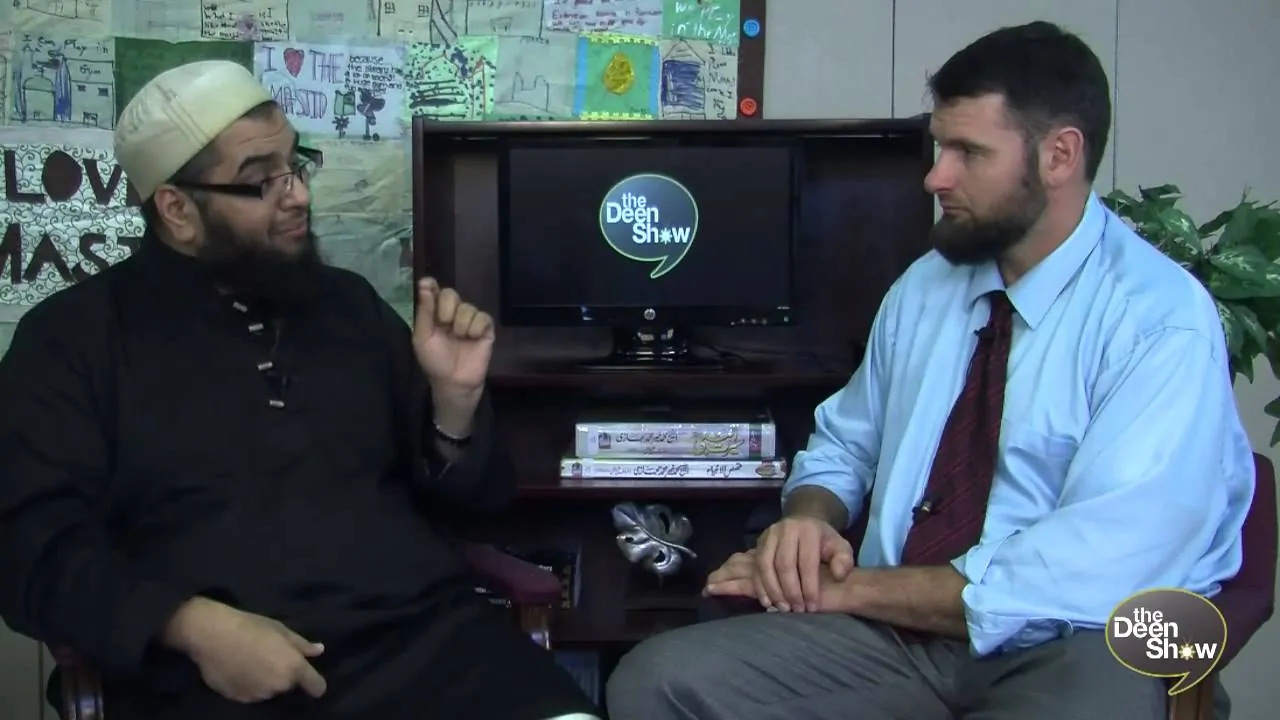
Few questions cut to the heart of Islamic identity as sharply as this one: can a person truly call themselves a Muslim while deliberately abandoning the five daily prayers? It is a question that arises not in abstract theology but in real life — from the young man drifting from his faith, the new Muslim still finding his footing, and the lifelong believer whose connection to Allah has quietly grown cold. Islam is not merely a label inherited at birth or a cultural identity worn on occasion. It is din — a complete way of life rooted in conscious submission to the Creator — and the Salah, the five daily prayers, is the living proof of that submission, performed in the body and declared by the tongue at least seventeen times every single day. Acknowledging that there is nothing worthy of worship except Allah and that Muhammad ﷺ is His final messenger is the foundation. The prayer is the proof that you mean it.
What the Quran, Sunnah, and Scholars Unanimously Affirm About Abandoning the Prayer
The scholarly position on this question, particularly as articulated by Imam Ahmad ibn Hanbal and grounded in explicit Quranic and prophetic texts, is both clear and sobering. Allah states in Surah al-Tawbah (9:11): “But if they repent, perform the prayer, and give Zakah, then they are your brethren in religion.” Brotherhood in faith — the bond that unites all believers — is explicitly tied to performing the prayer, not merely declaring it obligatory in principle. Surah Maryam (19:59–60) describes a generation that “gave up the prayers and followed their lusts,” adding that they are excluded from the believers unless they repent and truly believe, indicating that at the very time of abandoning prayer, they are not in a state of faith. The Companions of the Prophet ﷺ, as narrated by Abdullah ibn Shaqeeq and authenticated by al-Tirmidhi and al-Hakim, did not regard neglecting any deed as making a person a disbeliever — with one exception: neglecting the prayer. This was also the documented position of Umar, Muadh ibn Jabal, Abu Hurayrah, Ibn Masud, Ibn Abbas, Jabir, and others among the Sahabah — may Allah be pleased with them all.
“Between a man and shirk and kufr there stands his neglect of the prayer.” — Prophet Muhammad ﷺ (Narrated by Imam Muslim from Jabir ibn Abdullah)
- The ruling: Deliberately abandoning the prayer out of laziness — without denying its obligation — constitutes kufr akbar (major disbelief) according to Imam Ahmad and one of the two positions narrated from Imam al-Shafi’i, as cited by Ibn Kathir and Ibn al-Qayyim.
- The key linguistic distinction: The word al-kufr in the hadith carries the definite article in Arabic, indicating absolute disbelief — not the minor kufr mentioned in narrations about wailing or trading insults, which lack that definitive form.
- Denial vs. abandonment: One who denies the prayer is obligatory is a disbeliever regardless of whether they pray. But the texts about abandonment address the act itself — which is why this ruling stands on its own, independent of the person’s stated beliefs.
- The prophetic covenant: “The covenant that distinguishes between us and them is the prayer, and whoever neglects it has disbelieved.” (Reported by Ahmad, Abu Dawud, al-Tirmidhi, al-Nasa’i, and Ibn Majah from Buraydah ibn al-Husayb)
- Hope is never closed: The same texts that warn against abandoning prayer emphasise the door of repentance. The one who turns back to Allah, re-establishes the prayer, and sincerely repents returns to the fold of Islam — and Allah is Al-Tawwab, the Ever-Accepting of repentance.
Prayer Is Not a Burden on You — It Is the Lifeline Your Soul Was Designed For
Beyond the legal ruling lies a spiritual truth that the question of obligation often obscures: we do not pray because Allah needs our worship. He is Al-Ghani — entirely self-sufficient — and our prostrations add nothing to His majesty. The better question is not “why does God need my prayer?” but “do I need this prayer?” The answer, explored with rare depth in this episode, is yes — profoundly and practically so. The human being, like every sophisticated device that runs on constant output, depletes. The grind of work, the weight of family pressures, the corrosive effects of anxiety, moral failure, and spiritual fatigue wear us down from the inside. The Salah is the recharge point. And remarkably, it is not a monologue we offer into empty space. A hadith qudsi — a sacred tradition in which the Prophet ﷺ conveys the words of Allah directly — tells us that when the believer recites Surah al-Fatiha in prayer, Allah responds to every single verse. We are having a real conversation with our Creator a minimum of five times every day. This is what every prophet of Allah understood: Ibrahim prayed, Musa prayed, Isa (Jesus, peace be upon him) declared in the Quran, Surah Maryam, that his Lord commanded him to pray as long as he lived. When a Muslim establishes the Salah, they are not inventing something new — they are joining an unbroken line of worship stretching back to the very first human being, Adam, peace be upon him.
“The five daily prayers are faith made manifest — you say this is what I believe, but in the prayer you are showing that that’s what you believe.” — from this episode of The Deen Show
- Prayer as spiritual recharge: Just as a smartphone must be plugged in to maintain its extraordinary functions, the human soul requires the daily renewal of Salah to sustain clarity, gratitude, and moral strength through the ordinary pressures of life.
- A direct conversation with Allah: The Salah — particularly the recitation of al-Fatiha — is a two-way exchange. Allah responds to each verse, making every prayer a personal audience with the Creator of the heavens and earth.
- Prayer as an anchor: Even when a storm drifts the boat of your life off course, the anchor of Salah holds. When the storm settles, it pulls you back — to Allah, to yourself, to what matters.
- For the struggling family: The Prophet ﷺ, Khadijah, and Ali — the first household of Islam — prayed together. Praying as a family is simultaneously an act of worship and one of the most powerful tools for healing and strengthening the home.
- The first account on Judgment Day: The Prophet ﷺ taught that the first thing a person will be asked about is the prayer. If it is sound, all else follows. If it is not, everything else crumbles — like a magnificent building raised on a broken foundation.
- You do not need to be perfect to begin: The prayer is not the reward for becoming righteous — it is the mechanism by which you get there. Make wudu, stand, and speak to Allah. The connection itself is what purifies and guides.
The question “Can a Muslim have Islam without the prayer?” ultimately carries its own answer. Islam means submission to the will of Allah, and the Salah is that submission made visible, repeated, and embodied — five times daily, through every season of life. The evidences from the Quran, the authenticated hadith, and the near-unanimous position of the Sahabah and the major imams of Islam make this a matter settled with remarkable clarity. But beyond the scholarly ruling, it is the reality of the human condition that makes prayer not just obligatory but essential: we are creatures who forget, who drift, who exhaust themselves in the pursuit of this world, and who genuinely need to be anchored to something greater than themselves. If your spiritual battery has run dry, if your home is struggling, if you feel as though you have drifted far from what you once believed — the path back does not begin with waiting until you feel worthy. It begins with laying your forehead on the ground before the One who created you, reciting the words that Jesus, Moses, and Abraham recited before you, and trusting that Allah — who responds to every verse you speak — will guide your heart the rest of the way home.