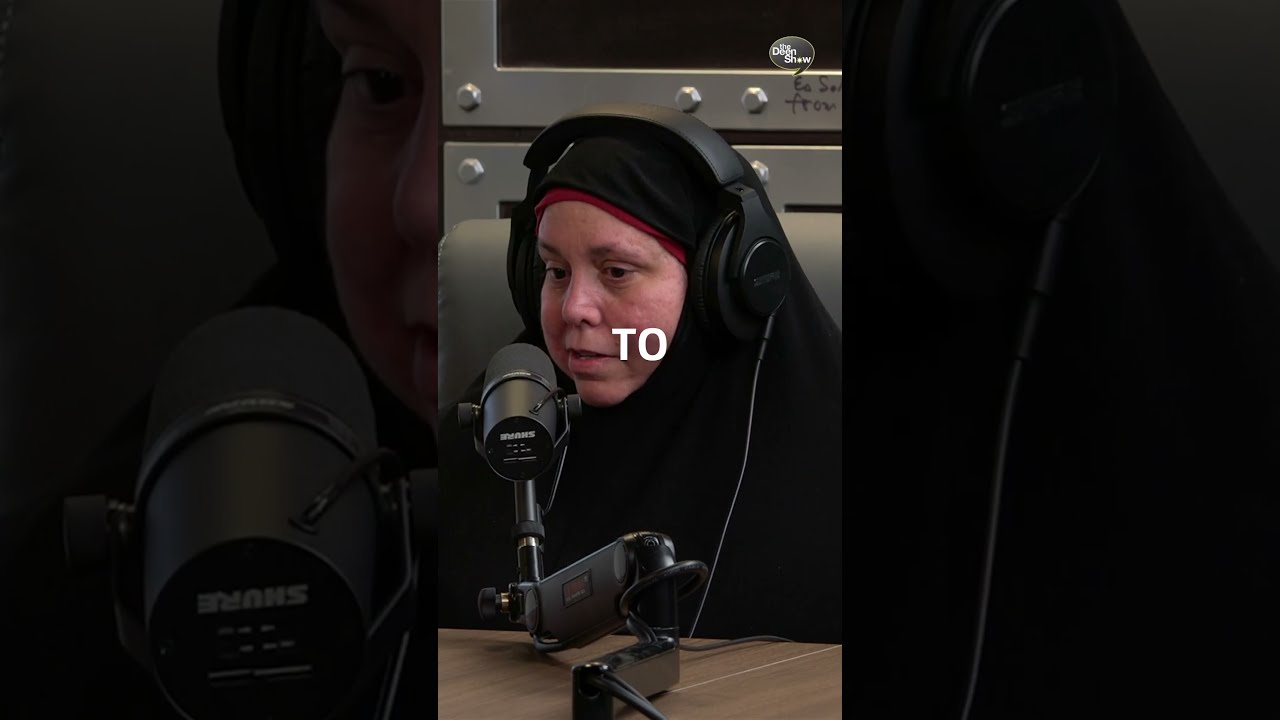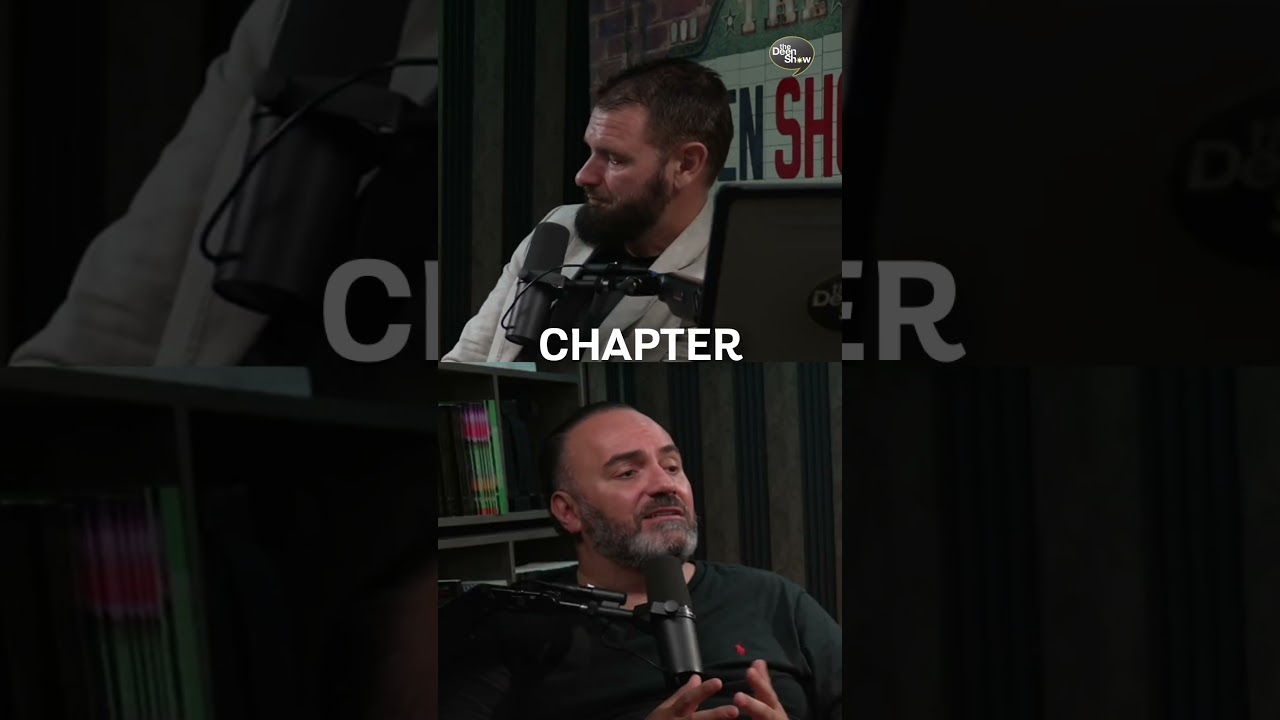
In a media landscape that frequently distorts the reality of Islam, four men sit together at the University of Illinois at Chicago to speak a quieter and more powerful truth: that genuine faith is not inherited by accident or adopted under pressure, but discovered — through honest questioning, patient seeking, and an inexorable divine pull toward the Creator of all things. A former atheist born in China, a former Catholic Filipino-American who converted alongside his family in 1998, a former Catholic gang member now pursuing a PhD, and a professor of mechanical engineering named after a prophet of the Old Testament — their backgrounds could hardly be more different. Yet each arrived at precisely the same destination: the Shahada, the testimony of faith that marks not an ending but the beginning of a life consciously submitted to Allah, the One God, the Creator of all existence.
The Shahada: Bearing Witness Beyond What the Eye Can See
The Arabic word “shahada” comes from a root meaning to see, to witness — and it is precisely this beautiful paradox that Sheikh Musa unpacked: Muslims declare witness to a God they have never seen and a prophet they have never met. This is not a flaw in the faith; it is the very nature of it. The Shahada — “I bear witness that there is no deity worthy of worship except Allah, and I bear witness that Muhammad is the messenger of Allah” — is the first and foremost of Islam’s Five Pillars, and its depth goes far beyond a ritual utterance. It is a covenant of the heart that demands sincere conviction, a conscious turning away from worship of anything lesser than the One who created all things. Allah, as Sheikh Musa clarified, is not a foreign or tribal concept — it is simply the Arabic word for the one true God, the same God worshipped by Jesus and Moses, used by Arab Christians and Arab Muslims alike. What the Shahada ultimately demands is not ceremony but transformation: a total reorientation of the self toward truth, purpose, and willing submission to the divine.
“The Shahada is a testification of your belief in the oneness of God — even though we’ve never seen God. There’s an indication here that your faith should be even more powerful and stronger than what you see with your eyes. When God has revealed something, that takes precedence even over our senses.” — Sheikh Musa Suang
From Atheism, Gang Life, and the Old Testament — Four Paths to the Same Truth
What makes this gathering extraordinary is the sheer diversity of backgrounds represented — and the unanimity of conclusion. Professor Jeremiah noted that as a child raised in a “Holy Roller” church, spending hours each week immersed in scripture, it was reading the Old Testament prophets that first planted a seed of longing in him. He found in Islam what he could not find in the New Testament alone: theological continuity, an unbroken prophetic line from Abraham and Moses all the way to Muhammad ﷺ, the seal of all prophets. John Smithers was drawn in by Persian music on iTunes, YouTube lectures by scholars like Sheikh Hamza Yusuf, and a piece of Arabic calligraphy he saved to his desktop simply because he found it beautiful — only to discover, when a Muslim student spotted it in a lecture hall, that it was the Shahada written in ink. “I don’t feel like I chose Islam,” John reflected. “Allah chose me to be a believer.” Musa recounted how a philosophy professor’s vivid description of heaven and hell brought the hereafter from mythology into startling reality, igniting a search that led him — and his brother and cousin — to embrace Islam within weeks of one another. And Lukman, who had discovered Malcolm X through Tupac Shakur in college, opened the Quran one day and found its 31st chapter bearing a name that was already his own.
- Lukman (former atheist, Chinese-American): Inspired by Malcolm X and guided by his mentor Dr. Muhammad Amin; found his Chinese name, Luman, mirrored in the Quran’s 31st chapter, Surah Luqman. Took his Shahada in Beijing, China, and found Islam’s history of standing against racism a natural fit for his identity as an immigrant and racial minority.
- Musa / Edwin (former Catholic, Filipino-American, 1998): A philosophy class made heaven and hell viscerally real for the first time. A Filipino Muslim convert named Eugene opened the door. His brother, cousin, and best friend all embraced Islam alongside him, turning personal conviction into a family transformation — despite fierce initial parental opposition.
- John Smithers (former gang member and former Catholic, 2012): Recruited into a Chicago gang at 13; walked away years later toward education and a sociological search for meaning. The Shahada calligraphy on his desktop, identified by a UIC student, led him to the Muslim Students’ Association and his declaration of faith within weeks.
- Jeremiah (assistant professor, UIC): Named after the Old Testament prophet; drawn to Islam’s unbroken prophetic continuity — a chain he found missing in the discontinuity between the Old and New Testaments — running from the earliest scripture through to the final and complete revelation of the Quran.
- Science and faith are not enemies: A sociology professor who openly discussed his own belief in class showed John that being a rigorous intellectual and a sincere believer are not mutually exclusive — a realisation that dismantled a false and damaging dichotomy many educated seekers carry.
- Taking the names of the prophets is virtuous: Musa chose his Islamic name — Arabic for Moses — from a poster of the prophetic lineage displayed the very night he took his Shahada. The Prophet Muhammad ﷺ advised believers to name their children after prophets, in hope they would aspire to follow their noble qualities and walk their righteous path.
Inner Peace Amid Outer Pressure: Challenges, Misconceptions, and Gratitude
“When I embraced Islam, from that day on I knew I never wanted to drink, never wanted to harm my body — because I realised it was a blessing to see life through the perspective of Islam. It is like a lens that clarifies life for you. I said: this is what I’ve been looking for all my life. Now all I have to do is live up to it.” — Musa (Edwin Suang)
The four men spoke honestly about the challenges that followed their conversions — Musa’s parents feared his faith would fracture a tightly bonded Filipino family; the broader Muslim community post-9/11 faced waves of suspicion and misrepresentation that Professor Jeremiah recognised as the same historical cycle of prejudice directed at every minority group that has ever sought a place in American society. His counsel was measured and wise: recognise the pattern, learn from those who came before and made space for others, and stand against injustice wherever it exists — because doing so builds bridges with natural allies across every background and belief. Yet what strikes each of these men most profoundly is not the weight of external resistance, but the extraordinary peace of internal transformation. Islam did not merely answer their intellectual questions about God, prophecy, and the hereafter; it answered the deeper question that every human soul carries — the question of why we are here, how we should live, and who we ultimately answer to. For the viewer who has absorbed a steady diet of fear and misrepresentation about Islam, the testimonies of these four men — a Chinese atheist, a Filipino Catholic, a Chicago gang member, and a tenured professor — offer not a theological debate, but a living proof: that the guidance of Allah reaches across continents, cultures, centuries, and circumstances, and that when a heart sincerely seeks the truth, it is never left without a path.