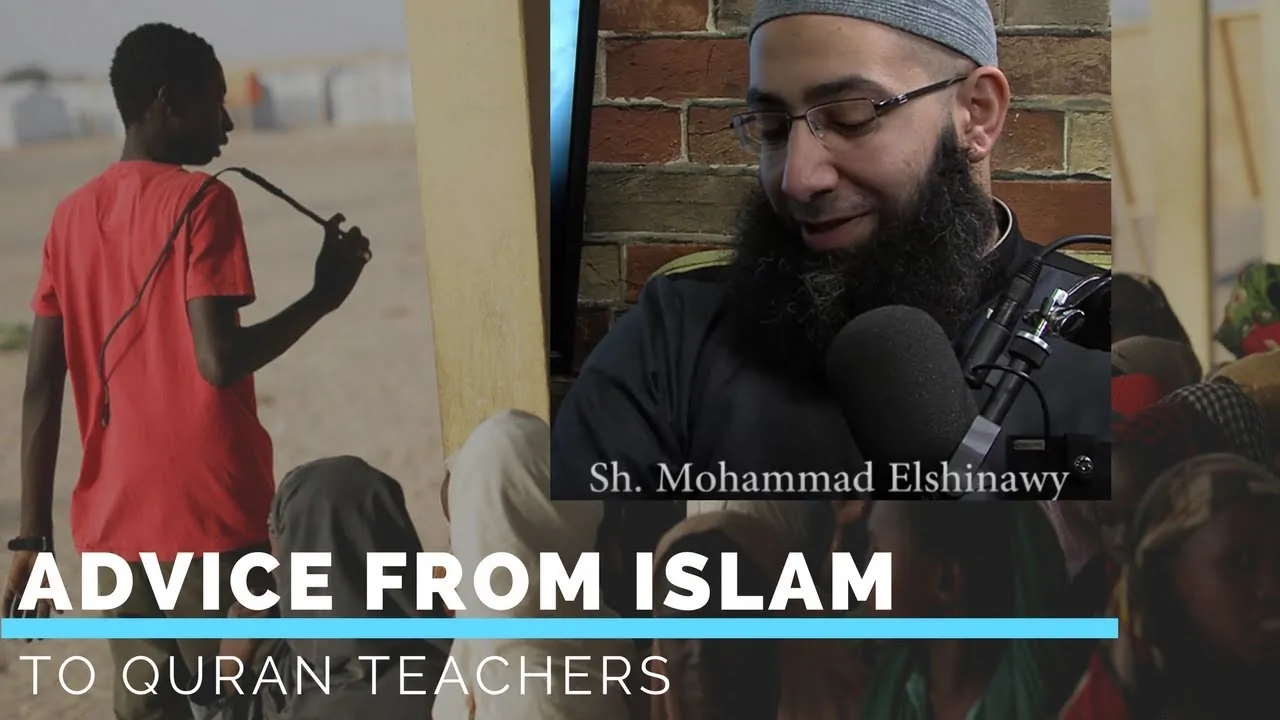
Every Muslim parent and Quran teacher carries an immense responsibility when it comes to nurturing children in the path of Islam. Research from Yaqeen Institute confirms that one of the primary reasons people reconsider their affiliation with Islam is bad experiences that create resentment toward the religion, its personalities, and its atmosphere. When children are subjected to yelling, harsh language, and demoralizing words during their Quran education, the damage can extend far beyond the classroom, potentially pushing them away from their faith entirely.
Why Anger and Harsh Words Have No Place in Teaching the Quran
The Prophet Muhammad (peace be upon him) said repeatedly, “Do not get angry, do not get angry, do not get angry.” Scholars explain this means two things: first, avoid the situations and triggers that lead to anger; second, when anger does arise, restrain yourself and do not act on it. Speaking or acting in anger only leads to regret, whether that means breaking something precious, damaging a relationship, or worst of all, pushing a child away from the Book of Allah. Calling a child “stupid” or “dumb” is absolutely unacceptable for any believer, let alone someone entrusted with teaching the sacred Quran. The Prophet (peace be upon him) was clear when he said, “I was not sent to invoke God’s curse on people.” Anas ibn Malik served the Prophet for ten years and testified that he never once said “why did you do that?” or “why didn’t you do that?” Even when young Anas deliberately disobeyed, the Prophet simply placed his hands gently on his shoulders and redirected him with kindness.
Human beings are like seatbelts — they just don’t come with snatching. It just doesn’t work. You think you have control, but you don’t. People have their own pace, and that’s a huge part of it.
The Power of Positive Reinforcement in Islamic Parenting and Teaching
- Focus on the positives: The Prophet (peace be upon him) compared the believer to a bee that lands gently on nectar and produces something sweet, unlike the fly that only lands on filth. Catch children doing things right and amplify that goodness.
- Praise with purpose: The Prophet praised his grandson, calling him “a chief who will lead the people,” and called young Muadh ibn Jabal “the most knowledgeable of my ummah.” This empowerment builds children up in faith and confidence.
- Speak about actions, not the child: Never brand a child with labels like “hard-headed” or “foolish.” Address the behavior, not the person. This golden rule preserves the child’s dignity and self-worth.
- Use indirect encouragement: One parent spent two years trying to force a child to say “thank you” with no success. When they switched to praising a sibling who remembered, the reluctant child began saying it on his own within one week.
- Get practical support: If a Quran teacher has 30 or 40 students, consider reducing class sizes, hiring an assistant, or developing a reward system. Specialists in Quran do not always have training in classroom management, and offering help is an act of community care.
The Prophet (peace be upon him) said, “Allah is gentle and loves gentleness, and grants on the basis of gentleness what He does not grant on the basis of harshness.” Mercy with children is not optional in Islam — it is a requirement for receiving the mercy of God.
Quran Teachers Are Held to a Higher Standard
The Prophet (peace be upon him) said, “The best of you are those who learn the Quran and teach it.” This distinction comes with profound accountability before Allah. A Quran teacher is not simply helping children memorize words; they are walking examples of everything the Quran teaches — patience, good manners, ethics, and mercy. If a teacher’s words call children toward Allah’s Book but their actions drive children away through harshness and humiliation, the negative impact will outweigh the positive. We would never tolerate such behavior in a public school, and we certainly cannot tolerate it from those who are supposed to represent the best among us. Parents must address this with love and offer constructive alternatives, while teachers must remember that retaining Muslims in the faith is just as vital as bringing new people to Islam. The path forward for every parent and Quran teacher is clear: embrace the Prophetic model of gentleness, replace harsh reactions with mercy, and trust that Allah’s way will always produce better results than our own frustration ever could.