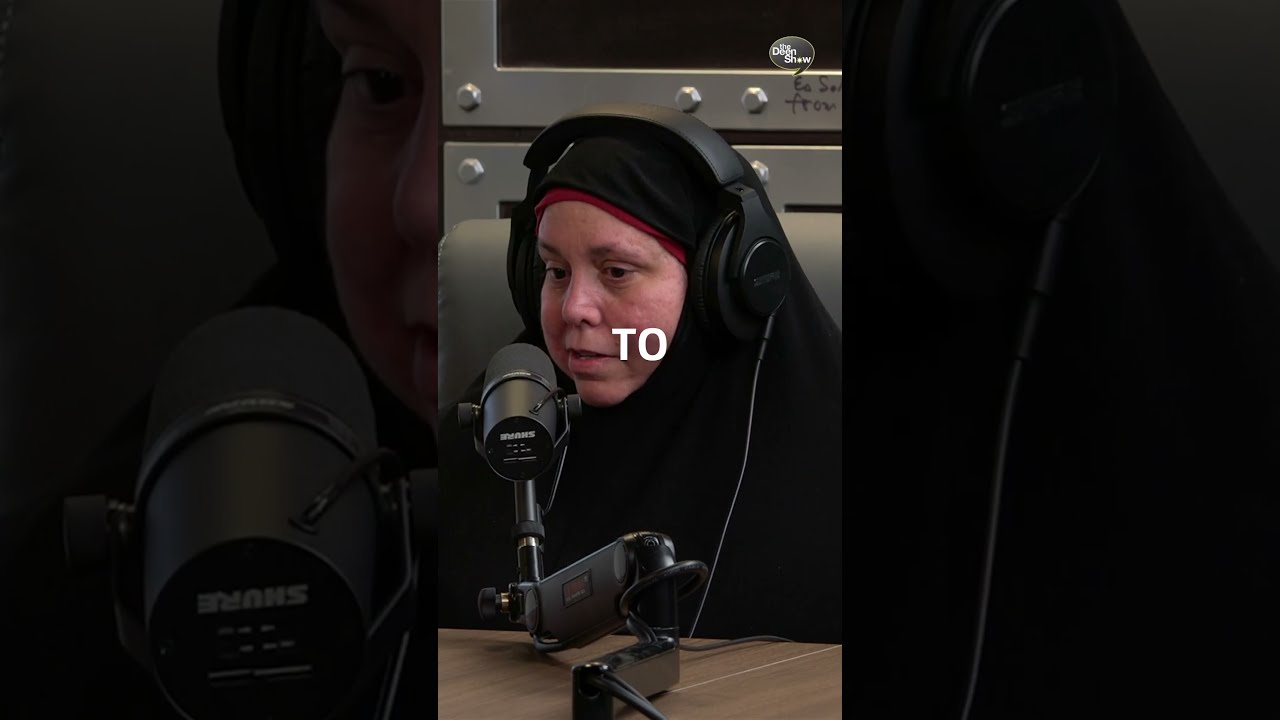
Some journeys to Islam begin with a dream, a crisis, or a chance encounter — but Shaykh Joe’s began with a question no pastor could answer. Baptized at the age of eleven in a Southern Baptist church in Charleston, South Carolina, Joe was the kind of child who took his faith seriously, attending Vacation Bible School and Sunday school with genuine earnestness. But beneath that devotion stirred an intellect that would not stay quiet. When he went to his pastor and asked — with the sincerity of a child who actually believed — how Jesus could be God, the Son of God, and yet also be his own father, the answer he received was not scripture or reason. It was simply: “Son, you just have to have blind faith.” That moment planted a seed. God, as the Bible itself says in Corinthians, is not the author of confusion. So why, Joe reasoned, was he so confused? His search for clarity — for a faith built on reason, not contradiction — would take him from a public library encyclopedia in pre-internet Jacksonville, Florida, all the way to the Islamic University of Madinah.
A Teenager’s Honest Investigation Across Every World Religion
“I started researching Shintoism, Jainism, Sikhism, and all of the Eastern religions I had never been exposed to — and every time I contrasted and compared, Islam came up on top. Whether it was justice, beauty, devotion, prayer, or duty to parents — Islam always came out on top. And that’s what motivated me to become a Muslim.” — Shaykh Joe
At fourteen, Joe came across a reader’s column in his older sister’s magazine written by a young woman who had embraced Islam — describing it as the most amazing thing that had ever happened to her. He had grown up in Detroit and Jacksonville around Arab communities but had never encountered Islam as a faith. Curious and intellectually restless, he spent a full year — from age fourteen to fifteen — visiting school libraries and public libraries, reading encyclopedias and every source he could find. His investigation was methodical and sincere: he did not just look into Islam but compared it systematically against every major world religion, including the Eastern traditions he had never previously explored. Islam, time and again, satisfied him most completely — not because of emotion or mystical experience, but because it aligned with his fitra, the innate human disposition toward pure monotheism that his soul had been searching for since the day it rejected the idea of worshipping a man. Key insights from his journey include:
- The concept of baptism — renewal through water — has a parallel in Islam: the Prophet ﷺ taught that “Islam wipes away everything that came before it,” mirroring the spiritual fresh start Joe sought through baptism at eleven.
- Joe’s natural fitra rejected the deification of Jesus long before he encountered Islam — he noticed that Abraham, Moses, Isaiah, and Jesus himself all worshipped God, not each other, and was troubled by the theological break that came after.
- When he visited the Islamic Center of Northeast Florida and heard Muslims speak of Jesus with reverence — as one of the mightiest messengers of God — he felt he had found continuity, not abandonment.
- Islam’s invitation to reason and reflection, evident in nearly every verse of the Quran, stood in direct contrast to the “blind faith” he had been offered as a child; the Quran says repeatedly: ponder this, think about this, look at the signs in the heavens and the earth.
- After accepting Islam at fifteen, Joe learned Arabic — the original language of the Quran — entirely within the United States before travelling to Madinah in 1999, where he completed his Bachelor’s and Master’s degrees in Islamic studies.
The Universality of Submission: What Islam Actually Means
One of the most powerful clarifications Shaykh Joe offers is the Islamic understanding of the word Muslim itself — and how it reframes the entire history of human spirituality. A Muslim is simply one who submits their will and life to God. By that definition, Abraham was a Muslim. Moses was a Muslim. Jesus was a Muslim. Islam, understood as submission to the One Creator, is not a religion that began in 7th-century Arabia — it is the original, unbroken thread of divine guidance sent to humanity since the first man, Adam, peace be upon him, and confirmed and completed through the final Prophet Muhammad ﷺ. Shaykh Joe’s own story is a living illustration of this truth: a boy from Detroit, baptized in the American South, who studied world religions in public libraries, learned Arabic from scratch, and earned a Master’s degree in Madinah — not because he was born into Islam, but because he chose it with his eyes fully open, after a year of honest, comparative research. His advice to Muslims is equally compelling: faith is not an ethnic or cultural inheritance, it is a conscious decision that demands understanding. “If I claim to be a Muslim, I should know Islam.” And to those still searching, his counsel is simple and timeless: remain open, do your own research, think for yourself — and when you seek the truth with sincerity, God will guide you.
“If you want to know how to live a moral life to the fullest, you need to know what the Creator of the heavens and the earth wants from us. Human beings are limited in our comprehension — we can’t do it alone. The tracks on the beach mean someone was walking there. The stars in the sky — all of these things should tell us that there is something that made all of this, and that made us.” — Shaykh Joe
Shaykh Joe’s journey is not simply an inspiring conversion story — it is a reminder that the path to Islam, for many, is paved with genuine intellectual struggle, honest questioning, and the courage to follow truth even when it conflicts with the world around you. He did not leave Christianity out of rebellion or social pressure; he left it because his God-given intellect refused to accept confusion as an answer. And he did not arrive at Islam out of convenience — he arrived after comparing it, rigorously and sincerely, against every alternative he could find. For Muslims who may have grown complacent in their faith, his example is a call to re-engage with the profound gift they carry. For those still searching — regardless of background, culture, or what the media has shown them — his story stands as proof that when the heart is sincere and the mind is open, the guidance of Allah finds its way. The truth, as Shaykh Joe’s life demonstrates, is always there for those who are genuinely looking for it.