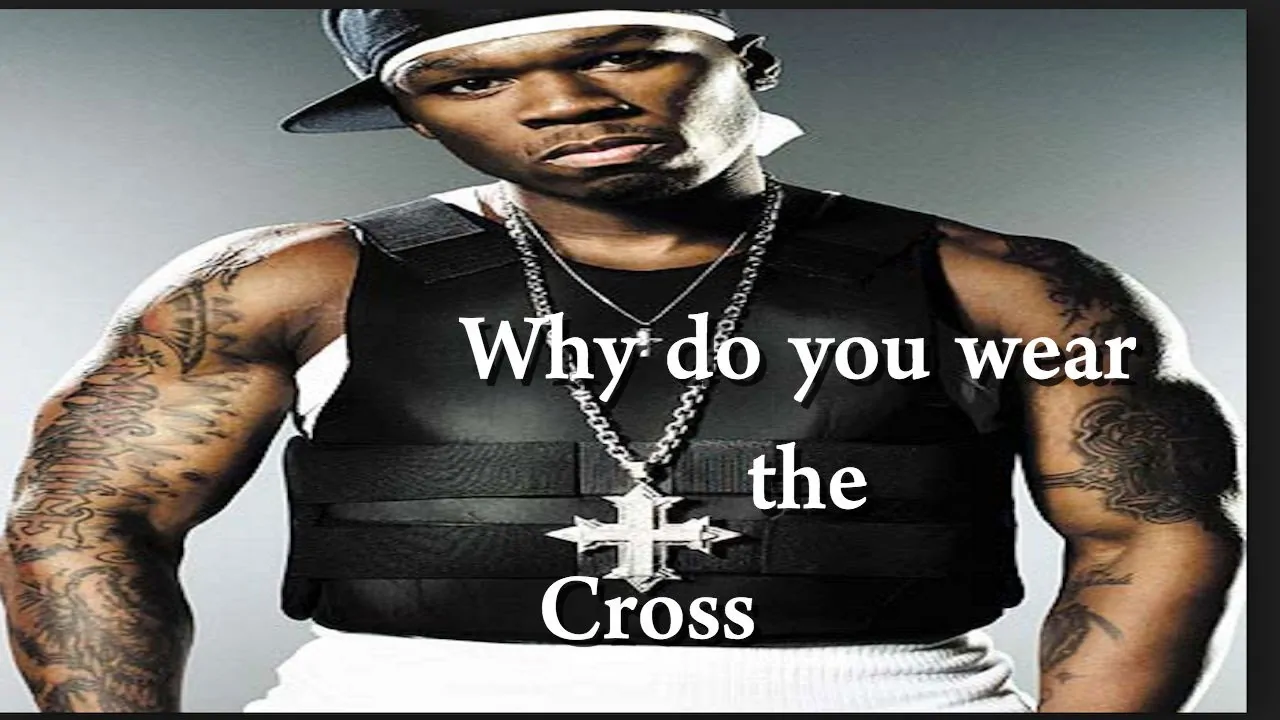
When you see 50 Cent step onto a stage with a diamond-encrusted cross swinging from his neck, or watch a Hollywood celebrity flash one on the red carpet minutes after a music video glorifying violence and promiscuity, a sincere and important question demands to be asked: have you actually thought about what you are wearing, and why? The Deen Show poses this question — not from a place of arrogance, but with the genuine love, humility, and intellectual honesty our shared humanity deserves. Jesus (peace be upon him), one of the mightiest Messengers ever sent by the Almighty Creator, never asked anyone to worship him, venerate an instrument of execution, or cling to an idol for comfort. His message was singular, consistent, and powerful: worship God alone, without intermediaries, without partners, without images — and that message is precisely what Islam upholds to this day.
The Cross Around Your Neck: Good Luck Charm or Sincere Act of Faith?
Consider a simple but piercing thought experiment: if Jesus (peace be upon him) had been executed by another means, would his followers wear miniature electric chairs, gallows ropes, or Winchester rifles around their necks? The instrument of a tortured execution is not a symbol of love — it is a symbol of death that has been transformed, over centuries, into a fashion accessory and cultural shorthand bearing almost no connection to Jesus’s actual teachings. We see it draped around the necks of rappers and celebrities while they celebrate the very things every Prophet warned against. This is not faith — it is idol worship wearing the mask of faith. Islamic scholarship, the Permanent Committee for Scholarly Research and Ifta’, and the authentic Sunnah are all unambiguous on this point. Key takeaways from this discussion include:
- Jesus (peace be upon him) never claimed to be God, never instructed people to worship him, and never asked anyone to venerate a symbol of his execution — these doctrines were added by human hands centuries later.
- The cross has devolved into a cultural idol — worn for fashion, identity, or superstition — directly contradicting the monotheistic message carried by every Prophet and Messenger sent by God.
- The Prophet Muhammad (peace and blessings be upon him) would not leave anything bearing the image of a cross in his household without altering it, as recorded in Sahih al-Bukhari (5952).
- Classical Islamic rulings hold that a Muslim who wears a cross after being informed of its theological implications and ruling enters a matter of grave spiritual consequence.
- The cross at the end of the day cannot help you — only the Almighty can, when you turn to Him alone, directly, without charm or symbol standing between you and God.
“Whoever imitates a people is one of them.” — Prophet Muhammad (peace and blessings be upon him), narrated by Abu Dawood (3512), authenticated by al-Albani. Shaykh al-Islam Ibn Taymiyyah commented that this, at minimum, indicates the prohibition of imitation — while its outward meaning implies the imitator joins those being imitated in identity and allegiance.
What Jesus Truly Taught — And Why Islam Is the Fulfilment of His Message
Strip away centuries of accumulated tradition, human interpolation, and cultural mythology, and the message of Jesus (peace be upon him) emerges with clarity: know the one God, and know that the Messiah was His sent Messenger — not God Himself. This is confirmed in John 17:3, where Jesus says, “Now this is eternal life: that they know you, the only true God, and Jesus Christ, whom you have sent.” The Creator is the only true God. Jesus is the one sent. The distinction is explicit, and it is the very distinction Islam has always championed. The Shahada — the Islamic testimony of faith — encapsulates this perfectly: nothing is worthy of worship except the One Creator, and Prophet Muhammad (peace and blessings be upon him) is His final Messenger. Accepting this includes belief in every prior Messenger — Abraham, Moses, Jesus the Messiah — each carrying the same unbroken call to pure Tawhid (monotheism), each warning against idol worship, saint worship, superstition, and the false comfort of symbols that cannot intercede, protect, or save.
“But they killed him not, nor crucified him, but it appeared so to them.” — The Quran, Surah al-Nisa (4:157). Islam affirms that Jesus (peace be upon him) was not crucified, meaning the central premise behind the cross as a salvific symbol rests on a theological claim that the Book of God directly refutes — making the cross not just a forbidden imitation, but a symbol rooted in a narrative Islam does not accept.
If you sincerely love Jesus (peace be upon him) — and many people genuinely do — then the truest expression of that love is to follow what he actually lived and taught: worship the Creator alone, reject idol worship in every form it takes, and seek guidance from God directly, without charm, symbol, or cultural habit standing between you and the Divine. Every Messenger from Adam to Muhammad (peace be upon them all) carried the same message as the greatest gift to humanity, and that message has never needed a gold chain or a jewelled pendant to carry its weight. The starting point, as this episode reminds us, is not a seminary debate or a theological argument — it is the heart. Ask the Almighty sincerely, earnestly, and with an open soul to guide you to that which is pleasing to Him, set aside whatever was inherited blindly from ancestors or absorbed from celebrity culture, and you will find that Islam is not a foreign religion imposed from without, but the timeless, unspoiled fulfilment of every sincere seeker’s journey back to the one God who created us all.