Wudu (ablution) is the ritual purification every Muslim must perform before standing in prayer — a sacred act of cleansing that bridges the physical body and the spiritual heart. Rooted in the Quran and demonstrated through the living Sunnah of the Prophet Muhammad ﷺ, wudu is far more than routine hygiene; it is a deliberate act of devotion, a conscious turning toward the Creator before every prayer. Every prophet of God — from Moses to Jesus, peace be upon them all — practiced purification before approaching Allah, and this timeless tradition has been preserved in Islam for over 1,400 years, unchanged in its wisdom and its method. The Prophet ﷺ reminded us: “The key to Paradise is prayer, and the key to prayer is cleanliness.”
The Complete Step-by-Step Method of Performing Wudu
“O you who believe! When you intend to offer As-Salaah (the prayer), wash your faces and your hands (forearms) up to the elbows, rub (by passing wet hands over) your heads, and (wash) your feet up to the ankles… Allah does not want to place you in difficulty, but He wants to purify you, and to complete His Favour to you that you may be thankful.” — [Al-Ma’idah 5:6]
Performing wudu correctly requires both sincere intention and proper sequence — each step deliberate, each movement an act of worship. Begin by setting the intention (niyyah) silently in the heart; it is never spoken aloud, for its place is between the servant and Allah. Then say Bismillah — “In the name of Allah” — to consecrate every action that follows. The Prophet ﷺ demonstrated the full method to his companions, and it has been transmitted faithfully ever since through authentic hadith, including the narration of ‘Uthman ibn ‘Affan (may Allah be pleased with him).
- Intention (Niyyah): Set the intention internally to purify yourself for prayer; say Bismillah to begin
- Wash the hands: Three times, interlacing fingers to clean thoroughly between them, starting with the right
- Rinse the mouth: Three times, swirling water around the inside of the mouth
- Rinse the nose: Three times — right hand draws water in, left hand blows it out
- Wash the face: Three times from hairline to chin and ear to ear; men run wet fingers through the beard
- Wash the forearms: Three times up to and including the elbows, right arm then left — remove anything blocking water (nail polish, paint, dough)
- Wipe the head and ears: Once, using fresh water — hands move front to back and back to front; index fingers clean inside the ears, thumbs wipe behind
- Wash the feet: Three times up to the ankles, right then left, ensuring water passes between every toe
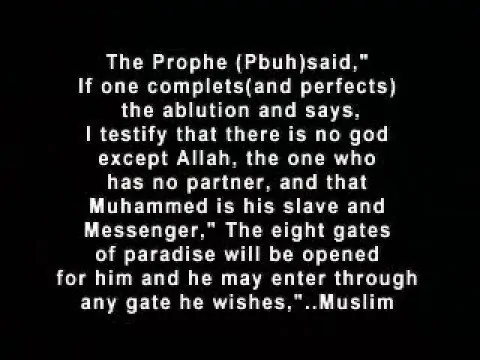
- Conclude with the Shahada: Ashhadu an laa ilaaha ill-Allaah wahdahu laa shareeka lah, wa ashhadu anna Muhammadan ‘abduhu wa rasooluhu
What Nullifies Wudu — and When a Full Ghusl Is Required
Knowing what invalidates wudu is just as important as knowing how to perform it, and Islam provides clear, practical guidance on both. Wudu is broken by using the toilet, touching the private parts, passing wind, losing consciousness, or falling into deep sleep. A complete ritual bath (ghusl) — which goes beyond wudu — is required before prayer after sexual intercourse, a wet dream, menstruation, or postnatal bleeding. For valid wudu, the water used must be pure (tahir), the person must be of sound mind and have reached the age of discernment, and nothing that prevents water from reaching the skin — such as nail polish, dried paint, or wax — may remain on the hands, arms, or feet. One notable Sunnah concession: if socks were worn after washing the feet during a previous, valid wudu, a Muslim may wipe over the top of the socks for subsequent prayers without removing them, for up to one day and night for a resident and three days for a traveller.
- Wudu is nullified by: using the restroom, touching the private parts, passing wind, deep sleep, or loss of consciousness
- Full ghusl is required after: sexual intercourse with one’s spouse, a wet dream, menstruation, and postnatal bleeding
- Valid wudu requires: pure water, sincere intention, Muslim faith, sound mind, and skin unobstructed by barriers
- Sunnah concession: wiping over leather socks (khuffayn) or regular socks is permitted for those who wore them over a complete wudu
- Order is obligatory: face → arms → head → feet, performed continuously without lengthy interruption
“Whoever does wudu as I have done it, then prays two rak’ahs in which he focuses completely on his prayer, his previous sins will be forgiven.” — The Prophet Muhammad ﷺ (Narrated by Muslim, Al-Tahaarah, 331)
The Spiritual and Physical Wisdom Behind Islamic Purification
Everything Allah prescribes carries profound wisdom, and wudu is a remarkable example of divine guidance that serves both body and soul simultaneously. Modern medicine continues to affirm the health benefits of regularly washing the hands, face, nostrils, and feet — the precise acts a Muslim performs at least five times daily as a prerequisite to prayer. Yet the deeper gift of wudu is spiritual: the moment water meets skin with conscious intention, something shifts — the noise of daily life quiets, the heart turns, and the believer stands purified before the Creator of the heavens and the earth. Scholars of Islam have long emphasized that wudu is not merely preparation for worship; it is worship. Upon completing it, the believer is encouraged to add: Allahumma ij’alni min al-tawwabeena wa-j’alni min al-mutatahhireen — “O Allah, make me of those who repent and of those who purify themselves.” If the key to Paradise is prayer, and the key to prayer is purification, then every drop of water used with sincerity is a step closer to Allah’s mercy — a reminder that in Islam, the path to the Divine begins not in grand gestures, but in the quiet, faithful act of washing one’s hands.