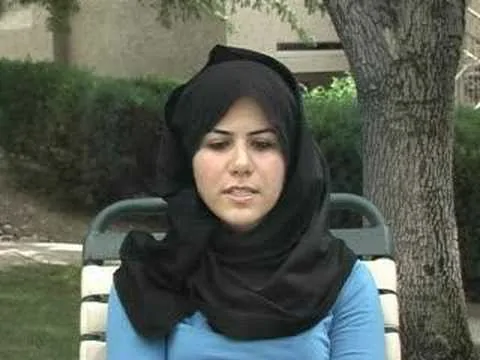
Few aspects of Islamic practice invite as much curiosity — and as many misconceptions — as the hijab. In contemporary society, where a woman’s value is too often measured by how much she reveals, the hijab stands as a quiet but powerful counter-statement: that true worth lies in faith, character, and soul. When Muslim women are asked why they wear the hijab, the answers are remarkably consistent and deeply personal — rooted in submission to Allah, a desire for genuine respect, and a spiritual identity that no cultural pressure can diminish.
A Divine Command Rooted in Mercy, Not Restriction
“And tell the believing women to lower their gaze and protect their private parts, and to draw their veils all over their bodies, faces, necks and bosoms… that is purer for your hearts and for their hearts.” — Quran, Surah al-Noor (24:31) & Surah al-Ahzaab (33:53)
The obligation of hijab is not a human tradition that evolved over centuries — it is a direct command from Allah, revealed in the Quran and confirmed through authentic hadith. When the women of the early Muslim community heard the verse of Surah al-Noor, they did not hesitate: they tore their garments and covered themselves immediately, earning the praise of Aisha (may Allah be pleased with her) for their swift and wholehearted obedience. This is the spiritual foundation of hijab — an act of taqwa, a response of love and trust in Allah’s wisdom. The women featured in this episode reflect that same spirit: “The number one reason I wear hijab is to only be submitting to God and to follow God’s laws and rules.” Another draws on a remarkable historical insight — that in pre-Islamic Arabia, the head covering was a mark of royalty, worn by women of elevated status, and Islam extended that dignity universally to every believing woman as both a right and a responsibility. The key spiritual and textual pillars of hijab include:
- The explicit Quranic commands in Surah al-Noor (24:31) and Surah al-Ahzaab (33:59) to cover and guard modesty
- The unanimous practice of the female Companions (Sahabiyyat), who covered themselves upon receiving the revelation — described by scholars as among the strongest evidence for hijab’s obligation
- Authentic hadith narrating how the wives of the Prophet ﷺ maintained hijab even during Hajj while in ihraam
- The scholarly consensus of scholars such as Ibn Hajar and Shaykh al-Shanqeeti that hijab is an obligation of faith rooted in the Quran and Sunnah, not cultural convention
- The Islamic principle that Allah’s guidance is rooted in mercy and wisdom — designed to honour and protect women, not diminish them
Empowerment, Identity, and Dismantling the Myth of Oppression
Perhaps the most persistent misconception surrounding hijab is that it is a tool of male oppression — that Muslim women are forced to wear it by fathers or husbands. Muslim women categorically and consistently reject this narrative. “My father never forced it on me — it was a choice, and I really like it,” says one woman. Another, who works as an architect, shares how the hijab has strengthened her professional standing: male clients engage with her education, her competence, and her ideas rather than her physical appearance. “I’m not a distraction for them — instead, they’re more engaged in business and how educated I am.” Far from holding women back, the hijab creates space for intellect, character, and faith to take centre stage. It is also important to distinguish between culture and religion: hijab is not a Middle Eastern tradition — it is a universal Islamic obligation observed by believing women of every nationality, background, and profession. The women in this discussion dispel common misconceptions with confidence and good humour — whether it is the question “are you bald under there?” asked by a stranger in Las Vegas, or the more serious assumption that hijab limits opportunity, each woman’s lived experience testifies to the opposite.
“If a room is full of white marbles and one is red, that’s the one that stands out — it’s the jewel in the box that you’re automatically attracted to. And when that jewel is protected, faithful, and has a good soul, that’s the one people are drawn to. It’s good to be different.”
The hijab is, ultimately, an act of profound spiritual courage — a daily declaration that a Muslim woman belongs first to Allah and second to no social expectation, beauty standard, or political trend. Those who wear it describe not constraint but clarity: clarity of purpose, clarity of identity, and clarity of faith in a world that often mistakes visibility for value. For any Muslim woman weighing this decision, the invitation from her sisters is sincere — try it for a day, step outside, and witness how the world engages with you differently when your worth is no longer reduced to appearance. In Islam, the believing woman is that jewel: precious, protected, and seen most fully by those who look beyond the surface. And that, at its heart, is why hijab endures — not as a relic of the past, but as a living testimony of faith, honour, and unshakeable spiritual identity in the modern world.