
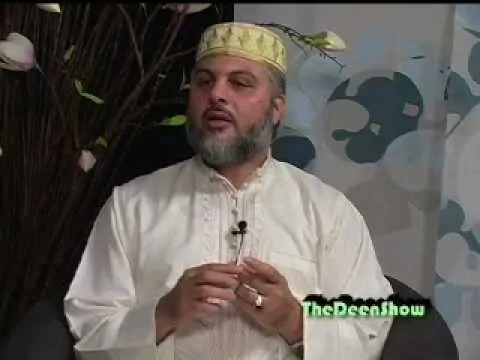
Hajj — the fifth and final pillar of Islam — is not merely a journey to a distant land. It is a divinely issued invitation, a sacred command addressed to every Muslim who is financially capable and physically able, rooted in the call of Prophet Ibrahim (peace be upon him) when he and his son Ismail raised the foundations of the Ka’bah and proclaimed to all of mankind: come and worship your Lord in His House. From that moment, every prophet sent by Allah — including Musa, Isa, and Muhammad (peace be upon them all) — performed this pilgrimage. Today, millions of Muslims from Indonesia, Africa, China, Latin America, and Europe converge on Mecca each year, standing side by side in simple white cloth, stripped of wealth and status, answering the very same call. As Dr. Shaikh Munji explained in this episode of The Deen Show, Hajj is not any ordinary trip — it is the journey of a lifetime, a deliberate act of surrendering everything worldly and returning to the One who created us.
The Spiritual Essence and Immense Reward of Hajj
What makes Hajj unlike any other act of worship is the totality of its demand on a person — their time, their wealth, their comfort, their ego — and the extraordinary mercy Allah returns in exchange. The Prophet Muhammad (peace be upon him) described it clearly: whoever performs Hajj with sincerity, avoiding foul speech, unlawful acts, and harm to others, returns home sinless — as if newly born. And beyond forgiveness, Allah Himself declared the pilgrims His honoured guests, saying through the Hadith Qudsi that He invited them, and they answered. This means their prayers in those sacred days carry a guarantee: they were already heard before the hands were raised. The scene at Arafah — millions weeping, all dressed the same, standing in supplication — is described by the Shaikh as a living preview of the Day of Resurrection, where all distinctions dissolve and only the relationship between the soul and its Creator remains. Hajj is the most concentrated spiritual experience available to a Muslim in this life, a complete reset of one’s record and a transformation of one’s character.
- Hajj is obligatory once in a lifetime for every Muslim who is financially capable and physically able — there is no minimum or maximum age
- The Kaaba (also referred to as “Becca” in Psalms 84:56 and in the Quran, Surah Al-Imran 3:96) is described as the first house built for the worship of Allah on earth
- Every prophet — including Musa and Isa (peace be upon them) — visited and performed pilgrimage at this holy site
- The Hadith of the Prophet (pbuh) confirms: a properly performed Hajj wipes the slate clean, returning the pilgrim in a state of complete forgiveness
- Pilgrims are described as the honoured guests of Allah — chosen from among 1.6 billion Muslims, only a few million are invited each season
- The experience of standing at Arafah in simple clothing alongside people of every race and language is itself a reminder of the Day of Judgement
- Hajj is not passive meditation — it demands action, intention, and a genuine commitment to return as a transformed person
“The pilgrims are my guests, my honourable guests — I invited them, and so by responding to me and coming to visit me, they asked me and I answered them.” — Allah’s own words, as conveyed in the Hadith Qudsi, cited by Dr. Shaikh Munji on The Deen Show
Dismantling the Excuses That Keep Muslims from the House of Allah
- “I’ll wait until I’m older / retired / 40.” There is no age requirement in Islam for Hajj. The requirement is ability — financial and physical. Waiting risks losing both. The Prophet (pbuh) explicitly warned: do not delay Hajj the moment you are able, for you do not know what tomorrow holds.
- “God hasn’t invited me yet — I don’t feel it in my heart.” Allah extended this invitation 1,400 years ago through the Quran. Feeling uninvited is not a sign from Allah — it is a sign of weakness in faith. Even people born and raised in Mecca have died without performing Hajj, not because Allah rejected them, but because they delayed and procrastinated until it was too late.
- “I have bills, family responsibilities, business to run.” The Muslim who makes Hajj abroad every few years for leisure but pulls out excuses when Hajj is mentioned is not lacking funds — he is lacking intention. Allah alone is the provider and protector of your family. You are only a means. No one can truly protect those they love; only Allah can.
- “I’m waiting for the right time.” The Prophet’s counsel was direct: take advantage of your youth before old age, your health before sickness, your wealth before poverty. These are not guarantees — they are fleeting windows. The man in the Shaikh’s story worked as a civil engineer building the very tunnels in Mecca, yet died without ever putting on the ihram.
- Skipping Hajj while able is not just a missed opportunity — it knocks out one of the five pillars on which the entire structure of a Muslim’s faith rests. A house standing on four pillars instead of five is not standing securely.
“On the Day of Judgement, no matter what excuses we try to present to the Lord, we ourselves know ourselves better than anyone else.” — Dr. Shaikh Munji, citing the Quran’s reminder that the soul is its own witness
If you meet the conditions — financial ability and physical health — Hajj is not something you schedule for later in life. It is due now, just as the five daily prayers are due at their appointed times. The beauty of this pillar is that it strips every barrier between you and your Creator: no titles, no bank accounts, no borders — just you, clothed in two pieces of white fabric, answering a call that has echoed across fourteen centuries of human history. Prepare with intention, travel light, stay with your group, and above all, go with the firm resolve to return a different person — better, purified, and more conscious of the life that awaits after this one. Hajj is not a reward you earn after you have perfected your faith; it is an instrument of transformation that helps you build it. Knock down the excuses, answer the invitation, and take that step toward the most profound spiritual journey a human being can make in this life.