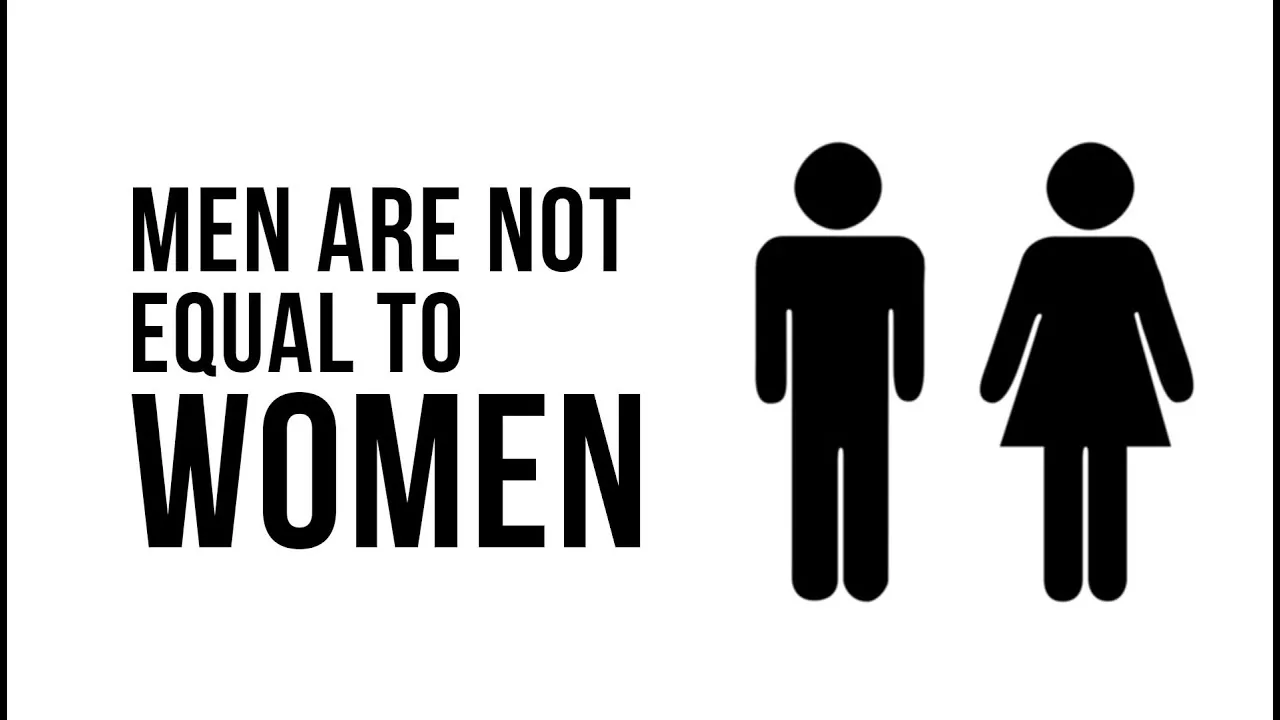
The question of gender equality ranks among the most debated issues of our time — raised in parliaments, academic halls, and social media feeds with equal urgency. Yet Islam entered this conversation centuries ago with a clarification that cuts through modern confusion: the Quran does not command equality between men and women — it commands justice. This is no mere semantic distinction. It is the foundational principle upon which an entire framework of divinely ordained roles, rights, and responsibilities rests. In an age that conflates sameness with fairness, and difference with discrimination, understanding the Islamic concept of Al-‘Adl — giving each one what they are rightly due — is not only spiritually essential, but urgently necessary for Muslims navigating modernity with faith intact.
Justice, Not Sameness: The Quranic Standard of Al-‘Adl
“Here we should note that there are some people who speak of equality instead of justice, and this is a mistake. We should not say equality, because equality implies no differentiation between the two… But if we say justice, which means giving each one that to which he or she is entitled, this misunderstanding no longer applies, and the word used is correct. Hence it does not say in the Quran that Allah enjoins equality, rather it says: ‘Verily, Allah enjoins Al-‘Adl (i.e. justice).'”
— Shaykh Ibn ‘Uthaymeen (rahimahullah), Sharh al-‘Aqeedah al-Waasitah
The Quran itself, across multiple verses, challenges the very premise of universal sameness. “Say: Are those who know equal to those who know not?” (al-Zumar 39:9). “Say: Is the blind equal to the one who sees? Or darkness equal to light?” (al-Ra’d 13:16). Treating unequal things as equal is not fairness — it is a subtler, more insidious form of injustice. Islamic Shariah reflects this divine wisdom by distinguishing between men and women in specific areas, each distinction grounded in Allah’s knowledge of human nature, biology, and social responsibility. Far from being arbitrary, these distinctions form a coherent and merciful system:
- Qiwaamah — Guardianship and Provision: Men are the protectors and maintainers of women (al-Nisa’ 4:34), a position tied directly to their obligation to provide mahr and full financial maintenance — a responsibility women do not carry.
- Testimony in Financial Contracts: Two women’s testimonies are required where one man’s suffices (al-Baqarah 2:282) — a practical safeguard, not a verdict on intelligence or spiritual worth.
- Inheritance: In most cases a man inherits twice a woman’s share (al-Nisa’ 4:11), balanced by the fact that he bears complete financial liability for his family while her inheritance is entirely her own to keep.
- Dress and Modesty (‘Awrah): A woman’s entire body is her ‘awrah in public; a man’s covers from navel to knee — a distinction that reflects the differing nature of attraction and temptation between the sexes.
- Marriage, Divorce, and Travel: A man may take up to four wives and holds the right of talaq; a woman travels only with a mahram — each ruling a form of structured honour and protection.
- Prayer and Jihad: Congregational prayer at the mosque is obligatory for men; a woman’s prayer in her home is more beloved to Allah — and the obligation of armed jihad does not fall upon her, out of Allah’s mercy for her nature.
The Story of Hanah and the Meaning of “The Male Is Not Like the Female”
Among the most illuminating illustrations of this principle in all of the Quran is the story of Hanah, the mother of Maryam (alayhis salam), recorded in Surah Aal ‘Imraan. Deprived of children for years, Hanah made a sincere and heartfelt du’a after witnessing a mother bird return to her nest to feed her chicks — and Allah accepted it. When she discovered she was pregnant, she vowed to dedicate this child entirely to the service of the sacred house of worship: not to raise someone of worldly prestige, not a businessman or an entertainer, but a pure servant of Allah. She assumed this would be a boy. When Maryam was born, Hanah was overcome — “O my Lord, I have delivered a female” (Aal ‘Imraan 3:36). But in that moment of human disappointment, Allah revealed one of the most striking truths in the entire Quran: “And the male is not like the female.” This was not a concession to her grief — it was a divine affirmation that what Allah had given her was not lesser. It was simply different. And from that “different” child, Allah brought forth one of the greatest human beings ever to walk the earth: ‘Isa ibn Maryam (alayhis salam). This is the spiritual reality Muslim women today are called to internalise — not the manufactured freedom of a culture that commercialises femininity, but the freedom of knowing your rank, your sacred role, and your irreplaceable value in the sight of Allah.
“You are the carriers of the torch. You are the only hope that can change the future of this ummah. We need you to raise men who will take over this deen — not to follow what others have projected upon you, but to be from the product of Muhammad ﷺ.”
— From the lecture
Maryam (alayhis salam) herself endured what few human beings could bear — known by all as a woman of unimpeachable righteousness, yet carrying a miraculous pregnancy that the people around her would never easily accept. She endured it with sabr, tawakkul, and a faith so deep she wished she could disappear rather than allow dishonour to touch the trust Allah had placed in her. This is the standard Islam holds before every Muslim woman: not a lesser standard than men, but a different and profoundly honoured one. The differences between the sexes in Islamic guidance are not a ceiling imposed upon women — they are a recognition of a reality that biology, psychology, and lived human experience all confirm. Every woman who raises her children upon taqwa, who guards her dignity and her household, who carries herself as a living Ayah of this deen in her community, is performing one of the most consequential acts of worship on earth. True justice — divine, timeless, merciful justice — does not demand that everything be made the same. It demands that every creation be honoured exactly as Allah intended, in the role for which He fashioned them, with the mercy He alone fully comprehends.