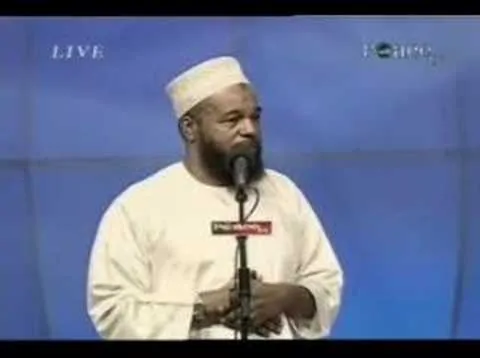
When global media frames Islam as the source of the world’s conflicts, the truth that history preserves becomes all the more urgent to reclaim. At this landmark conference, Dr. Abu Ameenah Bilal Philips — Islamic scholar, author of over 100 books, and founder of the Islamic Online University — delivered a powerful address grounded not in ideology, but in documented historical evidence. His message was direct and uncompromising: Islam is not the problem. It never was. From the moment the Prophet Muhammad ﷺ entered Makkah without shedding a drop of blood, to the centuries of interfaith coexistence under Muslim rule in Jerusalem and Andalusia, the faith has consistently demonstrated that its true spirit is one of mercy, justice, and genuine peace — a truth that matters more urgently now than ever before.
A Prophet of Mercy: What the Conquest of Makkah Reveals About Islam’s True Character
Dr. Bilal Philips anchors his argument in the life of the Prophet ﷺ, specifically in the pivotal moment of Fath Makkah — the Conquest of Makkah — the most decisive event of his prophetic mission. The Prophet ﷺ entered the city without bloodshed, and rather than exact retribution from those who had persecuted, tortured, and killed his Companions, he declared a sweeping general amnesty: “You are free to go, free to choose, free to believe as you please.” This was not weakness — it was the highest expression of Islamic principle in action. Dr. Philips draws a direct line from this moment through the subsequent chapters of Islamic governance: when Umar ibn al-Khattab رضي الله عنه entered Jerusalem, Christians and Jews were left entirely free to worship. When Muslims governed Spain for nearly a millennium in what became known as Al-Andalus, Jewish scholars driven out of every corner of Europe found refuge among them — Maimonides, among the greatest Jewish philosophers who ever lived, composed his foundational works in Arabic, in Muslim Spain. And when Salahuddin reclaimed Jerusalem after a century of Crusader occupation — a dark period in which not a single adhan was heard from any minaret across Palestine — he chose the path of the Prophet ﷺ and extended freedom of worship to all faiths rather than meeting oppression with oppression.
“Islam is the solution — in spite of the fact that the world would have us believe, through the media and through distorted presentations, that Islam is the problem. The fact of the matter is that it is the solution.”
— Dr. Abu Ameenah Bilal Philips
- The Conquest of Makkah: The Prophet ﷺ entered with an army yet took no lives, granting full amnesty to former enemies — the ultimate demonstration of Islamic mercy in the moment of victory.
- Umar ibn al-Khattab رضي الله عنه in Jerusalem: He guaranteed freedom of worship for Christians and Jews, establishing a standard of Islamic governance rooted in justice and human dignity.
- Andalusia — Islamic Spain: Jews expelled from across Europe found sanctuary under Muslim rule; the Golden Age of Spain was built upon centuries of interfaith intellectual collaboration.
- Salahuddin’s Liberation of Jerusalem: After 100 years of Crusader suppression, Salahuddin restored religious freedom for all — choosing magnanimity over retaliation, following the Prophetic example.
- The Pattern of Islamic Rule: In every case, Muslim governance preserved the right of non-Muslims to practise their faith — a historical record that stands in sharp contrast to the narrative Islam’s critics construct today.
Colonisation, Conflict, and the Root Causes the World Refuses to Name
Dr. Bilal Philips does not sidestep the present reality: Muslims are visibly at the centre of many of the world’s current conflicts. But he insists we must understand why. The current situation, he argues with historical precision, is the direct product of colonisation — a period when the faith was actively suppressed, Muslim lands were seized, and entire peoples were stripped of self-determination. He points to a remarkable artefact preserved in the British Museum: a diary written by a Muslim slave in Jamaica — the very island of Dr. Philips’ own birth — who was forced to eat pork, compelled to pray in secret, and denied his identity, yet who wrote out the entire Qur’an from memory under those conditions of oppression. That manuscript endures to this day. The consequences of that era persist in the present: lands taken and given arbitrarily to others, peoples denied the right to determine their own futures — a right the United Nations itself enshrines for all nations. When we contextualise contemporary violence within this framework, Dr. Philips’ point becomes unavoidable: desperate conditions, born of systematic injustice, produce desperate responses. The solution, therefore, is not to condemn the symptom while refusing to name the disease. True peace — the peace that Islam has always offered — will come only when the root causes are addressed with the same honesty and courage that Islamic history itself exemplifies.
“Peace will come when these situations are corrected. But the message of peace, in spite of this problem, remains in the teachings of Islam — and that is what we need to look to.”
— Dr. Abu Ameenah Bilal Philips
This conference stands as a reminder that knowledge is the most powerful antidote to ignorance — both about Islam and, crucially, within the Muslim ummah itself. Dr. Bilal Philips closes his address not with a call to confrontation, but to responsibility: to share the true message of Islam openly, with fellow human beings of every background, at a time when that opportunity exists. For those living with the freedom to speak, to gather, and to convey the faith with clarity and confidence, that freedom carries weight. Islam, as fourteen centuries of history attest and as this conference affirms, is a faith whose foundation is mercy, whose governance is justice, and whose vision for humanity has always been one of peaceful coexistence. The most meaningful contribution any believer can make today is to embody and convey that truth — with knowledge, with wisdom, and with the same generosity of spirit that the Prophet ﷺ demonstrated when he set his enemies free.