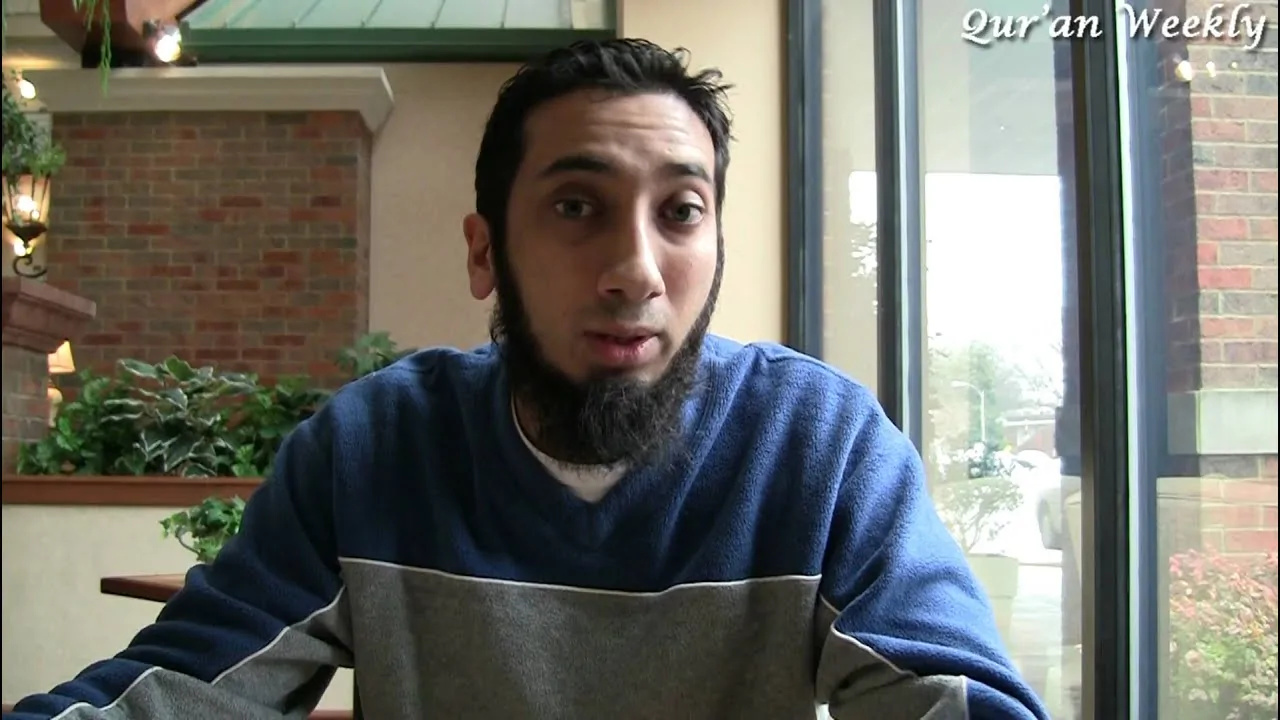
In a powerful message directed at young Muslims who are quickly gaining knowledge and becoming active in their communities, Nouman Ali Khan delivers a crucial reminder: the more knowledge you acquire about Islam, the more humble it should make you — not the more judgmental. When learning becomes a weapon to win arguments rather than a means to draw closer to Allah, it has become a path of destruction rather than guidance.
Knowledge Without Humility Is the Way of the Non-Believer
The non-believer acquires education to put a title next to their name — Dr., PhD, Professor — using knowledge as a badge of superiority. But the knowledge of Deen is fundamentally different. The more you learn about Allah, His Book, and His Messenger (peace be upon him), the more it should humble you before the vastness of what you do not know. If increasing knowledge makes you more judgmental, more dismissive of scholars and elders, and more eager to declare others as deviant, then something has gone seriously wrong with your approach to learning.
“If you have knowledge and the more knowledge you have the more judgmental you’re becoming — the more you think this one’s deviant and that scholar was wrong — how much have you studied compared to them that you can pass commentary like that?” — Nouman Ali Khan, challenging the arrogance of self-proclaimed students of knowledge.
The Danger of Speaking Without Qualification
Imam Ash-Shafi’i, one of the greatest scholars in Islamic history, spent a third of his wealth learning the Arabic language and two-thirds learning Hadith — and by the end he wished he had spent even more on Arabic. Yet today, students who have taken a few courses in Arabic feel qualified to comment on the Hadith of the Prophet (peace be upon him). Deriving legal conclusions from a Hadith requires deep understanding of the chain of narration, the context in which it was spoken, the consensus of the Companions, and the analysis of the greatest jurists — not a surface-level reading of an English translation.
“For you to just pick up the text and read a translation of a Hadith and then start arguing with someone — this is a disservice to the Sunnah of the Prophet, peace be upon him. You have to be very careful when you speak on his behalf.” — Nouman Ali Khan, warning against unqualified commentary on Prophetic traditions.
Practical Advice for Students of Knowledge
- Remember that above every person of knowledge is someone with more knowledge — and above all is Allah, the All-Knowing
- If you disagree with a scholar or community elder, you are in no position to pass a fatwa on them — acknowledge your limitations
- Never use Quranic verses or Hadith as ammunition in debates — they are guidance for your own soul first and foremost
- Say “I don’t know” when you truly do not know — this is a sign of genuine scholarship, not weakness
True Islamic knowledge leads to one destination: humility before Allah and mercy toward His creation. If your learning is taking you in the opposite direction, stop and recalibrate your intentions. The scholars of this Ummah were distinguished not by how much they knew, but by how that knowledge transformed their character, softened their hearts, and brought them closer to the servitude of Allah.