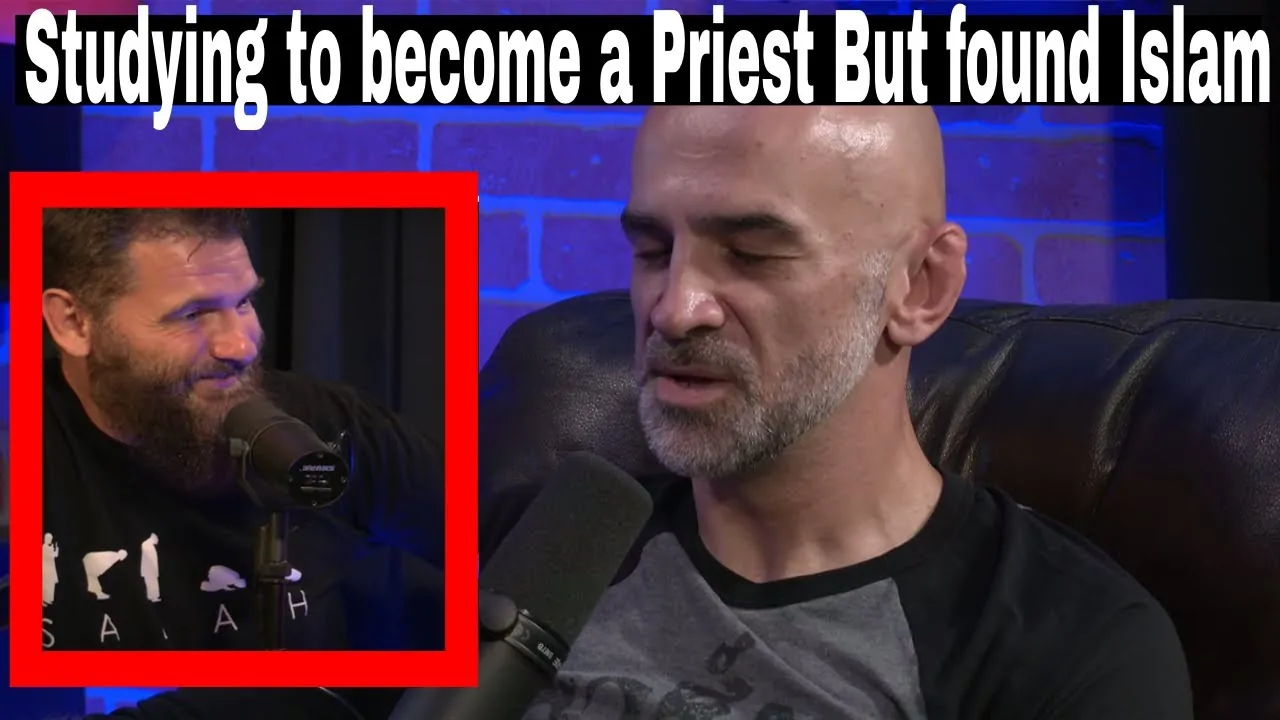
When a man devotes four years of his life studying to become a Jesuit priest, immersing himself in theology and philosophy within the Catholic Church, few would expect his path to lead him to Islam and the recitation of the Quran. Yet that is exactly what happened to Mustafa, a Polish-born American who traded the seminary for the masjid after discovering that pure monotheism — the very thing his heart had always been searching for — was preserved in its most authentic form within the Islamic faith.
A Lifelong Search for God That Christianity Could Not Fulfill
Mustafa always carried a deep spiritual calling. Born in Poland during the final years of communism, he grew up in Chicago and eventually entered the Jesuit order, studying theology, philosophy, and serving communities from the United States to Peru. Yet despite years of devoted study, he could not reconcile core Christian doctrines with reason and sincerity. The Trinity, the belief that Jesus is God, and the worship of images and statues left him with more questions than answers. After leaving the priesthood and drifting through a period of spiritual emptiness — one he tried to fill with alcohol, overeating, and material distractions — he reconnected with a Muslim high school friend in late 2015. For the first time, his study of Islam shifted from dry academic reading to something deeply personal, something that spoke directly to his heart.
“The one thing that drew me to Islam is the pure monotheism — just God is God, one God, no buts after that. The creation can never be equal to the Creator. And in Islam, you don’t have to turn your brain off. Reason and faith blend together beautifully.”
Why Islam Made Sense Where Christianity Fell Short
- Tawheed (pure monotheism): Islam affirms what Mustafa always sensed — that no human being can be God and that worship belongs to the Creator alone, not to any part of creation.
- Jesus (peace be upon him) in his proper role: The Quran honors Jesus as a mighty messenger and prophet, preserving the love Mustafa had for him without the theological contradictions of the Trinity.
- Prayer as Jesus prayed: The Islamic prostration (sujood) mirrors exactly how Jesus prayed according to Matthew 26:39 — falling on his face before God. In Catholicism, this prostration only occurs once, during priestly ordination.
- The character of Prophet Muhammad (peace be upon him): Reading the hadith revealed a man of extraordinary humility, tenderness, trustworthiness, and courage — completely unlike the distorted image spread by propaganda and media.
- A wholesome, purposeful life: Islam’s prohibitions on alcohol, fornication, and excess gave Mustafa a framework for living that filled the emptiness no amount of material comfort ever could.
From Emptiness to Inner Peace Through Faith
“The main difference is that pretty much throughout the day, every day, I know that I’m doing what I was created for — to worship the Creator, to do my best raising my kids, to live healthfully. I just feel very at peace and content. I don’t really need anything when it comes to material stuff.”
Islam Has Deep Roots Even in Poland
One of the most surprising discoveries Mustafa made after his conversion was that Islam has been in Poland for over 600 years. The Tatar Muslims, originally invited by the Polish king for their cavalry skills, have been native Polish citizens for centuries, fighting in every war, holding noble titles, and practicing Islam freely. This hidden history demolishes the myth that Islam is foreign to Europe and reveals that the cooperation between Muslims and Christians is not a modern experiment but a centuries-old tradition. Whether you are a Christian questioning the Trinity, someone struggling with spiritual emptiness, or simply curious about what draws educated, thoughtful people from the priesthood to the prayer mat, Mustafa’s journey is an invitation to look beyond the propaganda — visit a mosque, open the Quran, meet your Muslim neighbors, and discover the beauty of Islam for yourself.