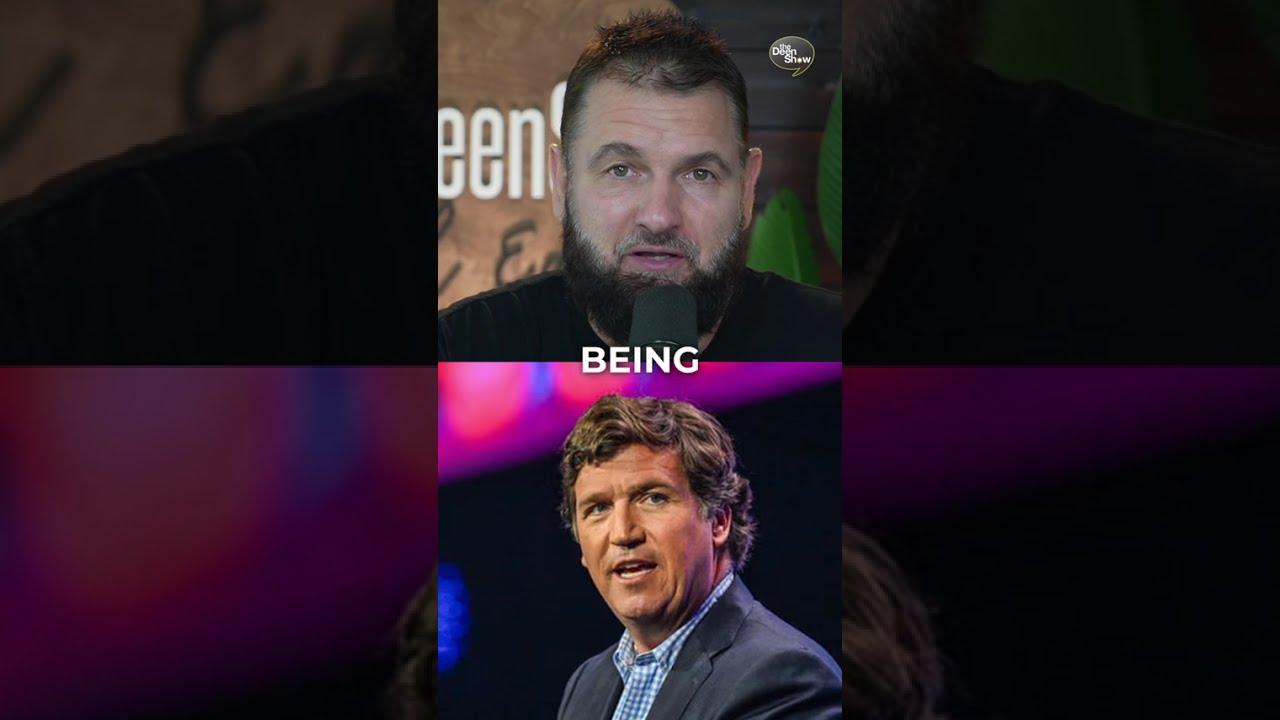
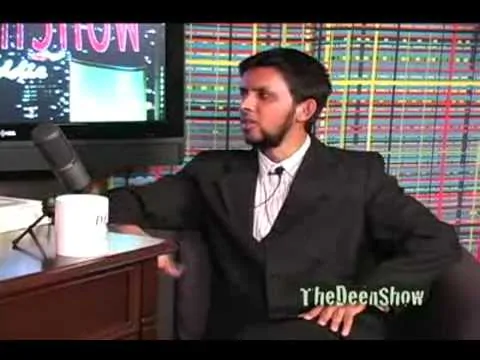
One of the most searching questions a sincere seeker of truth can ask is whether Muhammad ibn Abdullāh ﷺ was genuinely a prophet of God — or merely a gifted man who composed the Quran himself. In a landmark conversation on The Deen Show, Dr. Sabeel Ahmed walks host Eddie through the evidence with calm clarity, dismantling each skeptical claim one by one. Far from being a question that weakens faith, examining these arguments strengthens it: the historical record, the internal logic of the Quran, and the lived character of the Prophet ﷺ all point unmistakably toward divine guidance rather than human invention.
The Prophet’s Character Makes Fabrication Impossible
Any honest investigation must begin with the man himself. Muhammad ﷺ was known throughout Arabia — by Muslims and non-Muslims alike — by the title Al-Siddiq: the most truthful, the most trustworthy. He was also ummi, unable to read or write. If the motivation behind a false prophet is always worldly gain — wealth, power, fame, or desire — then the Prophet’s ﷺ life collapses that theory entirely. The Quraysh, desperate to silence his message of Tawhid (the Oneness of God), made him a staggering offer: limitless wealth, supreme political leadership over all the Arab lands, and whatever else he desired. His response has echoed through history as one of the most powerful rejections of worldly temptation ever recorded.
“By Allah, if they put the sun in my right hand and the moon in my left on condition that I abandon this course, I would not abandon it until Allah has made it victorious, or I perish therein.” — Prophet Muhammad ﷺ
- The Prophet ﷺ was wealthier before his claim to prophethood than after — the opposite of what a fraud seeking material gain would engineer.
- His wives narrated that entire days — sometimes three days in a row — passed with nothing in the household to eat except dates and water.
- His home was described as smaller than a studio room; he owned almost nothing of material value.
- Despite deeply loving his wife Khadijah (رضي الله عنها) and his children, the Quran — which he allegedly authored — does not memorialize her passing or elevate his family. A self-aggrandizing author would never have omitted this.
- The Quran praises Mary (mother of Jesus ﷺ) by name and devotes an entire chapter to her, yet does not mention the Prophet’s ﷺ own beloved wife who supported him in his darkest hour.
The Quran’s Scientific Precision and Uncontested Originality
Skeptics have also argued that the Prophet ﷺ compiled the Quran from the knowledge of Jews, Christians, and scholars of other civilisations he encountered — most notably Waraqa ibn Nawfal, a learned Christian who had converted from paganism and who confirmed the early revelation as genuine prophethood. But Waraqa passed away within days of that encounter, long before the bulk of the Quran was revealed over the next twenty-three years. Furthermore, of the 6,000+ verses in the Quran, over 500 contain scientific statements that modern science has since confirmed — yet ancient writings from Greece, Rome, Persia, and Egypt mixed truths with demonstrable falsehoods. Dr. Ahmed offers a compelling analogy: if a student plagiarises from another student, they copy the mistakes too. The Quran, by contrast, consistently selects only what is correct — describing the Earth’s shape, for instance, as spherical like an ostrich egg (Surah Nuh 71:3) — centuries before modern science established this. If the Prophet ﷺ had assembled this from human sources, he would inevitably have incorporated the errors those sources contained. And critically: not a single person in his lifetime — not one enemy, not one tribal rival — ever stood up and said, “I taught him that.” Had anyone been able to make that claim credibly, Islam would have been dismantled at its roots.
“There was not a single person — not a single unbeliever — who raised his hand and said: what you are saying in the Quran, I already knew it, I taught you that.” — Dr. Sabeel Ahmed
For the sincere heart open to guidance, these evidences are not isolated curiosities — they are part of an overwhelming, convergent case. A man who could not read or write, who rejected a kingdom, who lived on dates and water, who did not even use the divine text to mourn his greatest personal losses, who left no human claimant to his source material, and whose book achieves flawless scientific accuracy across five centuries of verses — this is not the profile of a fraud. It is the profile of a prophet. Islam invites every person, regardless of background, to approach this question with honesty and intellectual courage. The guidance is there; the question is whether we are willing to follow it wherever the evidence leads.