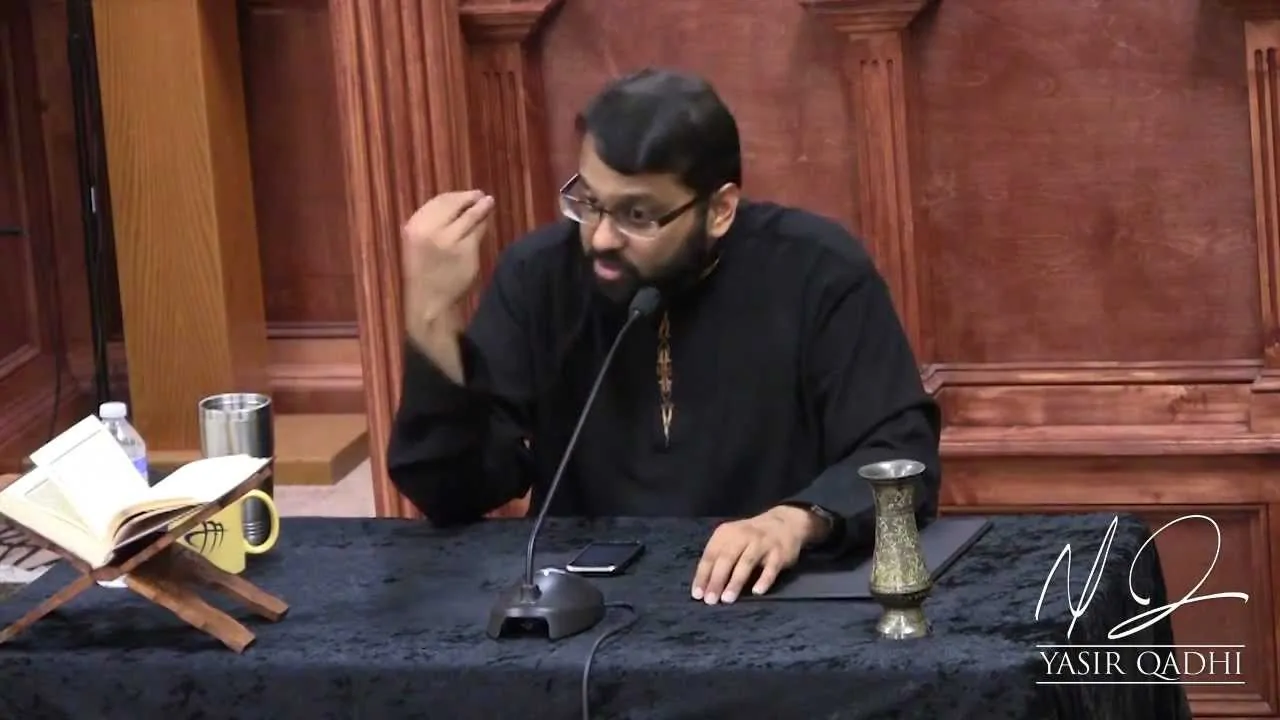
This Seerah lecture continues the exploration of early Islamic history, covering the first emigration to Abyssinia, the story of the Najashi (the Christian king who sheltered the Muslims), and the important question of how pre-Nicene Christianity may have survived in parts of Africa. The lecture also addresses the controversial topic of the so-called “Satanic Verses” and clarifies the scholarly consensus on this fabricated story.
The Satanic Verses — A Fabrication Debunked
The lecturer addresses the infamous claim of the “Satanic Verses” directly, explaining that scholarly analysis indicates there was no such incident. Rather, what actually happened was that the Quraysh prostrated simply because of the overwhelming power of Surah An-Najm when the Prophet recited it publicly. This rumor, however, spread to Abyssinia, leading some Muslims to believe the Quraysh had accepted Islam, and they returned to Makkah only to discover the rumor was false.
“The Najashi recognized the truth of Islam instantaneously, reportedly saying: ‘This comes from the same source as what Jesus Christ came from.’ Some scholars theorize that pre-Nicene Christianity — the original monotheistic teaching of Jesus — may have survived in pockets of Abyssinia, influencing the Najashi’s immediate recognition of Islamic monotheism.”
Key Insights from This Chapter of the Seerah
- Among the four greatest companions, only Uthman ibn Affan emigrated to Abyssinia — Ali was too young, Umar had not yet accepted Islam, and Abu Bakr was intercepted by Ibn al-Dughunnah who offered him tribal protection
- The Council of Nicaea in 325 CE formalized the Trinity doctrine and Arius, its main opponent, fled south — the theory that his monotheistic influence survived in Africa helps explain the Najashi’s receptivity to Islam
- The Najashi’s grave remains a well-known site in Abyssinia (modern-day Ethiopia) to this day, and the Prophet (peace be upon him) prayed the funeral prayer over him in absentia — the only time he ever did so in his life
- Ubaidullah ibn Jahsh, a cousin of the Prophet, died in Abyssinia, leaving his wife Umm Habibah widowed — the Prophet sent her a marriage proposal through the Najashi, who arranged the marriage and personally gifted the mahr
“Before the Council of Nicaea, there was no unified doctrine of the Trinity. Not a single branch of Christianity existing today traces back to the original pre-Nicene creed — but Islam carries that same pure monotheistic message that Jesus himself taught.”
This chapter of the Seerah reveals the deep connection between Islam and the original teachings of all previous prophets, including Jesus (peace be upon him). The Najashi’s story stands as a powerful example of how a sincere heart recognizes truth when it encounters it, regardless of religious or cultural background.