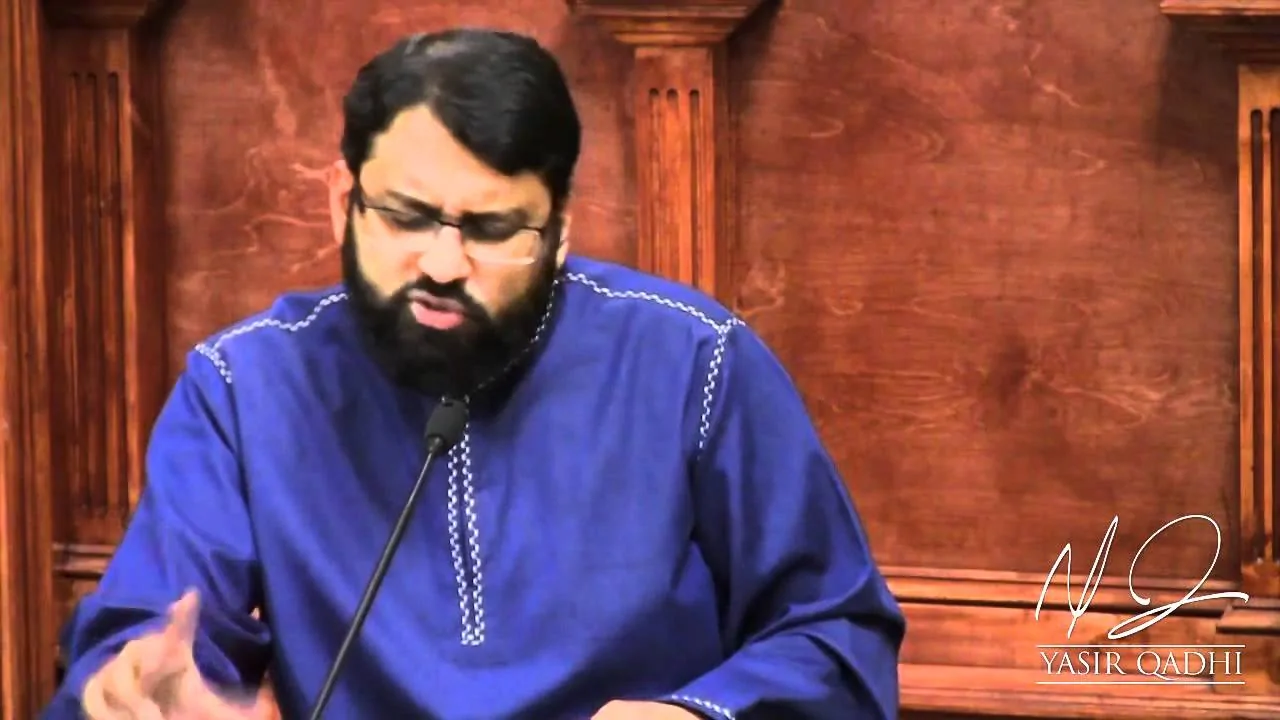
This Seerah lecture covers the pre-Islamic religious landscape of Arabia, tracing the origins of idol worship from the time of Prophet Ibrahim (Abraham) to the eve of Islam. It reveals a remarkable fact: the pagan Arabs actually believed in Allah by name as their Creator and Sustainer, yet they still fell into polytheism by introducing intermediaries between themselves and God — a lesson with profound relevance for Muslims today.
From Ibrahim’s Monotheism to 360 Idols at the Ka’bah
When Prophet Ibrahim and his son Ismail established the Ka’bah and the rituals of Hajj, the people of Arabia practiced pure monotheism. Over centuries, however, as travelers brought cultural influences from surrounding civilizations, idol worship gradually crept in. The main idol of Makkah, Hubal, was imported from Syria by the Amalekites, and eventually 360 idols surrounded the Ka’bah. Yet remarkably, the Arabs never made an idol of Allah Himself — they always knew He was above representation. Their error was in believing they needed holy intermediaries to access Him.
“If you were to ask the pre-Islamic Arabs who created them, who sends the rain, who provides their sustenance — they would all say Allah. Yet they were not Muslim, because they worshipped idols as intermediaries, saying: ‘These beings bring us closer to Allah.'”
The Hanifs — Those Who Preserved the Truth
- Even before Muhammad’s prophethood, a small number of individuals called “Hanifs” rejected idol worship and maintained the pure monotheism of Ibrahim — among them was Waraqah ibn Nawfal, a cousin of Khadijah who would later confirm Muhammad’s prophethood
- Quss ibn Sa’idah, a famous pre-Islamic orator, publicly declared: “O people, listen — whoever lives will die, and whoever dies is gone. I swear by Allah that He has a religion more pleasing to Him than this religion of yours”
- The origins of the idols teach us how shirk develops: it always begins with honoring righteous people, then gradually escalates to venerating their graves, then invoking them, and finally worshipping them alongside Allah
- Christianity itself underwent this same process of corruption: within 300 years of Jesus, the Council of Nicaea in 325 CE introduced the Trinity, and the original monotheistic teachings were persecuted and eventually lost
“Quss ibn Sa’idah stood before the Arabs and proclaimed: ‘O people, where are Thamud and Aad? Where are the fathers and grandfathers? I swear by Allah that He has something more pleasing to Him than this religion of yours.’ Even before Islam, truth-seekers recognized that idol worship was a deviation from the original faith of Ibrahim.”
This lecture powerfully demonstrates that the message of Islam was not new — it was a restoration of the original monotheism taught by every prophet from Adam to Ibrahim to Jesus. The Prophet Muhammad (peace be upon him) came to remove the layers of corruption and intermediaries that had accumulated over centuries and reconnect humanity directly with their Creator.