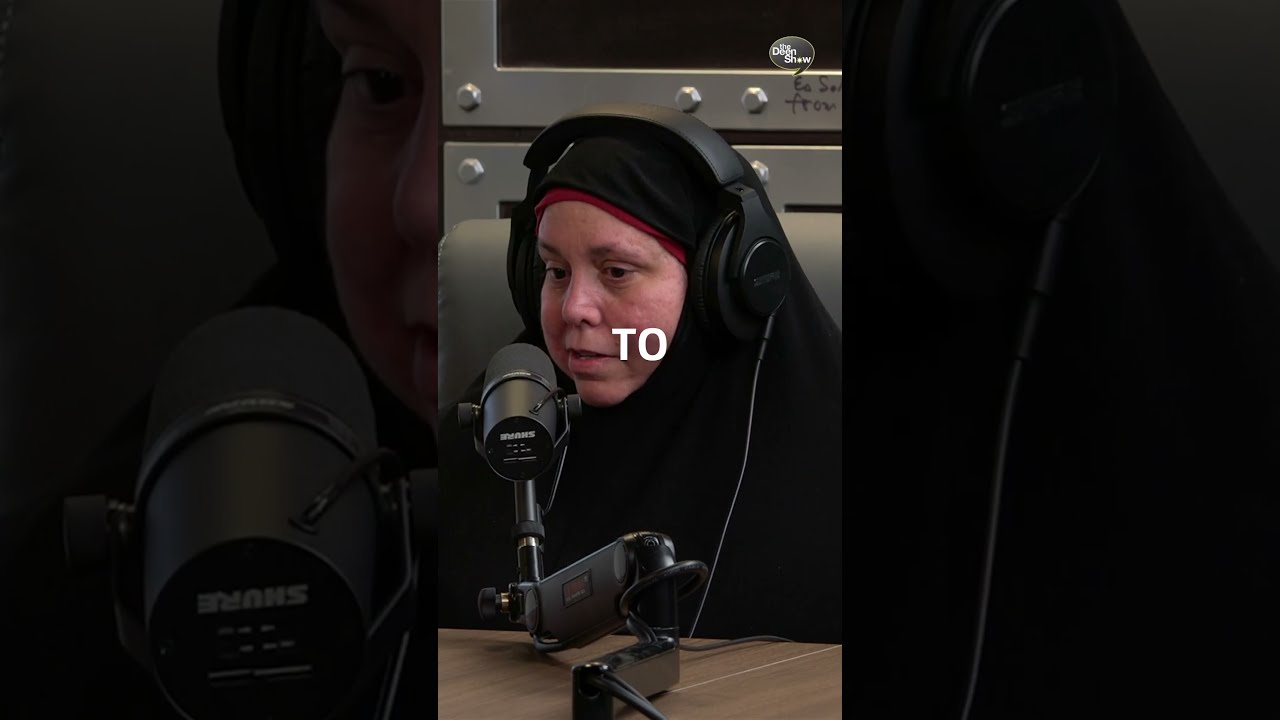
Millions of young people today are living a quiet contradiction: partying, smoking weed, pursuing relationships, chasing status — yet privately unable to shake the feeling that something fundamental is missing. Ali Mahmud, a premed biology student and community filmmaker from Dallas, and Fatih, a hafiz of Quran since the age of twelve, grew up watching peers spiral through exactly these struggles. What they share in this episode of The Deen Show is not a lecture but a lived testimony. They’ve questioned, faltered, and ultimately found what the world’s pleasures could never deliver: a heart at rest, a genuine sense of purpose, and contentment no nightclub, substance, or broken relationship can replicate — and that contentment came from sincere faith and a real, personal connection with Allah, the Creator of the heavens and the earth.
Why the Club, the Weed, and the Heartbreaks Keep Failing You
Ali ran a student interview show at his high school in Plano, Texas, speaking with both Muslim and non-Muslim classmates about drugs, wasted time, promiscuity, and identity — and what he uncovered was a generation performing happiness rather than feeling it. Young people waking every morning to put on a mask, fitting into crowds they secretly couldn’t stand, defending choices they privately knew were hollowing them out. The pattern is painfully predictable: get something, want more. Weed leads to harder substances. A broken relationship sends you searching for the next one. The car, the house, the social media following — each milestone simply moves the goalposts. Corporations and influencers profit from this cycle because they are monetising your dissatisfaction; they are not looking out for you. When young people argue aggressively online that weed is harmless or their lifestyle is “fine,” they are often not truly convinced — they are desperate to feel less bad about choices already made. The spiritually honest question to sit with is: do I actually have a living connection with my Creator, or have I been going through inherited motions my entire life?
“You think these things are going to bring you happiness — you know why you keep going back to the club and you keep going back to these desires? Because you never find satisfaction. It’s going to end up causing you — if it hasn’t already — a lot of pain. You think you’re happy? You’re kidding yourself.”
- Many born-Muslim youth know the rules of Islam but have never personally sought a living relationship with Allah — without that genuine connection, knowledge alone will not change behaviour
- Converts often appreciate Islam more deeply because they explored the alternatives and chose the light; their conviction was earned through a real journey, not inherited by default
- Changing your social circle is temporarily painful and even lonely — but your environment shapes you more powerfully than almost anything else, and community support during this transition is not optional
- True belief in resurrection and accountability before Allah naturally realigns daily choices — genuine conviction in consequences, here and in the hereafter, is what actually changes a person
- Society directs you to worship money, status, pleasure, and relationships; Islam calls you back to the only object of worship that will never disappoint, expire, or abandon you
The Quranic Blueprint: Submit, Worship, Serve — Then You Will Succeed
Fatih shared a transformative ayah from Surah Al-Hajj that his teacher in Dallas brought to life for him: “O you who have believed, bow, and prostrate, and worship your Lord, and do good — that you may succeed.” The sequence is not coincidental. Allah begins with ruku (bowing) then sujood (prostration) — the most physically vulnerable positions a human being can occupy, embodying total submission to the Creator. Only after genuine submission can a person meaningfully worship. And only after giving Allah His full due can you effectively serve and do good for others, because a soul running on empty cannot pour goodness outward. The chapter closes with this recipe, and immediately the next surah — Al-Mu’minoon — opens: “Surely the believers have attained success,” then lists their qualities: humility in prayer, turning from idle speech, guarding their chastity, fulfilling their trusts. This divine sequencing is not coincidence — it is a complete guidance system for a well-lived life. The Quran, as Fatih describes it, reads you back when you open it, like a manual written by the One who designed you, because only the Creator truly knows His creation. The Prophet ﷺ confirmed in an authentic narration that the first matter a person will be held accountable for on the Day of Judgement is their prayer: if it is sound, everything else follows; if it is neglected, everything else collapses. The five daily prayers are not a burden on an already-crowded life — they are the architecture that gives a life its structure and stability.
- Submit before you worship: True ibadah begins with genuinely surrendering your ego and will to Allah — going through the motions without real submission leaves the soul unchanged
- Worship before you serve: Serving others well requires first filling your soul through its relationship with its Creator; give Allah His due rights, and generosity toward others follows naturally
- Prayer is the foundation of everything: The Prophet ﷺ said that if prayer is sound, all other deeds will be sound — it is the first question on the Day of Judgement
- Success in Islam means flourishing, not achievement: Falah — spiritual soundness, inner peace, and good standing with Allah — is the real metric, not wealth, rank, or social approval
- The Quran is a living guide, not a museum piece: It was revealed to change hearts; read it seeking to understand what Allah is personally saying to you, not merely to recite it as ritual
What Islam Gives the Heart That Nothing in This World Can Match
The Islamic tradition has long understood what modern psychology is only beginning to measure: why some people flourish through adversity while others collapse under comfort. Ibn al-Qayyim and Sheikh Abd al-Rahman ibn Sa’di both mapped the means by which Allah removes worry, anxiety, and grief — means that combine spiritual anchoring with practical wisdom, accessible to every believer regardless of status or background. These include:
- Faith and righteous action: The believer responds to good with gratitude and to hardship with patience — the Prophet ﷺ said both multiply his reward: “How wonderful is the situation of the believer, for all his affairs are good” (Muslim, no. 2999)
- Dhikr (remembrance of Allah): “Verily, in the remembrance of Allah do hearts find rest” — this is not poetry, it is a direct Quranic promise (Ar-Ra’d 13:28)
- Occupying the mind with beneficial knowledge: A mind engaged in purposeful learning and action has no space for anxiety to take root
- Living fully in the present: The Prophet ﷺ sought refuge from regret over the past and dread of the future — channel all your effort into acting rightly today
- Tawakkul (trusting Allah with outcomes): “Whosoever puts his trust in Allah, then He will suffice him” — complete sufficiency for all spiritual and worldly concerns (At-Talaq 65:3)
- Repentance (tawbah): Allah does not merely forgive the sincere believer who returns to Him — He transforms their past mistakes into good deeds; no other offer in existence comes close
- Salah (prayer): Five anchors in the day that return the heart to its purpose and its Lord, preventing spiritual drift before it becomes a crisis
- Counting blessings against hardships: When calamity feels overwhelming, the sheer volume of unearned blessings — health, sight, air, family — quietly reframes what has been lost
“At the end of the day it all comes down to being pleased with yourself — and you can’t be pleased with yourself unless Allah is pleased with you.”
If these words reach you while you carry the weight of a lifestyle that promised everything and delivered exhaustion, let this be a moment of honest clarity: the cure has always been free. Islam is not asking you to become a different person — it is calling you back to who you were made to be. The fitrah, the innate disposition every human soul is born with, has always inclined toward its Creator. You do not need to have it all together before you begin. Take one sincere step: open the Quran with the genuine intention of understanding what Allah is saying to you, re-establish your prayer, make du’a from a place of real need rather than routine obligation. Allah’s promise is that when you take one step toward Him, He moves toward you — and when you return in sincere repentance, He does not merely wipe your record clean but transforms what you regret into good standing with Him. No club, no substance, no relationship, and no brand in the history of this world has made that offer, because none of them can. That life — anchored, purposeful, and genuinely at peace — is not reserved for scholars or saints. It begins the moment you stop running and start returning.