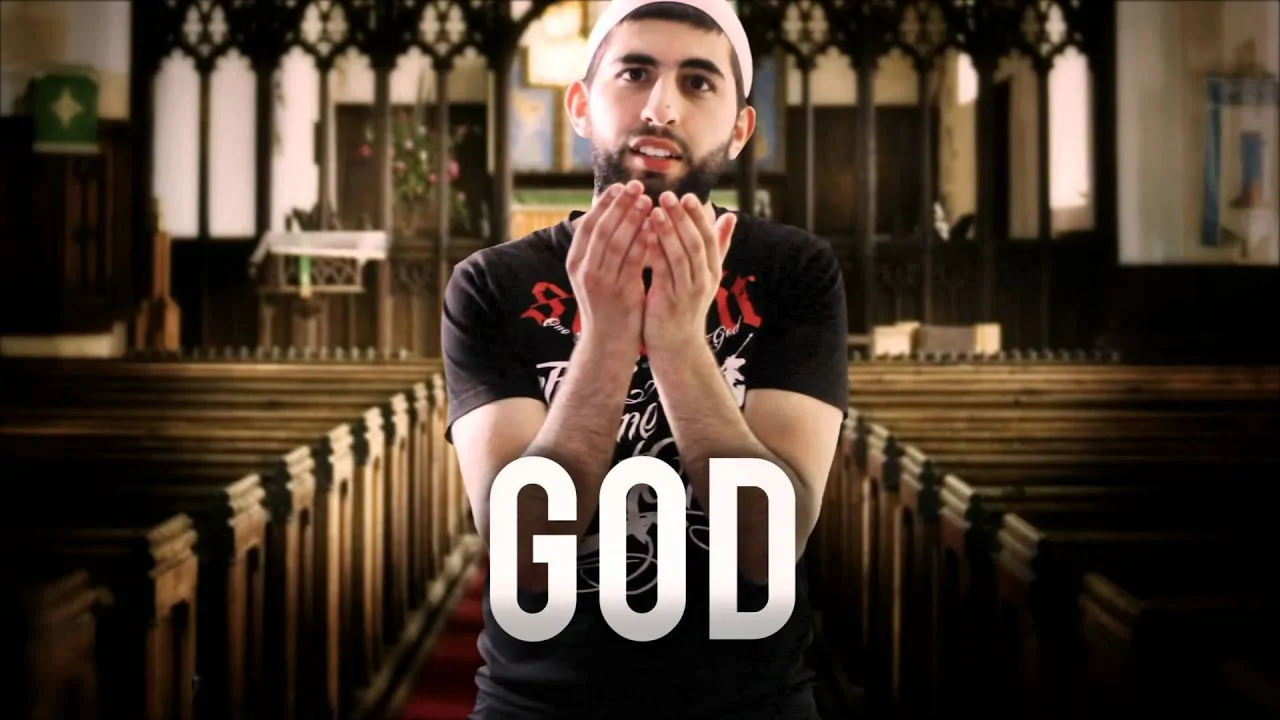
When a spoken word poem titled “Why I Hate Religion, But Love Jesus” went viral, millions resonated with its central tension — a love for the figure of Jesus alongside a rejection of organised religion. But what that poem never answered, and what Islamic tradition has preserved with remarkable clarity for over fourteen centuries, is this: if you truly love Jesus, follow what Jesus actually taught. This response, offered in the same spirit of honest reflection, is not an attack on Christians or Christianity — it is an invitation to think deeply, reason carefully, and ask the questions that genuine faith and spirituality demand of every sincere seeker. Because loving someone means listening to them, and Jesus spoke with unmistakable clarity about Who deserves worship.
The God of Jesus: All-Powerful, Unborn, and Beyond Human Comprehension
“Say: He is Allah, the One and Only; Allah, the Eternal, Absolute; He begets not, nor was He begotten; And there is none co-equal or comparable unto Him.” — Surah Al-Ikhlas (Qur’an 112:1–4)
Islam’s foundational declaration — that God is One, unbegotten, and entirely beyond human limitation — directly addresses the theological contradiction at the heart of Trinitarian doctrine. The poem challenges this with piercing clarity rooted in pure logic: if God is all-powerful, how could He be crucified? If God is all-knowing, why did He pray, express uncertainty, or say “I of myself can do nothing”? God gave humanity both faith and reason, and the Islamic position is that these two gifts are never in conflict — they point in the same direction. Among the key insights drawn from this theological reflection:
- Jesus prayed to God — a being who is God has no need of prayer, yet Jesus prayed consistently and explicitly directed his followers toward a God above him, not himself.
- Jesus preached One God — the church later institutionalised a Trinity, but Jesus said “one.” He said “our Father,” not “my Father,” and never once commanded anyone to worship him.
- God cannot be “begotten” — the creation of Jesus, like the creation of Adam, required nothing more than divine will: God said “Be,” and it was. This is power, not parenthood.
- Worshipping creation over Creator — shifting devotion from the One who made everything to something or someone within creation — however beloved — is precisely what every Prophet, including Jesus, came to correct.
- Faith must not abandon reason — the poem’s sharpest point stands: when belief is built on emotion alone and divorces itself from logic, it produces the very contradictions that drive sincere people away from organised religion.
The Real Message of Jesus: Submission, Guidance, and the Final Testament
In Islamic understanding, Jesus (peace be upon him) was one of the mightiest Prophets ever sent — honoured, loved, and defended by Muslims — but sent with the same core message every Prophet carried before him: worship God alone, submit entirely to His will, and live with justice and righteousness. He never asked to be worshipped. He observed dietary laws, prayed in humility, fasted, and called his followers to a life of submission — the very meaning of the Arabic word Islam. To love Jesus authentically, in the Islamic framework, is to follow his actual example: to pray as he prayed, to believe in One God as he believed, and to refuse to elevate any human being — no matter how noble — to the rank of divinity. The Quran, the final and preserved testament of divine guidance, confirms his miraculous birth, upholds his prophethood, and corrects the doctrinal distortions that accumulated in the centuries after his departure. Muhammad (peace be upon him) completed that chain of prophethood, and the guidance brought through both of them — and all the Prophets before — converges on a single, undivided truth.
“And they say: the Beneficent hath taken unto Himself a Son. Assuredly ye utter a disastrous thing, whereby almost the heavens are torn, and the earth is split asunder and the mountains fall to ruins, that ye ascribe to the Beneficent a son, when it is not meet for (the Majesty of) the Beneficent that He should choose a son. There is none in the heavens and the earth but cometh unto the Beneficent as a slave.” — Qur’an 19:88–93
The question this spoken word ultimately raises is not one of hostility but of sincerity: do you love Jesus enough to follow what he actually said, rather than what was later said about him? Islam does not ask you to abandon love for Jesus — it asks you to love him correctly, as the noble Prophet and servant of God that he was and is. If the original poem’s central premise holds — that religion corrupted by human hands is worth questioning — then the honest seeker must follow that reasoning all the way to its conclusion, without stopping where it becomes uncomfortable. That conclusion is Tawhid: the pure, undivided, uncompromised oneness of God. One God. No partners. No son. No intermediaries between the Creator and the created. That was the message Abraham carried, the message Moses carried, the message Jesus carried, and the message Islam preserved and sealed. Ponder it. Question it. Reason through it. Because a God worth worshipping is a God your intellect, your conscience, and your soul can recognise — and that God has always been One.