At the heart of one of the most profound interfaith questions lies a deceptively simple challenge: what does it truly take for a human soul to be saved? For many Christians, the answer centres on the crucifixion — the conviction that salvation is impossible without the shedding of blood. Islam offers a strikingly different answer, one rooted not in sacrifice but in sincere turning to God. This distinction is not merely theological; it speaks to the deepest questions of human purpose, divine mercy, and spiritual accountability — questions that matter to every person of faith seeking guidance on the road to eternal life.
The Islamic Path to Salvation: Repentance, Not Blood Sacrifice
In Islam, the path to salvation is clear: repentance is the ultimate route to eternal life, not the shedding of blood. While animal sacrifice may serve as a form of atonement in specific contexts, it is never a substitute for sincere remorse and turning back to Allah. The story of Adam (peace be upon him) makes this vivid — he erred by eating from the forbidden tree, but his sincere repentance was accepted by God and he was forgiven. There was no original sin transmitted to his children, no inherited guilt requiring a cosmic blood payment to resolve. Each soul enters this world in a state of fitrah — a pure, natural disposition — accountable only for its own choices. This Islamic understanding aligns with a profound principle of divine mercy: that a just and compassionate God would never require the innocent to suffer for the guilt of another, and that the door of forgiveness is always open to the one who knocks with a sincere heart.
- Repentance (tawbah) is the primary means of salvation in Islam — sincere turning back to God wipes the slate clean
- Animal sacrifice may serve as a form of atonement but is not the ultimate path to eternal life
- Adam’s sin did not pass to his descendants — Islam rejects the doctrine of original sin entirely
- Salvation is also attained through righteous deeds and living in obedience to God’s commandments
- God’s mercy is boundless — He forgives those who genuinely repent, without requiring substitutionary sacrifice
- Faith without deeds is incomplete — good character and righteous action are inseparable from spiritual purpose
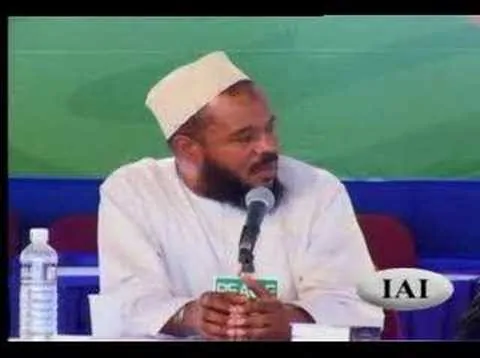
“Salvation comes through repentance — that is the essence. Where a person makes a mistake, they turn back to God, ask God’s forgiveness sincerely, and God forgives them. That is our path to salvation, along with living a life in keeping with the commandments of God.” — The Deen Show
Jesus in Islam: Honoured Prophet, Not Divine Being
Muslims hold Jesus — Isa, peace be upon him — in the highest regard: as a mighty prophet, a word from God, and a messenger born of the Virgin Mary through a miraculous act of divine creation. Islam affirms the virgin birth without hesitation; the Quran even honours Mary with an entire chapter in her name (Surah Maryam). However, Islam firmly holds that a miraculous birth does not make Jesus divine. Eve was created without a mother; Adam came into being without either parent. If a miraculous birth were proof of divinity, Adam would have greater claim to it than anyone. Islamic theology understands these as four modes of creation — with father and mother, without a father, without a mother, and without either — all acts of Allah’s will, none of them making the created being God. As for belief in “God’s death” — this is theologically impossible in Islam, because one of the essential attributes of God is His eternity, without beginning or end. To speak of God being born or dying is to contradict the very definition of the Creator. Jesus was born; Islam does not deny this. But it was Jesus the prophet who was born — not the eternal, self-subsisting God.
- Islam venerates Jesus as one of the greatest prophets and messengers in the history of human guidance
- The virgin birth is fully affirmed in Islam and given prominent place in the Quran
- A miraculous birth is not evidence of divinity — Adam came into being with no parent at all
- God is eternal and uncreated — birth and death are attributes of creation, not the Creator
- Islam affirms the second coming of Jesus and his role in the events of the Last Days
- Jesus himself, in the Quran and in authentic Biblical testimony, called people to worship God alone
“The soul who sins is the one who will die. The son will not share the guilt of the father, nor will the father share the guilt of the son. The righteousness of the righteous man will be credited to him, and the wickedness of the wicked will be charged against him.” — Ezekiel 18:20–21 (NIV)
Across both the Quran and the Biblical texts themselves, the principle of individual accountability emerges as a consistent, recurring truth — each soul answerable for its own deeds, each person capable of direct repentance and direct forgiveness from God. Islam sees in this not severity but profound mercy: no intermediary required, no blood payment demanded, no inherited guilt to shoulder — just a soul, its Creator, and the sincere intention to return. The questions raised about salvation and the nature of Jesus (peace be upon him) are among the most important any spiritually serious person can ask, and Islam does not ask you to suspend reason or accept mystery where clarity is available. It offers a theology of accountability grounded in divine justice, a path of salvation open to every human being regardless of lineage or ritual, and a vision of Jesus that honours him fully — as prophet, miracle, and a sign of God’s power — without burdening him with claims he himself never made. This is the invitation that Islam extends to all people of faith: to come to a word that is just, to worship God alone without partners, and to trust that a sincere heart coupled with righteous action is more than enough to bring any soul safely home.