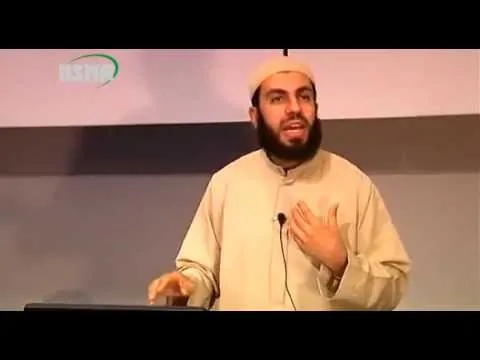
Of all the qualities that define greatness across history and civilization, none cuts deeper than mercy — and no figure in human history embodied it more completely than Prophet Muhammad ﷺ. In this preview lecture by Sheikh Bilal Assad, viewers are invited into a profound exploration of the Prophet’s compassion: not as a theological abstraction, but as a living, breathing reality that touched every corner of creation. This was a man whom historians — Muslim and non-Muslim alike — have consistently ranked as the most influential human being who ever lived, not because of military conquest or political power, but because of the sheer transformative force of his character, his gentleness, and his love for humanity.
A Mercy to All Creation — Not Just Believers
Allah ﷻ declared in the Quran that His Messenger was sent as a mercy to the entirety of existence — and Sheikh Bilal Assad unpacks exactly what that means. The scope of the Prophet’s ﷺ compassion was staggering in its reach: it extended beyond Muslims to non-Muslims, beyond human beings to animals and insects, and even — according to the Islamic tradition — to the jinn. This was not a mercy that came with conditions or religious affiliation. His care was universal, his concern boundless. Michael Hart, a non-Muslim author and historian, captured this plainly in his landmark book The 100: A Ranking of the Most Influential Persons in History, where he placed the Prophet ﷺ at the very top of his list.
“My choice of Muhammad to lead the list of the world’s most influential persons may surprise some readers, but he was the only man in history who was supremely successful on both the religious and secular level.” — Michael Hart
The lecture draws out specific dimensions of this mercy through stories and examples, highlighting how the Prophet ﷺ treated each individual — companion or stranger, friend or foe — with a personal sensitivity that made every person feel uniquely valued. His treatment of those around him was so attentive that every companion believed they were the most beloved to him. Key takeaways from this foundational teaching on Prophetic character include:
- Universal compassion: His mercy reached Muslims, non-Muslims, women, children, the elderly, the poor, the sick, animals, and even enemies of Islam
- No coercion in faith: For fourteen years the Prophet ﷺ invited people without lifting a finger in aggression — sincere belief, he taught, must come from the heart
- Radical generosity: He would not eat better food until his community had eaten, and for months at a time his household went without meat — distributing everything he had to the needy
- Individual dignity: He treated every person as though they were the most cherished in his eyes, actively abolishing jealousy and envy among his companions through this practice
- Forgiveness over revenge: When given divine permission to destroy those who persecuted him, he refused — hoping their children or grandchildren might one day embrace guidance
The Incident at Ta’if: Where Mercy Faced Its Greatest Test
Perhaps no story illustrates the depth of the Prophet’s ﷺ compassion more powerfully than what took place at Ta’if. After years of rejection in Mecca, he traveled sixty kilometres to call another people to Islam. For over ten days, he invited them with wisdom and kindness — and was met with mockery, insults, and finally a brutal gauntlet: children, women, and servants lined both sides of a narrow path, hurling rocks, filth, and abuse at him until his legs bled and his freed slave Zayd was wounded trying to shield him. Exhausted and alone, bleeding beneath a garden tree in a strange land, the Prophet ﷺ raised his hands and made one of the most emotionally charged supplications ever recorded. When the Angel of the Mountains then offered to crush Ta’if between its peaks in retribution, his answer was immediate and instinctive — no. Perhaps, he said, their descendants would one day worship Allah alone. That was not a political calculation. It was pure, unfiltered mercy.
“Allah, to you alone I complain of my weakness, my insufficient ability, and my insignificance in the eyes of the people. You are the most merciful of all mercifuls. Oh my Lord, but if you are not angry with me, then all of this no longer matters to me.” — Du’a of the Prophet Muhammad ﷺ at Ta’if
What the incident at Ta’if reveals — and what this lecture by Sheikh Bilal Assad ultimately calls us to reflect upon — is that the mercy of the Prophet ﷺ was not a performance for favorable circumstances. It was his nature, inseparable from his identity as Allah’s messenger and as a human being formed by divine guidance. For Muslims seeking to deepen their faith and spirituality, studying his life is not merely an academic pursuit — it is a path toward understanding what Islam truly asks of us: to embody compassion in the way we treat our families, our neighbors, the poor, and even those who wrong us. The Prophet ﷺ is not simply history to be admired from a distance; he is the living example of what a mercy-centered life looks like, and the closer we draw to his character, the closer we draw to the purpose for which we were all created.